3D Forensic Reconstruction of Multiple Collision on the A-6 Using Digital Technologies
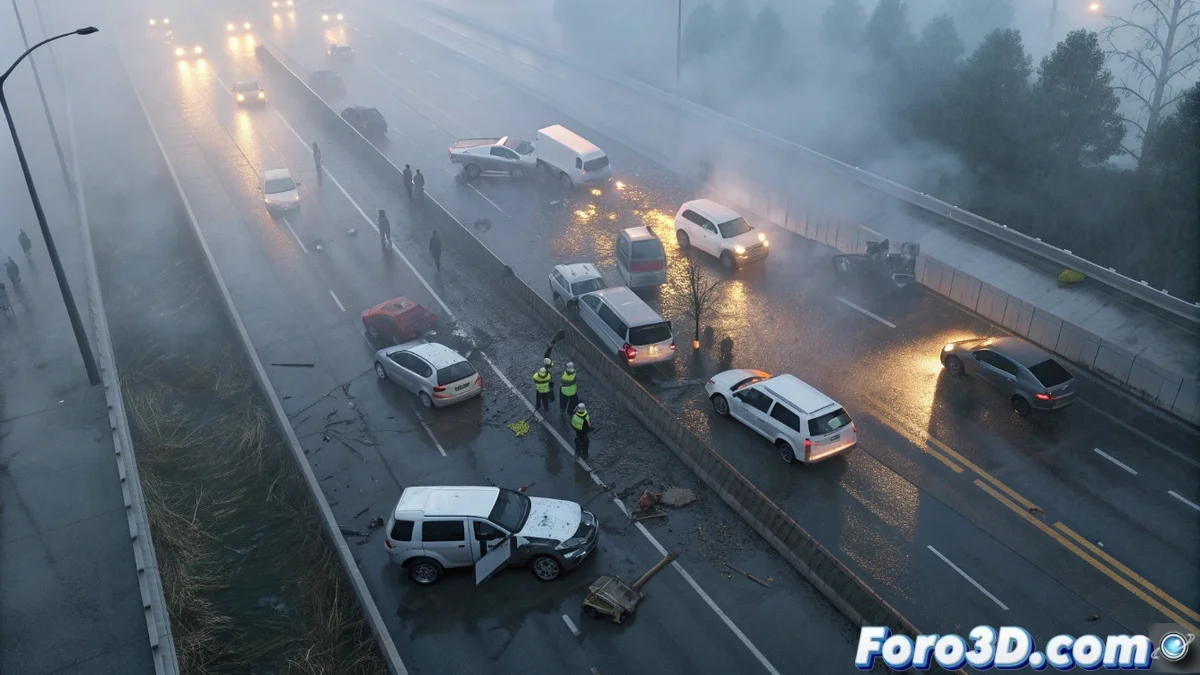
A thick fog on the A-6 highway caused extremely dangerous visibility conditions, triggering a chain collision involving more than fifty vehicles. Investigation teams quickly deployed to the scene to implement a three-dimensional forensic process that captured the entire accident scene. 🚗💥
Technical Documentation with Laser Scanners and Photogrammetry
Using FARO laser scanners and photogrammetry techniques with Agisoft Metashape, specialists meticulously documented the final position of each vehicle, structural damage patterns, and skid marks on the asphalt. This precise digital documentation forms the fundamental basis for subsequent analysis of the accident dynamics.
Key Elements Documented:- Exact positioning of all vehicles involved in the incident
- Detailed record of deformations and structural damage to bodies
- Skid marks and yaw marks on the roadway surface
Millimetric precision in data capture is crucial for reliable forensic reconstructions
Advanced Physical Simulation with Specialized Software
The collected 3D data was imported into PC-Crash software to perform advanced physical simulations. The system calculates trajectories, speeds, and impact angles faithfully replicating vehicle physics laws. Through successive iterations, investigators reconstruct the exact chronological sequence of impacts.
Aspects Analyzed in the Simulation:- Identification of initial conflict points and energy transfers
- Determination of pre-impact speeds and collision angles
- Establishment of causal relationships based on scientific evidence
Visual Production for Court Presentation
The simulated sequences are transferred to visual production environments with 3ds Max and Blender to create high-fidelity animated representations. Technical artists develop realistic materials showing progressive body deformation and generate particle systems to simulate glass fragments. 🎬🔍
These forensic visualizations are crucial for presenting the reconstruction in courts, allowing judges and juries to understand the complex dynamics of the event through precise visual narratives that replicate the accident's weather conditions.
Final Reflection on Digital Reconstruction
The combined use of 3D capture technologies, physical simulation, and forensic visualization represents a significant advancement in traffic accident investigation. These processes not only allow determining responsibilities on a scientific basis but also improve understanding of complex phenomena in low-visibility environments. The irony of thinking that drivers could have benefited from a "third-person view" like in video games underscores the importance of visualization technologies in preventing future incidents. 💻🚓