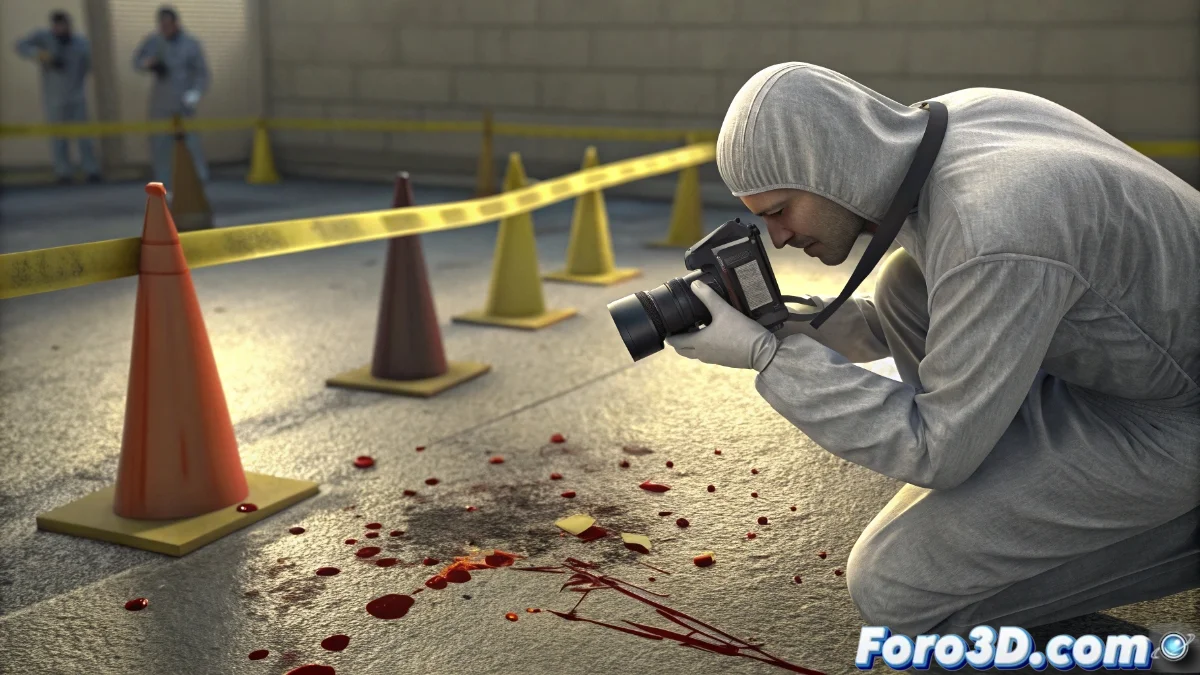
3D Forensic Reconstruction: Methodology and Applications in Investigation
The three-dimensional forensic reconstruction represents a technological revolution in incident investigation, allowing scenarios to be recreated with unprecedented precision. This process integrates multiple technical disciplines to generate digitally admissible evidence in judicial proceedings 🔍.
Initial Phase: Field Data Capture
The acquisition of information constitutes the foundation of the entire reconstructive process. Complementary techniques are implemented that guarantee the metric integrity and visual completeness of the collected data. Exhaustive documentation in this stage is determinant for the subsequent success of the digital model 📸.
Capture Procedures:- Terrestrial photogrammetry with professional DSLR equipment, maintaining 70-80% overlap between consecutive images to ensure complete surface reconstruction
- Implementation of scale markers and specialized markers that provide absolute metric references throughout the workflow
- 3D laser scanning with multi-station registration to capture the environment's geometry with millimeter precision
- Complementary photographic documentation to record textures, colors, and contextual details that will enrich the final model
In forensic reconstruction, a pixel out of place can completely change the verdict, so constant validation is essential.
Processing and Development of Three-Dimensional Models
Once the information has been collected in the field, the transformation of raw data into usable three-dimensional models begins. This phase requires specialized software and advanced knowledge in digital processing 🖥️.
Modeling Stages:- Automatic alignment of photographs and generation of dense point clouds using computer vision algorithms
- Creation of optimized polygonal meshes from point clouds, followed by photorealistic texturing using reference images
- Cleaning and optimization processes through controlled decimation techniques and retopology to maintain visual fidelity while reducing geometric complexity
- Precise metric scaling using field-captured references, ensuring all model dimensions exactly match reality
Technical Analysis and Reconstructive Simulations
The prepared 3D models undergo advanced analyses that allow recreating event dynamics and studying investigative hypotheses. This phase incorporates animation tools and physical simulations to generate scientifically valid technical reconstructions 🔬.
Analytical Applications:- Importation of models into dynamics software to recreate physical phenomena using particle systems (splashes) and rigid bodies (impacts)
- Visibility analysis and lighting conditions through renders from specific perspectives that help understand what witnesses could have observed
- Implementation of basic rigging on human avatars to recreate body positions and movement sequences related to the investigated events
- Validation of hypotheses through iterative simulations that contrast different possible scenarios
Forensic Validation and Judicial Presentation
The conclusive phase ensures that the reconstructions meet the forensic standards required for presentation in legal proceedings. Every element must be contrasted with documented physical evidence and follow strict data integrity protocols ⚖️.
Final Procedures:- Exhaustive contrast between simulation results and physical evidence collected at the real scene
- Generation of explanatory animations and interactive environments that facilitate understanding of complex events by judges and juries
- Exportation of models and metadata in suitable formats for judicial expertise, maintaining digital chains of custody
- Implementation of integrity protocols that guarantee the legal admissibility of the generated digital evidence
Final Considerations in 3D Forensic Reconstruction
The three-dimensional forensic reconstruction represents a transformative tool in modern investigation, combining technical precision with scientific rigor. Each phase of the process must be executed with extreme meticulousness, remembering that the slightest inaccuracy can have determining consequences in judicial proceedings. Iterative validation and constant quality control are imperatives in this field where accuracy is synonymous with justice 🎯.