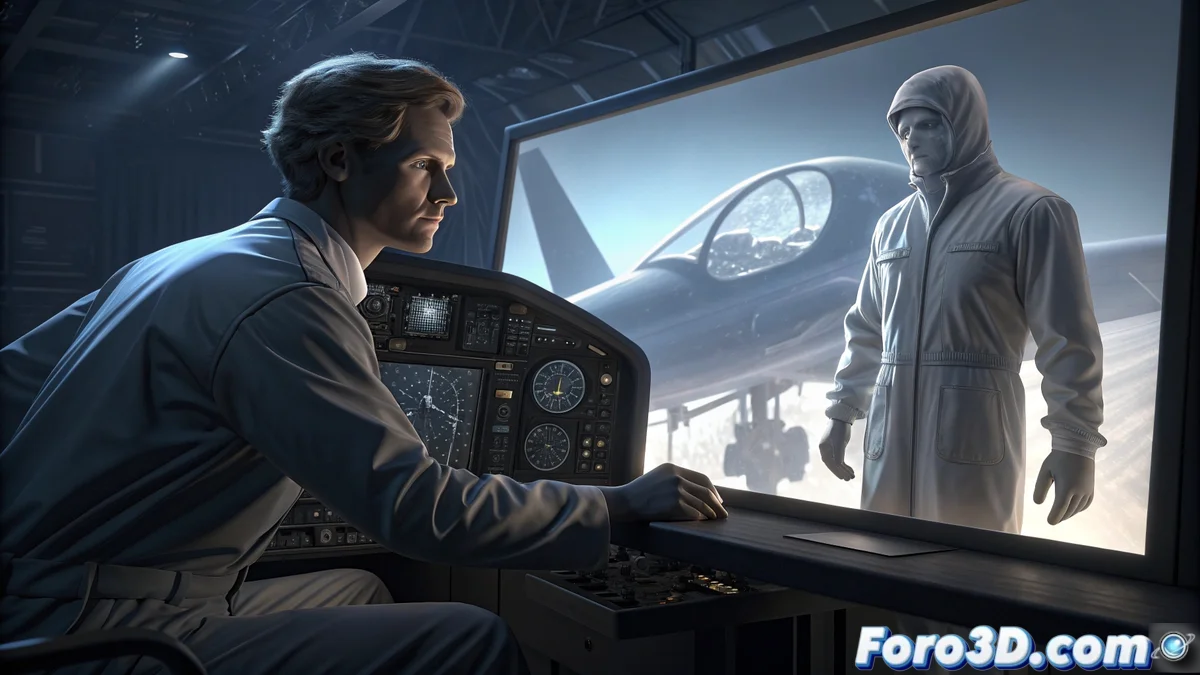
3D Forensic Reconstruction Analyzes Ergonomics in Flight Cabins
When an air accident occurs, a specialized forensic team can digitally reconstruct the final moments of the flight. To do this, they combine data from the flight recorder with an accurate three-dimensional model of the cockpit. The ultimate goal is to animate a digital mannequin that matches the pilot's dimensions and thus reproduce each gesture and posture with precision. This process seeks to determine if a control was activated erroneously and uncover the root cause. 🕵️♂️✈️
A Technical Process that Merges Capture and Simulation
The method begins by digitizing the geometry of the crashed cockpit. A handheld 3D scanner, such as the FARO Freestyle, is used to obtain a detailed point cloud. This model is then imported into animation software, such as Autodesk Maya, where experts create and animate the pilot's avatar. The accident timeline, extracted from the flight recorders, serves to synchronize each movement of the digital character.
Key Phases of the Analysis:- Capture the Scene: Use a 3D laser scanner to generate a faithful digital model of the crashed airplane cockpit.
- Create and Animate the Avatar: Model an anthropomorphic mannequin with the pilot's exact measurements and animate it according to the recorder data.
- Simulate Interaction: Use specialized ergonomics software, such as Siemens Jack or Delmia, to calculate visual reach, physical effort, and detect conflict points in the controls.
Sometimes, the problem is not the finger that presses the wrong button, but the engineer who placed it right next to an identical one.
Evaluate the Design to Understand the Error
This technique not only seeks to recreate the facts, but primarily to understand the reasons behind a human error. Investigators examine whether the layout, shape, or labeling of the controls could have induced confusion. They verify, through simulation, whether the pilot—given their height and position in the seat—could clearly see and distinguish each switch or lever.
Parameters Measured in the Simulation:- Viewing Angles: The avatar's field of view is calculated to check if critical instruments were visible.
- Movement Ranges: It is analyzed whether the pilot could reach the necessary controls without excessive effort or forced postures.
- Control Identification: It is tested whether similar elements or poorly labeled ones could lead to operating the wrong device.
From Reconstruction to Objective Evidence
3D Ergonomic Simulation allows testing different scenarios virtually and measuring parameters with precision. This approach provides objective and quantifiable evidence on the complex interaction between the human operator and the machine. In the end, the analysis transcends simple animation; it becomes a powerful tool for improving air safety, pointing out design flaws that can be corrected in future models. 🔍📊