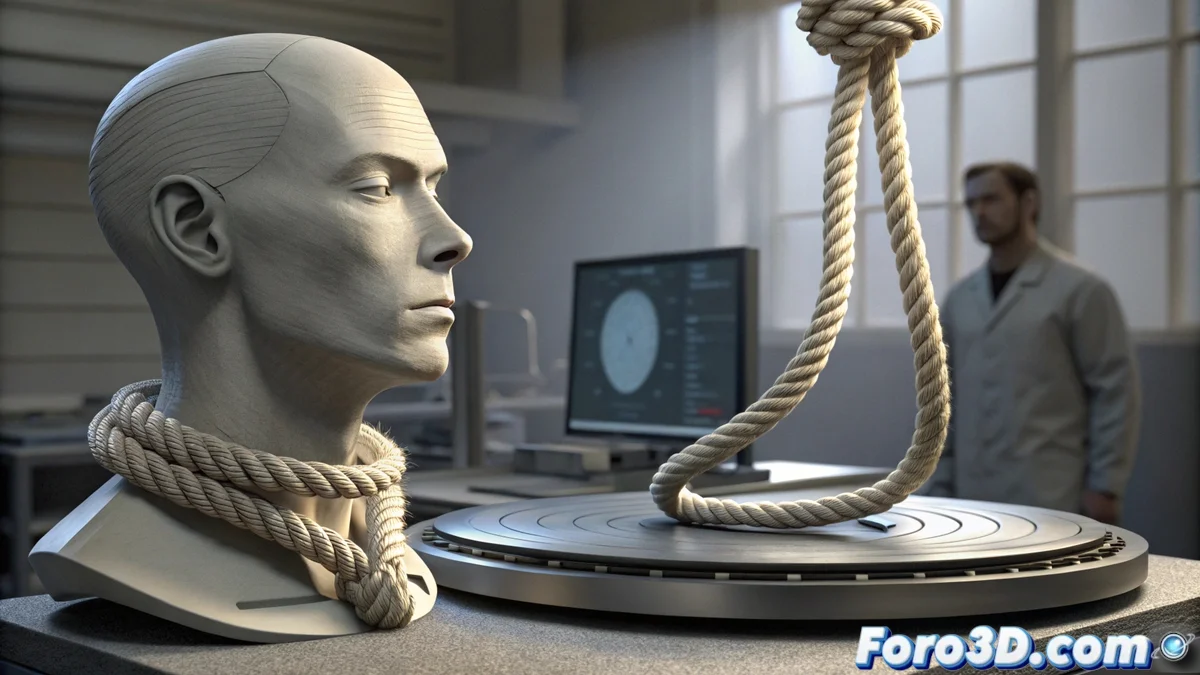
3D Forensic Expertise Compares Strangulation Marks with Suspicious Objects
Modern criminal investigation adopts three-dimensional tools to examine physical evidence with unprecedented precision. In crimes such as strangulation, experts no longer rely solely on photographs; now they digitize the neck injury and the instruments found, such as ropes or belts, to seek an irrefutable material link. This method converts microscopic patterns into quantifiable data. 🔍
The Technical Pipeline: From Skin to Digital Data
Establishing a solid forensic match requires a structured workflow in three fundamental phases. The goal is to transform analog evidence into digital models that can be measured and compared objectively.
Key Phases of the 3D Forensic Process:- Capture: A 3D scanner like the Artec Micro is used to record the topography of the mark on the skin and the surface of the suspicious object. This equipment captures micro-details such as striations, grooves, and specific wear.
- Process and Align: Metrology software, such as GOM Inspect, handles the generated point clouds. Its main function is to align the models in the same coordinate space to prepare for comparative analysis.
- Visualize and Measure: Tools like Blender help represent the results. Overlays and color maps are generated to interpret deviations between the imprint and the object.
The most eloquent evidence can be a silent 3D model that screams match from every vertex and texture.
Establishing the Match through Overlay
The core of the analysis lies in overlaying the digital models. The skin, when deformed, acts as a mold that records a negative impression of the instrument used. The software compares this imprint in the soft tissue with the geometry of the seized object.
Elements Sought to Match:- The unique torsion pattern of a rope or cord.
- The characteristic relief of an electrical cable or wire.
- The exact shape and dimensions of a belt buckle.
The Value of Objective Evidence
By overlaying the 3D model of the object onto that of the mark, the software measures the distances between both surfaces and calculates a statistical correlation. A significant match indicates that that particular object could have caused the injury. This data provides objective physical evidence to the case, shifting expertise from subjective to measurable and demonstrable. 3D technology does not replace the expert but equips them with a language of precision to support their conclusions. ⚖️