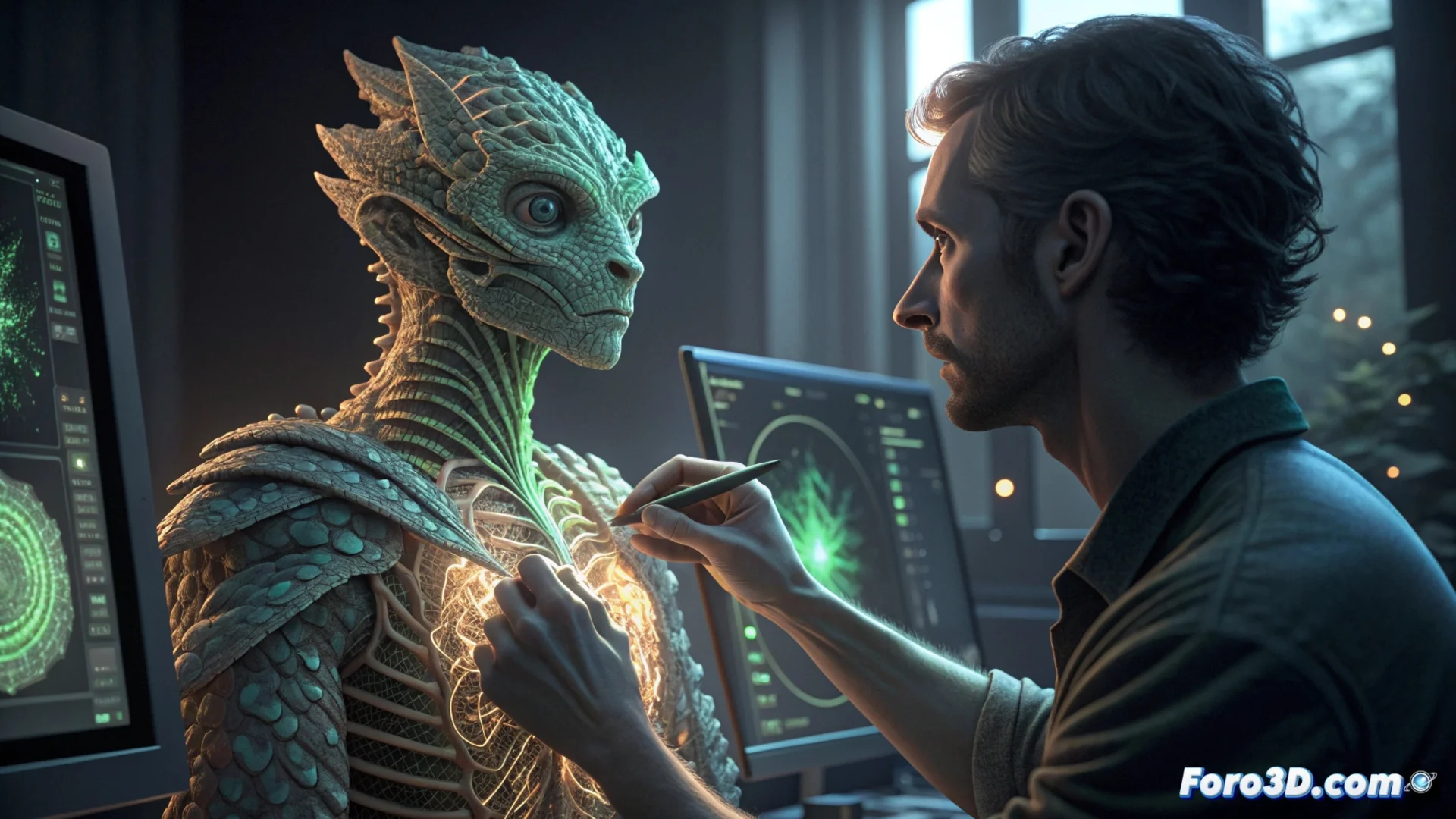
3D Coat: Sculpting with Voxels Without Preparing Topology
In the world of 3D modeling, 3D Coat stands out for adopting a unique approach: using voxels, which are pixels with three-dimensional volume. This technological foundation frees the artist from having to build or worry about an initial polygonal mesh, allowing them to focus purely on form and mass from the very beginning. It's like sculpting with digital clay 🎨.
Creative Freedom from the Initial Sketch
When working with voxels, the workflow transforms. You can explore ideas and block out complex shapes without the typical constraints of polygons. You don't need to retopologize, extrude faces, or manage edge loops in the early design phases. This makes the software ideal for sketching creatures, characters, or environment elements in a fluid and organic way. Subsequently, the voxel volume is converted into a clean polygonal mesh ready for adding finer details or exporting to other programs in the pipeline.
Key Advantages of the Voxel Approach:- Allows sculpting volume directly, without a base topology.
- Speeds up the conceptualization and shape-blocking phase.
- The process is non-destructive; you can correct and remodel with ease.
The voxel workflow prioritizes intuition and form over polygonal technique, ideal for artists who think in volumes.
Tools That Simulate Traditional Sculpture
The program includes a set of dynamic brushes that emulate real-world behaviors, such as lifting, dragging, smoothing, or carving the virtual mass. The resolution of the voxel volume can be increased locally or globally, allowing you to add fine details precisely where they are needed. This method offers great flexibility for experimentation and making mistakes, as it is always possible to restore or adjust the virtual material without compromising the base work.
Features of Organic Sculpting in 3D Coat:- Brushes that respond like physical sculpting tools.
- Adaptive resolution increase for detailing specific areas.
- Intuitive process focused on the artistic perception of volume.
Final Technical Consideration
Although this method promises significant creative freedom, it is important to remember that converting billions of voxels into a usable polygonal mesh can be very demanding on your system's resources. It is a computationally intensive step that your computer must process to deliver a model ready for the next stages of production 🖥️.