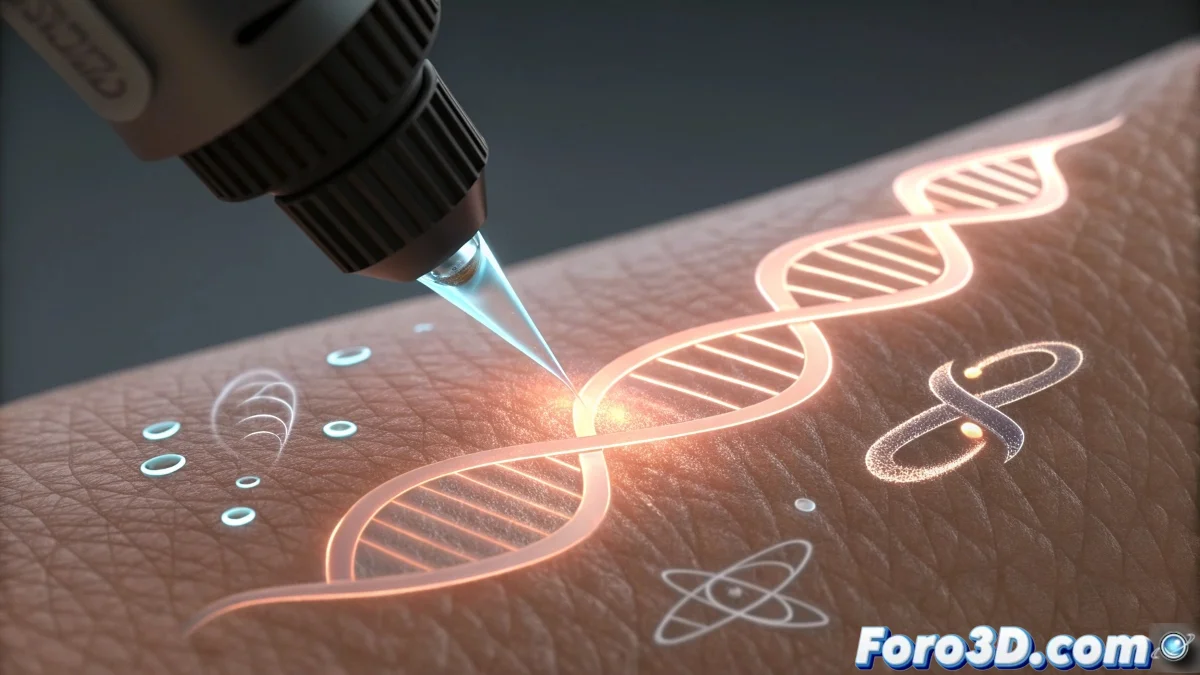
When Printing Replaces Injection
3D bioprinting is on the verge of turning needles into a thing of the past, promising a simultaneous revolution in two seemingly disparate fields: regenerative medicine and body art. This emerging technology allows for direct printing onto the skin of both biological tissues and decorative pigments, completely eliminating the need for piercing instruments. What began as cutting-edge medical research could end up transforming how we conceive both dermatological treatments and artistic tattoos.
The fundamental principle is as elegant as it is disruptive: instead of injecting materials under the skin, specialized bio-inks and biocompatible pigments are deposited layer by layer onto the skin's surface, creating structures that integrate seamlessly with the existing tissue. This approach not only eliminates the pain associated with needles but significantly improves the precision and customization of the results.
Bioprinting not only avoids pain, it completely redefines the interface between technology and skin
Transformative Medical Applications
- Custom artificial skin for burn victims
- Dermatological patches with controlled drug release
- Aesthetic treatments with millimeter precision
- Medical monitoring via sensors printed directly onto the skin
The Renaissance of Body Art
In the world of tattooing, 3D bioprinting represents the greatest technical advance since the invention of the electric tattoo machine. Artists can now digitally design complex works that are applied with an impossible-to-achieve manual precision. The ability to print perfect gradients, microscopic details, and colors that integrate organically with the skin is creating a new category of body art where the only limitations are the artist's imagination and the printer's resolution.
The smart pigments used in these systems can even react to external stimuli, changing color based on body temperature, sun exposure, or even the user's mood. This interactivity opens creative possibilities that completely transcend the traditional concept of a static tattoo.
Key Advantages Over Traditional Methods
- Completely painless process without skin penetration
- Subdermal precision controlled digitally
- Immediate recovery without healing time
- Total customization based on 3D body scans
Enhanced safety is perhaps the most significant benefit, especially in medical applications. By eliminating needles, the risks of infection, allergic reactions, and tissue damage are drastically reduced. The bio-inks used can be specifically formulated for each patient, considering their skin type, medical conditions, and particular immune responses. This customization represents the holy grail of modern medicine applied to dermatological care.
The future of skin is no longer punctured, it's printed
And while early adopters show off their printed tattoos, skeptics wonder if they'll miss the characteristic buzz of the traditional tattoo machine... or if they'll prefer the silent ballet of the print heads 🖨️