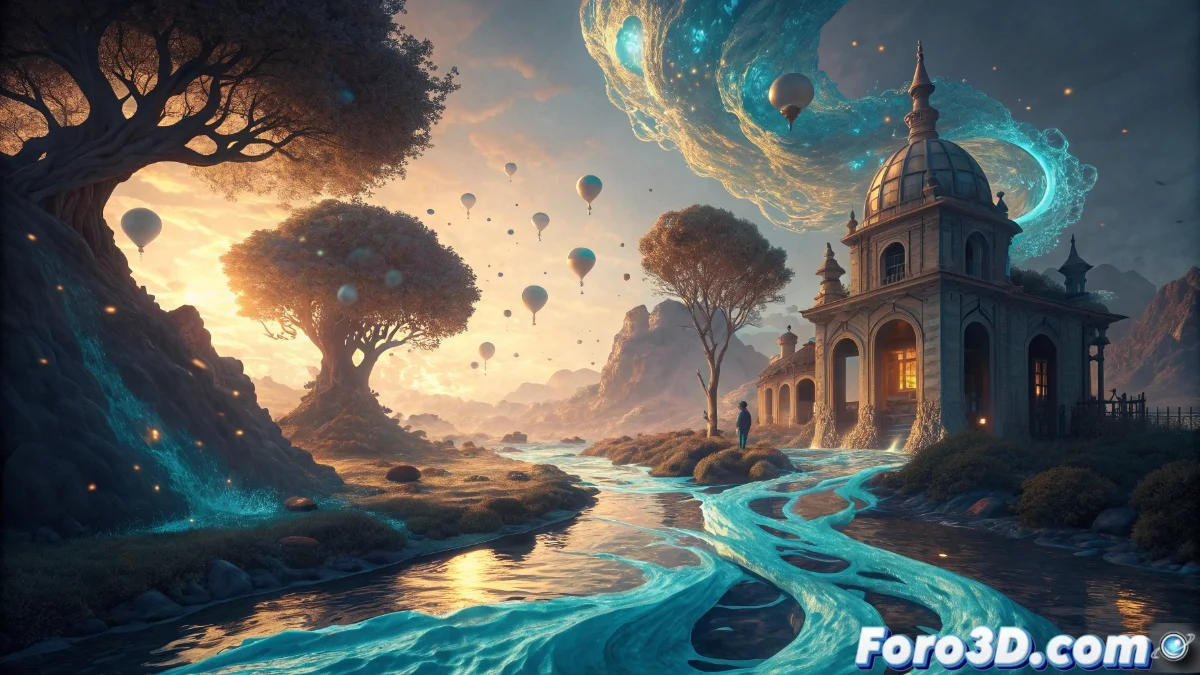
3D Art as an Emotional Mirror of the Artist
Three-dimensional creations function as a direct reflection of the internal universe of those who design them, where every visual choice contains fragments of their current psychological state 🎨.
The Psychological Connection in Digital Design
The selected colors, compositional structures, and generated atmospheres constitute digital manifestations of mental processes. This relationship transforms rendering into an expressive language that surpasses merely technical aspects, establishing a visual dialogue between creator and work.
Emotional Manifestations in 3D Scenes:- States of calm that translate into diffuse lighting and soft color harmonies
- Episodes of anxiety represented through abrupt contrasts and unbalanced compositions
- The choice between realism or stylization as a response to internal expressive needs
We spend weeks perfecting the subsurface scattering of a character to convey vulnerability, while our own features show the marks of the creative insomnia that drove us to create it.
Technical Tools as Emotional Vehicles
The conscious mastery of resources like Shader | Compute, particle systems, and post-processing allows for the materialization of complex mental states. These tools become the visual vocabulary of a personal language that communicates the ineffable 🔧.
Techniques that Externalize Internal Processes:- Selective blurring to represent mental confusion or uncertainty
- Extreme chromatic saturation as an expression of euphoria or emotional intensity
- Procedural texturing with organic qualities that reflect thought patterns
Lighting as a Psychological Metaphor
Volumetric lighting transcends its technical function to become a powerful emotional symbol, capable of evoking everything from mental clarity to dense emotional fog. Each lighting decision constitutes an introspective statement that reveals hidden dimensions of the creator 💡.