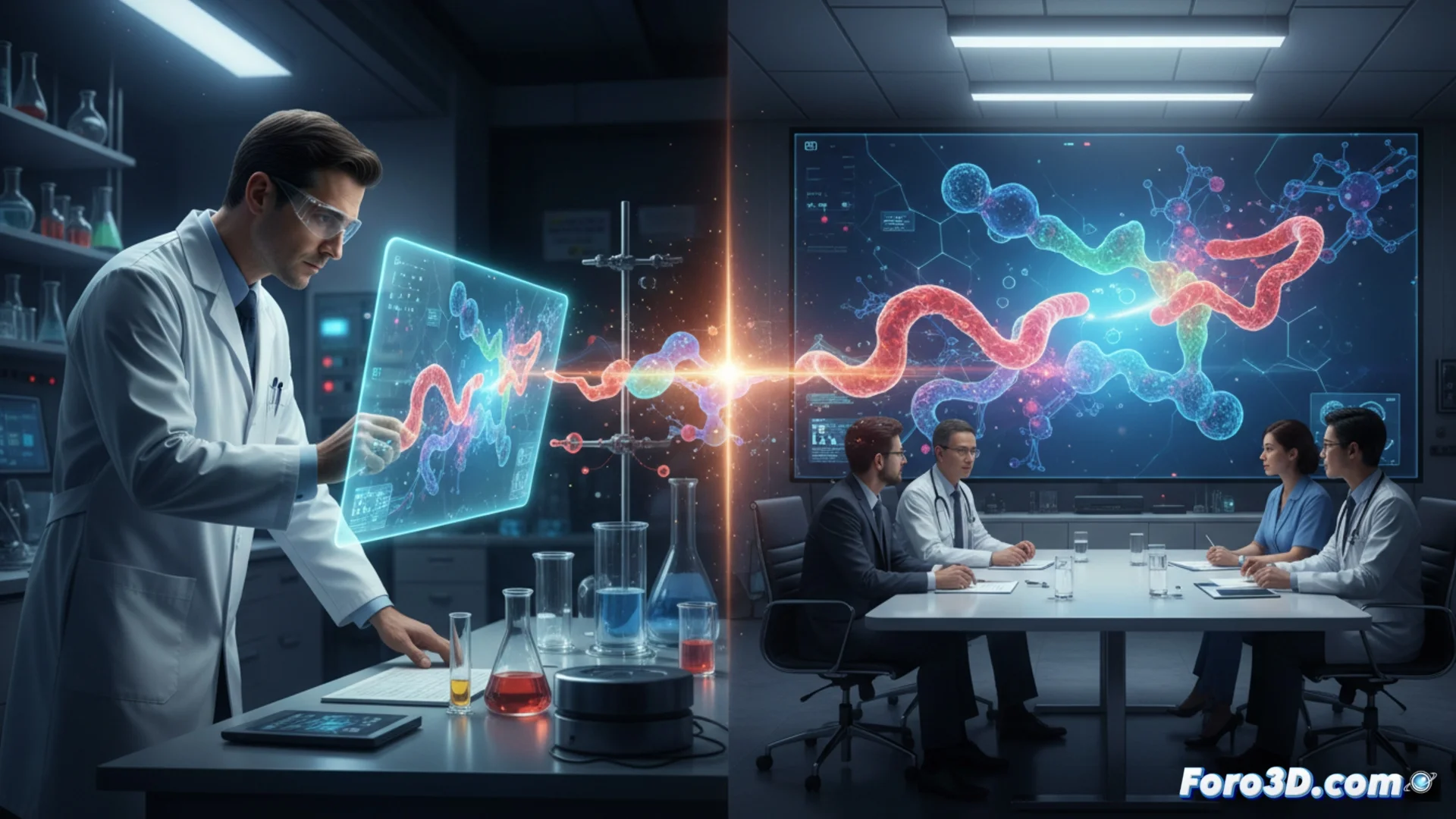
3D Animation Transforms How the Pharmaceutical Industry Communicates Science
The pharmaceutical sector is increasingly adopting three-dimensional animation to explain intricate scientific concepts. This visual tool replaces lengthy technical documents, making data on mechanisms of action and manufacturing processes more accessible to healthcare professionals and the general public 🧬.
Showing Hidden Processes to Educate
The main advantage lies in being able to visualize the invisible. Animations depict molecular-level interactions, such as how a drug binds to a cell receptor or how a pathogen spreads. This is crucial for training medical teams, supporting sales strategies, and educating patients about their treatments. Specialized companies use tools like Maya, Cinema 4D, or Blender, along with advanced rendering techniques, to produce sequences that are rigorous and visually impactful.
Key Advantages of 3D Animation in Pharma:- Explains complex mechanisms intuitively and easily retainable.
- Allows viewing biological interactions that conventional microscopes cannot capture.
- Used in congresses, training materials, and campaigns targeted at professionals.
The biggest challenge is sometimes not animating a protein, but getting the entire medical team to approve the color assigned to it.
Scientific Accuracy as a Fundamental Basis
All work is based on close collaboration with researchers and medical departments. Every 3D model, whether of a protein or an organ, is built from real structural data obtained through techniques like X-ray crystallography. Animators must balance absolute precision with the need to tell a clear story, simplifying elements without falsifying the science.
Guaranteed Workflow:- Initial collaboration with scientists to understand structural data.
- Modeling and animation based on that verified information.
- Exhaustive validation of the final product before distribution or public use.
A Visual Bridge Between Science and Understanding
In short, 3D animation acts as an essential bridge. It transforms abstract and complex data into comprehensible visual narratives, improving communication in a sector where precision is paramount. This approach not only informs but also facilitates understanding and remembering critical information about health and therapies 💊.