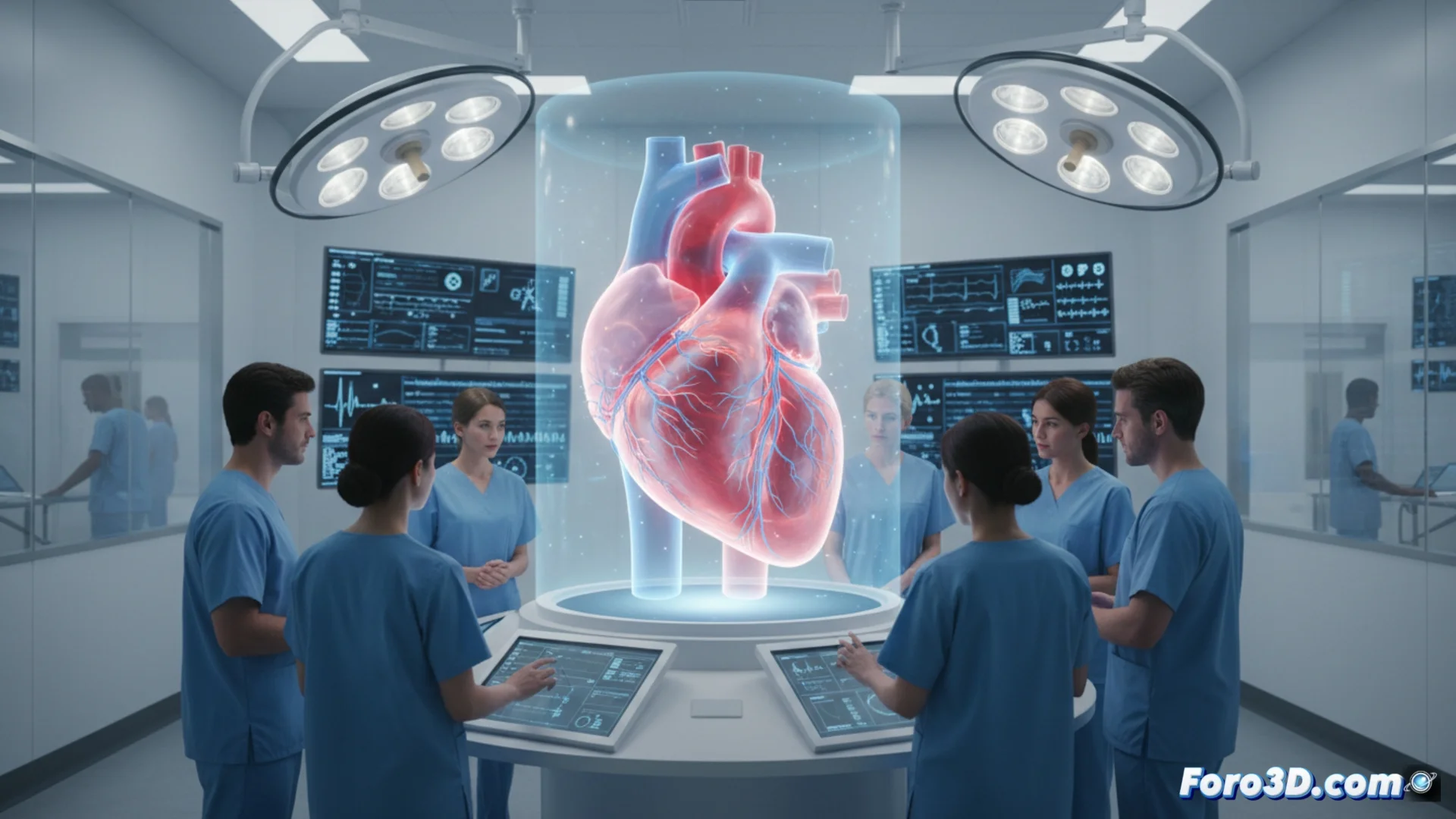
3D Animation Optimizes Healthcare Professionals' Training
Three-dimensional animation technology is radically transforming the methods for training future doctors and nurses. This innovation enables the creation of procedural simulations and highly accurate anatomical models, offering an immersive and safe learning platform. 🧑⚕️
Visualizing the Complex to Understand Faster
Animated 3D models explain in detail the functioning of physiological systems or the progression of a pathology. A student can observe a surgical procedure from multiple perspectives or analyze it step by step. This ability to visually represent internal or abstract concepts reduces the time needed to assimilate clinical principles.
Key Advantages of Visual Learning:- Explore the human body in an interactive and limitless way.
- Repeat intricate medical processes as many times as needed, eliminating any risk.
- Reduce the learning curve and make training more reliable.
Seeing a high-definition rendered liver and being able to rotate it to locate structures is much more effective than memorizing pages of static text.
Prepare for Reality with Interactive Simulation
Practicing with 3D simulated environments provides safety before interacting with a person. It allows rehearsing suturing techniques, diagnostic methods, or the use of specialized instruments in a fully controlled context. This constant practice without repercussions is essential for acquiring manual skills and learning to make decisions in clinical scenarios.
Impact on Professional Preparation:- Healthcare personnel arrive at their rotations and residencies with a higher level of preparation.
- Motor skills and clinical judgment are developed effectively.
- Institutions train their teams in a more productive and cost-effective way.
The Future of Medical Education
Implementing 3D animation not only speeds up the learning process but also enhances long-term knowledge retention. This tool is consolidating as a pillar in modern healthcare training, bridging the gap between academic theory and the demanding real hospital practice. 🏥