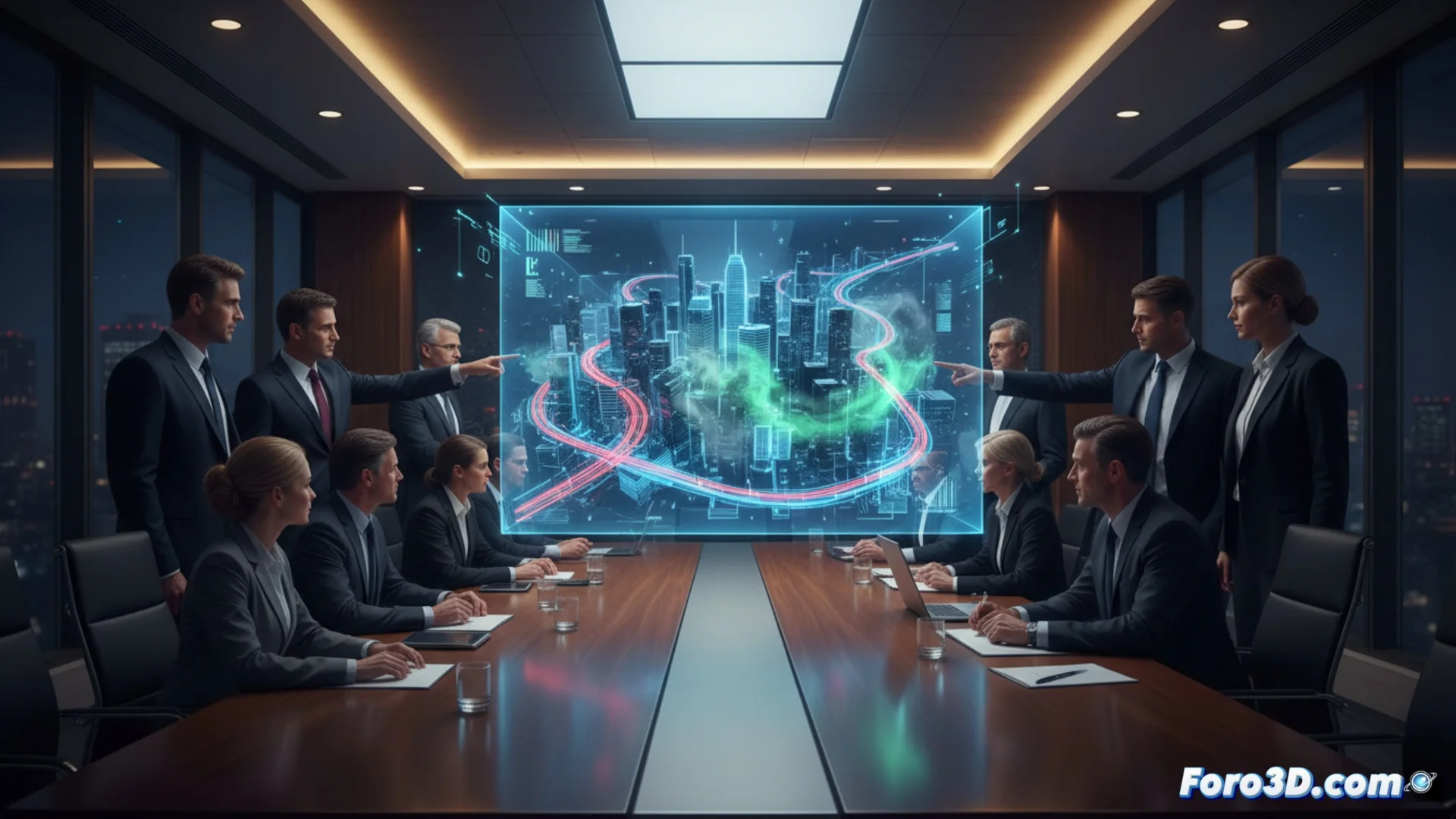
3D Animation as a Key Tool for Decision-Making in Regulatory Environments
In processes where complex initiatives must be evaluated and authorized, three-dimensional animation has become a fundamental ally. This technology allows recreating and examining scenarios with a high degree of precision, helping policymakers perceive the consequences of a proposal more clearly. By presenting spatial and temporal information dynamically, it facilitates analyzing potential hazards and anticipating outcomes long before giving final approval. 🏗️
Transforming Technical Reports into Visual Narratives
A 3D animated model converts lengthy technical documents into intuitive graphical representations. Regulators can observe, for example, the dispersion of a pollutant in a watershed or how a new construction affects traffic patterns and the urban landscape. This ability to process and display intricate data in an understandable way speeds up meetings and minimizes confusion, as all participants view the same scenario from different perspectives.
Key Advantages of Dynamic Visualization:- Clarity in Complex Data: Tables and dense texts are replaced by moving images that everyone understands.
- Multicriteria Analysis: Allows simultaneous examination of environmental, social, and economic impacts.
- Unified Communication: Creates a common visual basis that avoids misunderstandings among technicians, politicians, and citizens.
The true power lies not in showing what is, but in simulating what could be, proactively reducing uncertainty.
Anticipating the Future through Virtual Simulation
The core of this tool lies in its power to simulate. Planners can test different hypotheses, such as the effectiveness of a wall in reducing noise or the movement of people during an evacuation. By running these virtual recreations, latent problems are detected that traditional plans or physical models fail to reveal. This enables adjusting designs in advance and supporting decisions with compelling visual evidence, making the approval process more robust and transparent.
Scenarios That Can Be Modeled:- Environmental Impact: Simulate the spread of emissions or effects on watercourses.
- Urban Flows: Recreate vehicular, pedestrian traffic, or use of public spaces.
- Risk Analysis: Visualize consequences of extreme events or structural failures.
Geometry, Physics, and Patience, Not Magic
Far from being a technological trick, this process is based on computational geometry, principles of physics, and considerable graphics processing time. The final value lies in presenting these complex calculations in such an accessible way that even a review committee can understand them without difficulty, maintaining interest and facilitating informed debate. It is the union of technical precision and effective communication. 💡