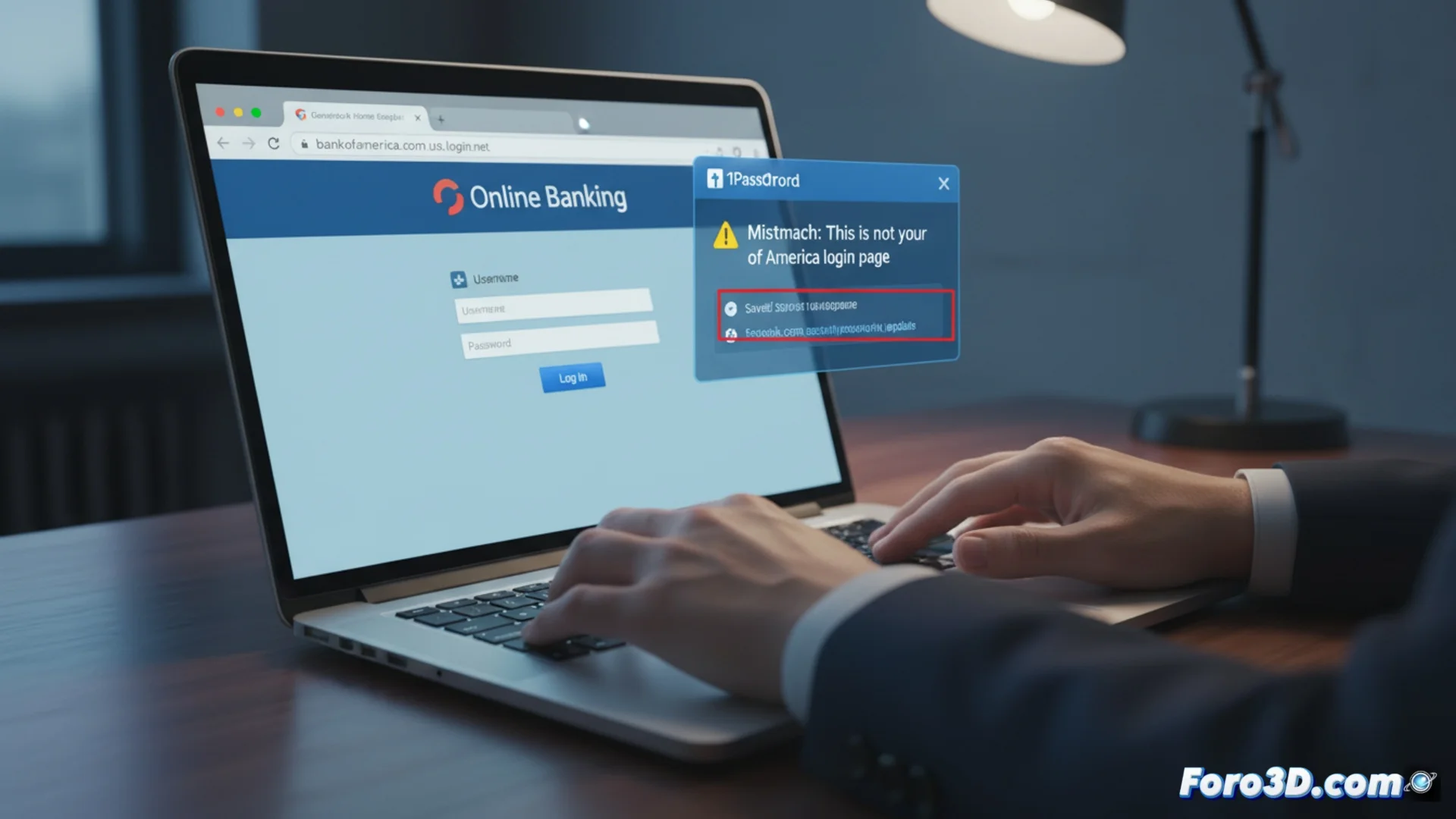
1Password Adds a Phishing Barrier by Verifying Domains
The well-known password manager 1Password strengthens its defenses by integrating a mechanism that protects users from identity theft attempts. This innovation examines web addresses in real time to detect irregularities before sensitive data is exposed. 🛡️
Mechanism of the New Security Feature
When using credential autofill, the tool instantly compares the current domain with the one registered in the user's vault. If it identifies a variation, such as a spelling error or a misleading name, it displays a clear notification requesting explicit confirmation to proceed. This intermediate step allows the user to pause and evaluate the legitimacy of the web portal.
Detection Process:- Compare the active site's URL with the stored one.
- Identify typographical or character discrepancies.
- Display a visual alert requiring user action.
This feature does not block automatically, but informs so the user can decide knowingly.
Why Examining the Web Address is Crucial
Numerous phishing attempts rely on domains that mimic official ones, using similar spellings or nearly identical names. 1Password's ability to highlight these subtle differences that often go unnoticed becomes a valuable shield. It operates alongside other protection layers, such as two-factor authentication, to create a more robust environment.
Advantages of This Verification:- Discovers imitations of legitimate domains.
- Acts as a pre-check before autofill.
- Complements existing security methods.
A Practical Example of Its Utility
In practice, if a user mistakenly types "foro3d.corn" instead of "foro3d.com", the password manager may be the first to indicate the anomaly. This early alert occurs even before the person realizes they are about to enter their data into a fraudulent site, offering a crucial opportunity to correct it. This measure represents a significant advancement in proactively protecting digital credentials. 🔒