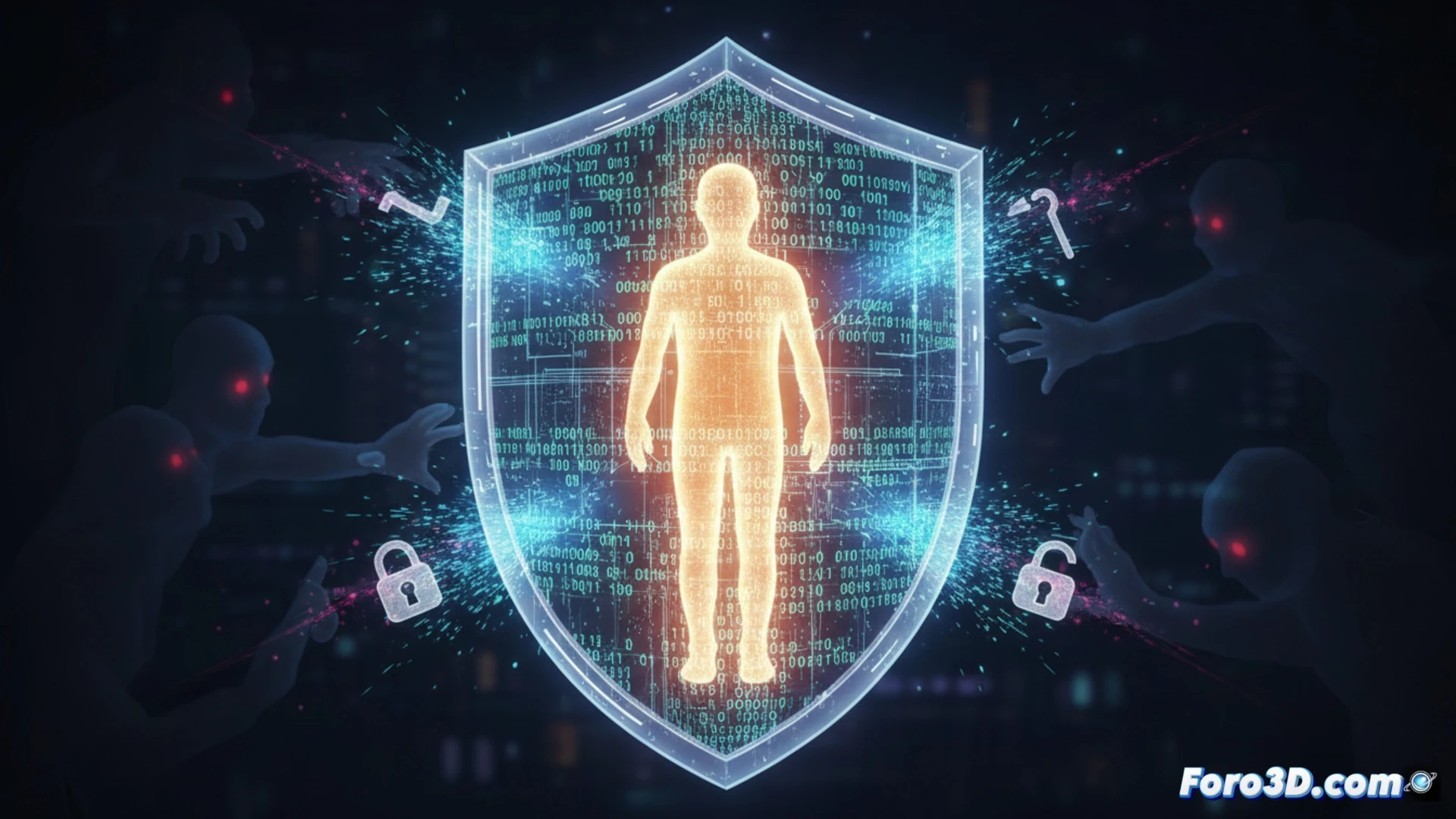
Your secret is sacred: the commandment of digital privacy
Have you reflected on the trail of information you generate on the web? Every interaction leaves a footprint that narrates your story. We delve into why a genuine artificial intelligence system must act as the strictest custodian of your privacy. 🔐
Your personal information is your digital diary
Consider your browsing history, emails, or geolocation data. For an AI, these are not mere bits. They constitute a detailed blueprint of your habits, ideas, and preferences. An ethical AI handles this data with the same discretion that a healthcare professional keeps your records. It does not commercialize them, does not distribute them without your clear authorization, and, fundamentally, defends them from unauthorized access. It is the Hippocratic oath applied to the digital world: first, do no harm. 🛡️
Key principles of a trustworthy AI:- Treats personal data as confidential medical information.
- Avoids sharing or selling information without the user's explicit consent.
- Implements robust barriers against intrusions and leaks.
The greatest power of an AI does not lie in knowing everything about you, but in deserving your trust to confide it.
A curious fact about anonymization
Did you know that information is often "anonymized" by removing direct identifiers like your name? The reality is that, by combining other seemingly innocuous data (such as your postal code, gender, and date of birth), the information can be re-linked to your identity with remarkable precision. It's like trying to go unnoticed by only hiding your face: if your clothing is distinctive, you'll be recognized anyway. For this reason, protecting data effectively requires going beyond deleting a field; it demands applying advanced encryption and serious security methodologies. 🕵️♂️
Why simple anonymization fails:- Data can be cross-referenced to re-identify people.
- Information like postal code, age, and gender creates a unique footprint.
- Real defense requires powerful cryptographic and obfuscation techniques.
Trust as the foundation
In short, an artificial intelligence that does not safeguard your privacy is akin to a nosy acquaintance peering at your screen without permission. It might be useful in some aspects, but you will never generate full trust. True AI understands that its main value does not lie in accumulating knowledge about you, but in building the integrity necessary for you to decide to provide it. Digital ethics is not an add-on; it is the core. 🤝