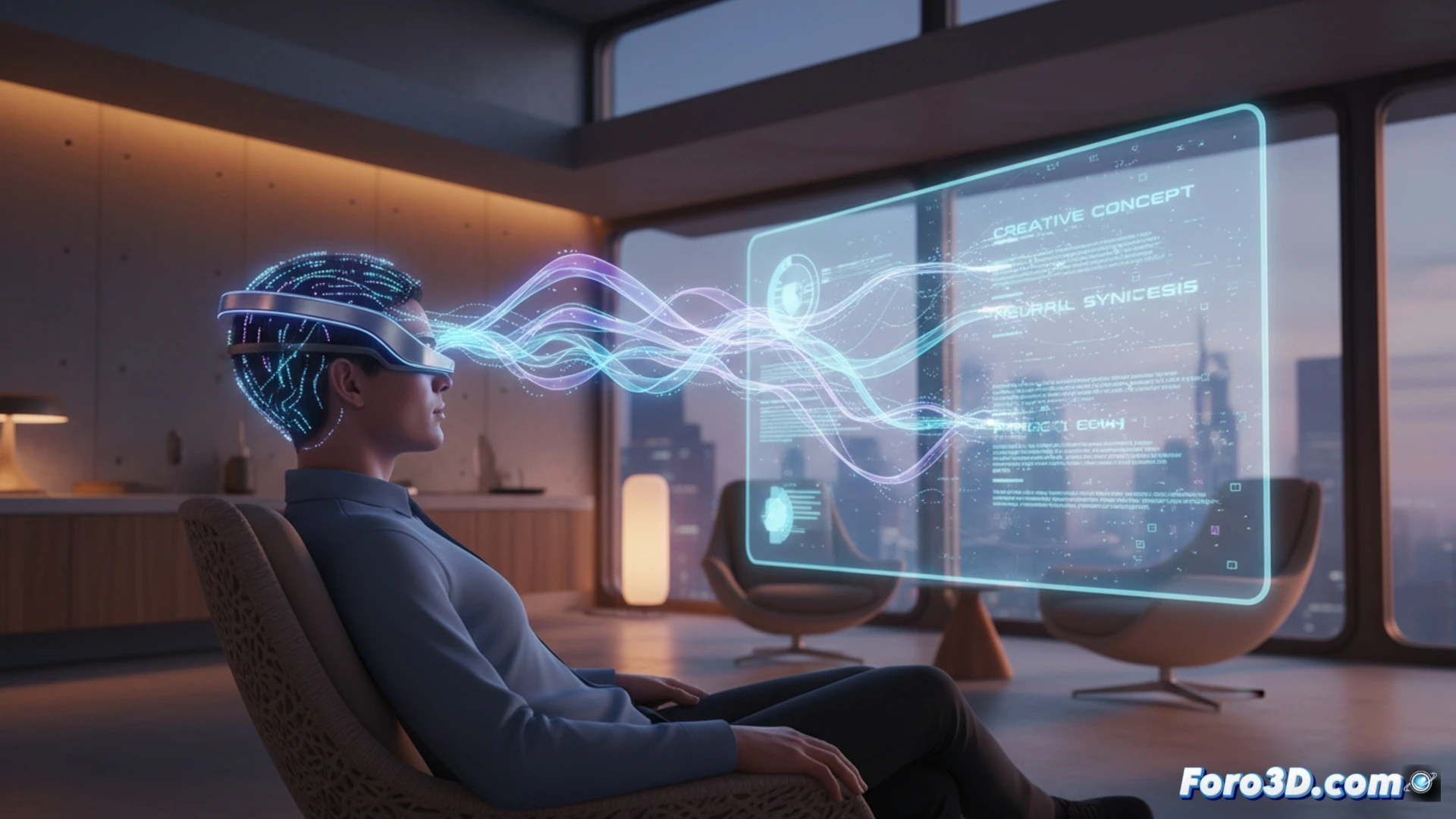
Your Brain Now with Subtitles: The Non-Invasive Mental Decoder
Imagine being able to see your thoughts written on a screen? 🧠 Science is advancing towards that, but without the futuristic implants suggested by fiction. We present a brain decoder system that operates externally, acting as a real-time translator of your neural activity. It's like adding subtitles to your internal dialogue, fully preserving your physical integrity.
The Mechanism Behind Mind Reading
The key lies in a series of external sensors placed on the scalp. These devices capture the electrical signals your brain generates continuously. Subsequently, a specialized artificial intelligence algorithm analyzes these patterns. Its function is to learn to relate specific sequences of brain waves to concepts, words, or even intentions. Basically, it identifies your unique neural fingerprint.
Key Components of the Process:- EEG Sensors: Collect superficial electrical activity from the brain without the need for surgery.
- AI Algorithm: Processes raw data, searching for and learning recognizable patterns associated with language.
- Output Interface: Transforms decoded patterns into text, commands, or actions on an external device.
The magic is not in reading abstract thoughts, but in deciphering neural activation patterns associated with a vocabulary previously learned by the system.
Present and Future Applications
This technology is already beyond the laboratory. Its most immediate and valuable application is in the field of assisted communication, allowing people with severe motor or speech limitations to express themselves. However, the horizon is much broader. It could redefine how we interact with the technology around us.
Possible Uses Being Explored:- Environment Control: Manage lighting, temperature, or appliances with a simple thought.
- Digital Interaction: Write messages, browse the internet, or play video games using only concentration.
- Medical Rehabilitation: Offer new avenues for therapy and evaluation for neurological disorders.
Privacy and the Future of Neurotechnology
It may sound like science fiction, but it is based on solid scientific principles that seek to interpret the code of our mind. It is essential to highlight that, being an external system, it poses fewer ethical and medical barriers than implants. For now, the technology is limited and requires prior training with the user, so your most private ideas remain safe. The future of this brain-computer interface will depend on both refining accuracy and establishing clear frameworks to protect mental privacy. 🔒