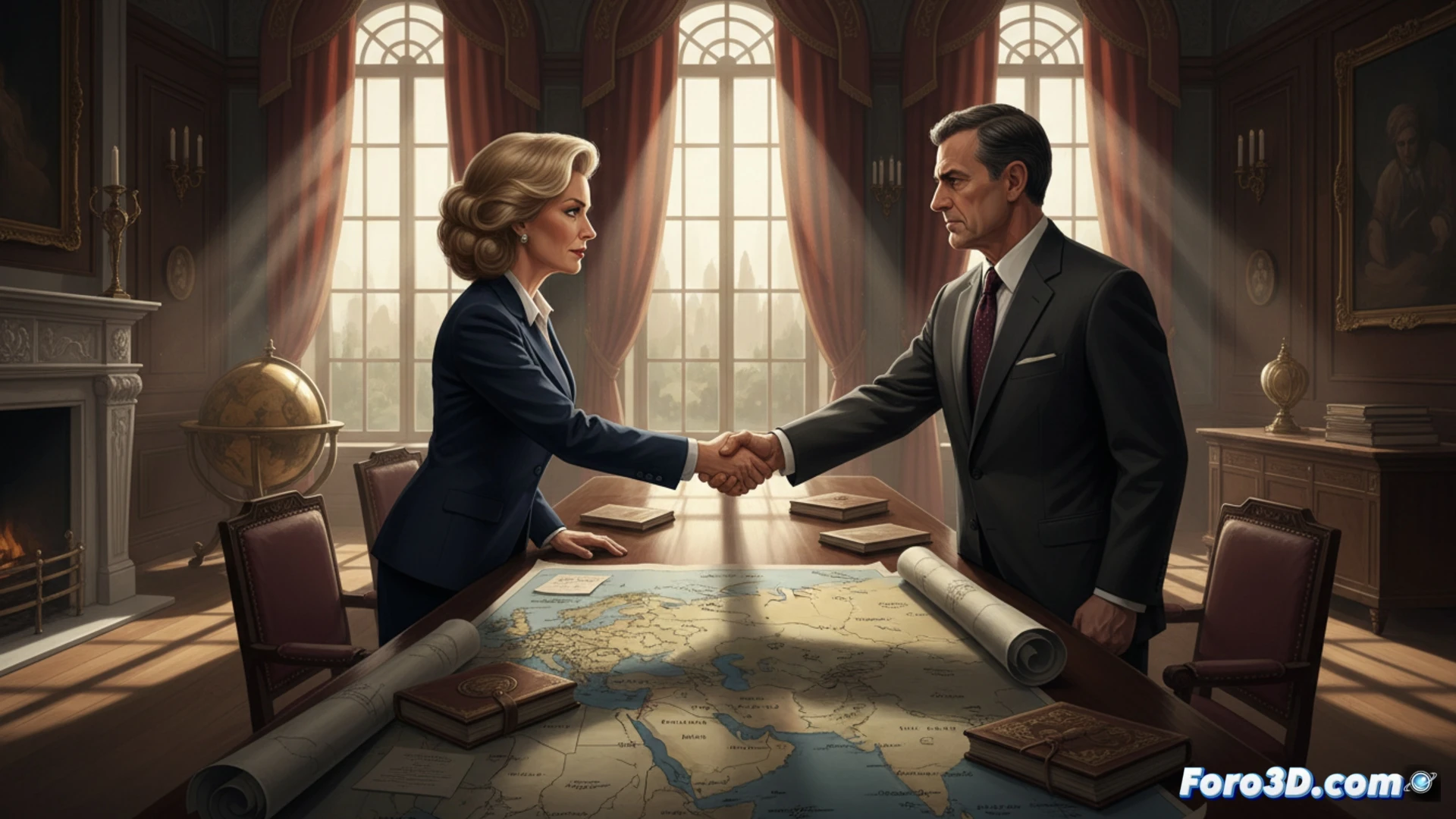
When Two World Leaders Meet: The Delicate Balance of Power
Think of a tense situation in the schoolyard, but taken to the international sphere. Two key figures, Israeli Prime Minister Benjamin Netanyahu and former U.S. President Donald Trump, hold a meeting to analyze how Washington manages its relationship with Tehran. This dialogue has the potential to reconfigure the dynamics of an entire region. 🎭
A Geopolitical Triangle Under Pressure
The relationship between these three powers is intricate. On one hand, the United States and Israel maintain a historic and solid alliance. On the other, Washington and the Islamic Republic of Iran have been in deep confrontation for decades. The possibility of Trump seeking to approach Iran generates great concern in Netanyahu, as Israel perceives this country as its main threat. It is a situation where loyalties and security interests clash directly.
Key elements of this dynamic:- Historic allies: The bond between the U.S. and Israel is strategic and military, almost like a fraternal relationship in foreign policy.
- Deep-rooted enmity: The conflict between the U.S. and Iran encompasses nuclear, ideological, and regional influence aspects.
- Threat perception: For the Israeli government, an Iran with greater power or favorable agreements with Washington poses an existential risk.
High-level diplomacy is the art of communicating one thing and having another understood, all while moving pieces on a global chessboard.
What is Really Negotiated Behind the Scenes
These transcendental conversations usually operate on two levels. While the public agenda focuses on issues like nuclear agreements or economic sanctions, the undeclared agenda revolves around projecting influence, ensuring national security, and obtaining strategic advantages. Every statement, every gesture, and every silence are calculated elements in a game where the consequences affect entire populations.
Aspects of diplomacy behind the curtain:- Influence and security: The ultimate goal is not just to sign papers, but to consolidate or reduce each actor's sphere of power.
- Non-verbal communication: A handshake, a glance, or body posture convey messages that sometimes weigh more than words.
- Meticulous preparation: Behind a brief meeting are months of analysis, position-setting, and scenario prediction.
The Weight of a Simple Gesture
The next time you see two heads of state greeting each other in front of the cameras, remember that that moment is the tip of the iceberg. Behind it is a complex tangle of national interests, risk assessments, and the future of millions of people. A bilateral meeting can, in essence, be more revealing and have more impact than long speeches or official statements. True power is often exercised in private rooms, away from the spotlight. 🤝