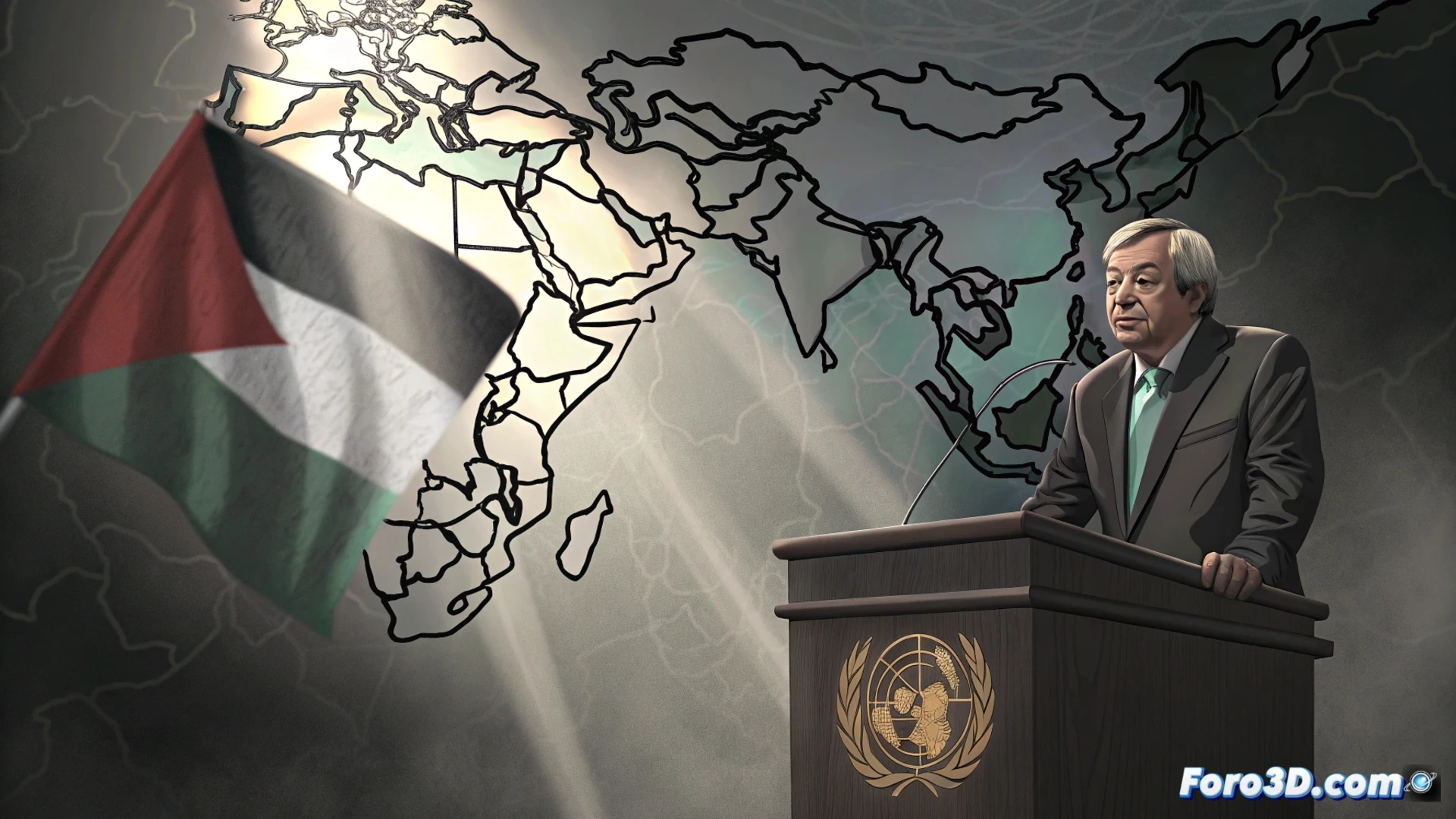
When the UN Expresses Deep Concern
What does it really imply when the highest representative of the United Nations says that something concerns him "deeply"? 🤔 It's not an expression used lightly. Imagine a very long-standing neighborhood dispute, where one of the parties decides to unilaterally change the rules of the common space. That's the kind of scenario that sets off alarms in the international organization.
The Action That Generated the Reaction
This week, Secretary-General António Guterres responded to a measure taken by Israel regarding the West Bank, a territory it has administered for decades. Guterres described the decision in strong terms: he called it coercive and stated that it erodes prospects for achieving a lasting agreement. Essentially, he perceives this step as a setback on the complex path for two states to coexist in peace. 🕊ï¸?/p> The Weight of the Secretary-General's Words:
- Using the term "deeply" signals a maximum level of alarm within formal diplomatic language.
- Describing an action as "coercive" implies that it pressures and limits the options of the other party.
- Saying that it "erodes" the possibilities of peace indicates progressive and concerning damage to an already fragile process.
Diplomacy often plays out in semantic details. When the UN Secretary-General raises the tone, he is mobilizing the full moral weight of his position to try to influence.
The Real Role of the Secretary-General
It is crucial to understand that the UN Secretary-General does not govern the world nor can he order countries what to do. His main function is to act as the global mediator and chief diplomat. His most powerful tool is what is known as "corridor diplomacy": exerting pressure in private meetings, making public statements to take a position, and building bridges between opposing stances. 🏛ï¸?/p> How the Secretary-General Exerts Influence:
- Silent Diplomacy: Negotiating and advising behind closed doors with the leaders involved.
- Public Statements: Using his global platform to define what the international community considers acceptable or unacceptable.
- Early Warning: Pointing out actions that, although they may seem technical or administrative, can further destabilize a conflict.
An Administrative Gesture on a Global Chessboard
In prolonged and convoluted conflicts, a decision that appears to be merely technical or internal management can equate to moving a key piece on a geopolitical chessboard. Guterres' reaction serves as a powerful reminder that, in this complex game, the international community watches and evaluates every move. The Secretary-General's call acts as that sensible voice urging reflection on the consequences of actions, always seeking to avoid deepening divisions. 👁ï¸?/p>