When the Earth Moves: How to Manage an Emergency
What to do when a landslide puts a community at risk? 🏘️ In the Sicilian town of Niscemi, this hypothetical scenario became reality, triggering a structured response that combines technical expertise and institutional coordination to safeguard people.
Diagnosing the Terrain: The First Critical Phase
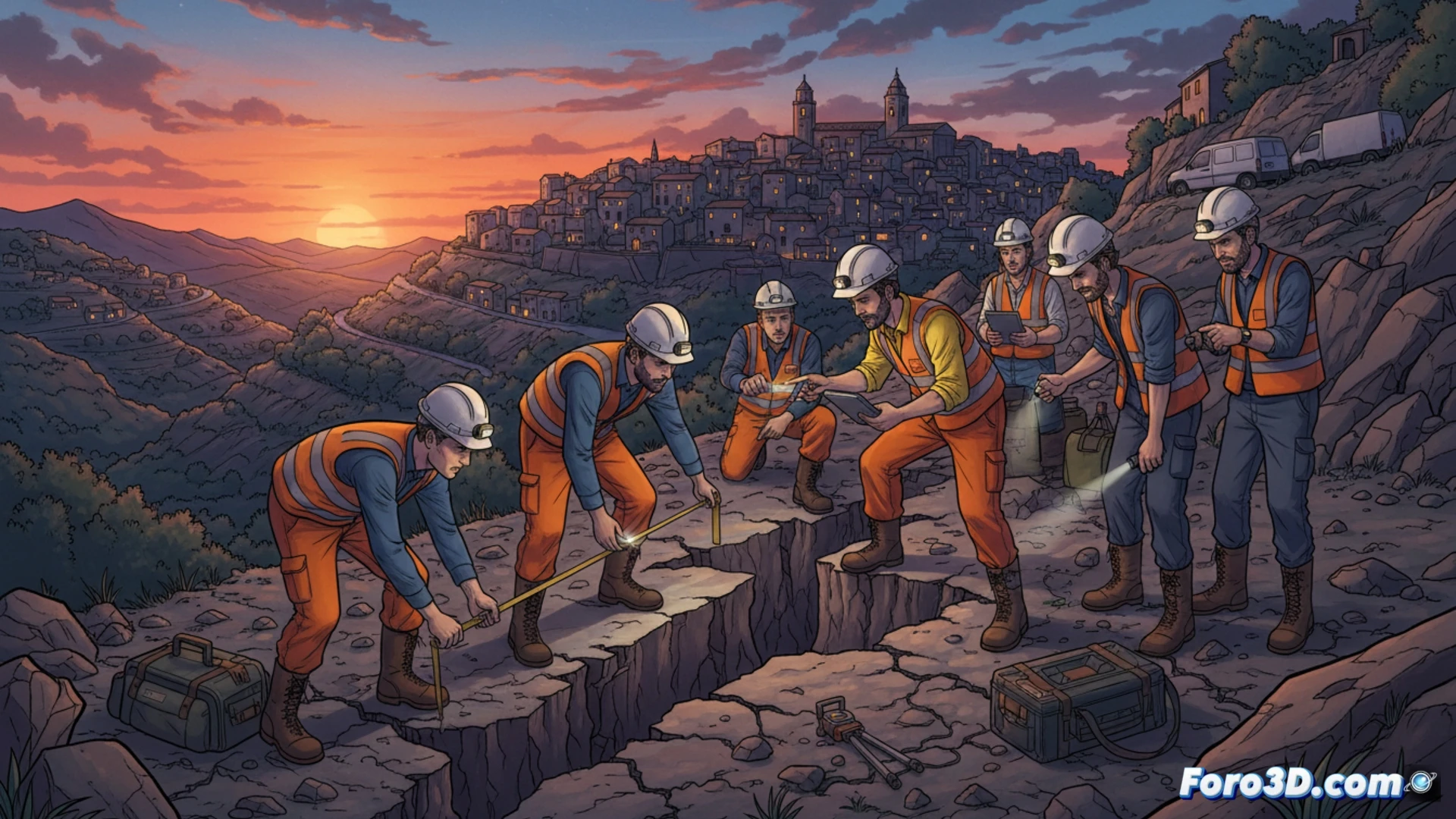
To act precisely, you first need to understand the magnitude of the problem. Minister Nello Musumeci led a site inspection, a direct assessment on location. In this stage, specialists examine fissures, evaluate soil inclination, and collect samples, acting like doctors auscultating a patient. This is the moment to obtain primary data, to feel the earth and measure the real risk. 👷♂️
Key actions in the inspection:- Analyze cracks and their evolution to predict movements.
- Evaluate the slope and composition of the unstable soil.
- Precisely document the extent of the affected area.
The most advanced technology serves an ancestral purpose: keeping the community safe.
From Analysis to Execution: The Operational Meeting
With the collected information, the operational meeting is activated. This emergency gathering brings together geologists, civil engineers, and civil protection officials. Their mission is to transform raw data into a viable intervention plan. It's about deciding, based on evidence, whether a targeted solution or a larger-scale work is required to secure the area. 🤝
Elements defined in the meeting:- Prioritize actions to mitigate immediate danger.
- Assign available human and material resources.
- Establish a realistic timeline to stabilize the terrain.
The Synthesis Between Nature and Logistics
This process demonstrates how a complex natural phenomenon translates into a challenge of engineering, logistics, and communication. Observing this mechanism is fascinating: what starts as a geological study ends up being an exercise in organizing, coordinating, and executing under pressure. It's a practical lesson that true progress sometimes lies in preventing a catastrophe, using knowledge and coordinated action. 🛡️