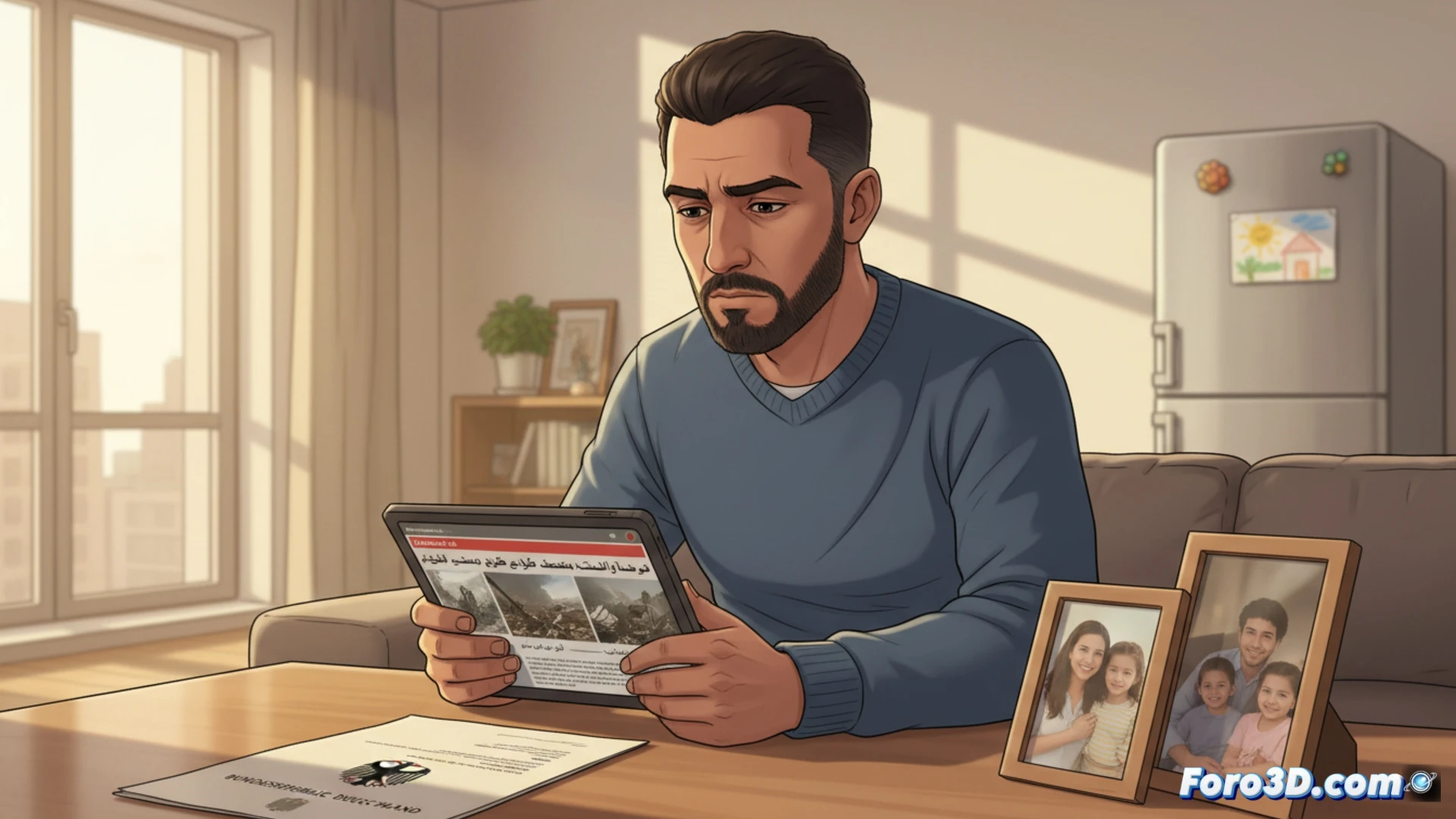
When a Country Tells You to Return to a Home at War
Imagine escaping an armed conflict and finding refuge in a foreign nation. Years later, the authorities of that country inform you that, according to their assessments, your place of origin no longer poses a danger. This is the complex scenario currently faced by thousands of Syrian citizens residing in Germany. The German government is changing its approach to asylum by classifying certain areas of Syria as "safe" and promoting the return of a portion of the refugees. 🤔
The Difficult Balance Between Regulations and Human Lives
This determination is not easy for any of the parties involved. On one hand, Germany needs to manage its reception system, which faces considerable pressure. On the other, there are personal trajectories: family units that have established their lives, children educated in German, and adults who have achieved labor integration. The central question is: how is it defined and measured that a territory is "safe"? It's like being assured that your former violent neighborhood is now calm, while you continue to receive alarming news from there.
Key Details on Legal Statuses:- Not all Syrian refugees in Germany have the same rights. There are different levels of protection defined by law.
- Some have full asylum, a more established and permanent right.
- Others have subsidiary protection, which is a temporary permit subject to periodic reviews.
A change in an official report on the situation in a country can alter the fate of thousands of people overnight.
The Group Most Vulnerable to the New Policies
Those with subsidiary protection status are the most exposed to these reassessments. It is a meticulous legal process, comparable to a constant audit of the conditions in the country of origin. The authorities examine reports, testimonies, and data to decide if the risk to people's integrity persists. This bureaucratic mechanism has a direct and profound impact on the daily lives of thousands of families. 📄
Consequences of Zone Reclassification:- People with temporary protection may lose their residence permit if their region is declared safe.
- A process begins that may lead to the obligation to leave German territory.
- Conflicts arise between the adaptation achieved in Germany and the order to return to an uncertain place of origin.
A Reminder of the Human Face of Policies
This situation underscores that behind the major migration guidelines, there are individual decisions of enormous difficulty. Often, administrative logic and personal circumstances follow divergent paths. We are faced with a scenario where, unfortunately, there are no simple solutions, only questions of great complexity. It is a crossroads that reflects the permanent tension between state sovereignty and the fundamental rights of people. 🌍