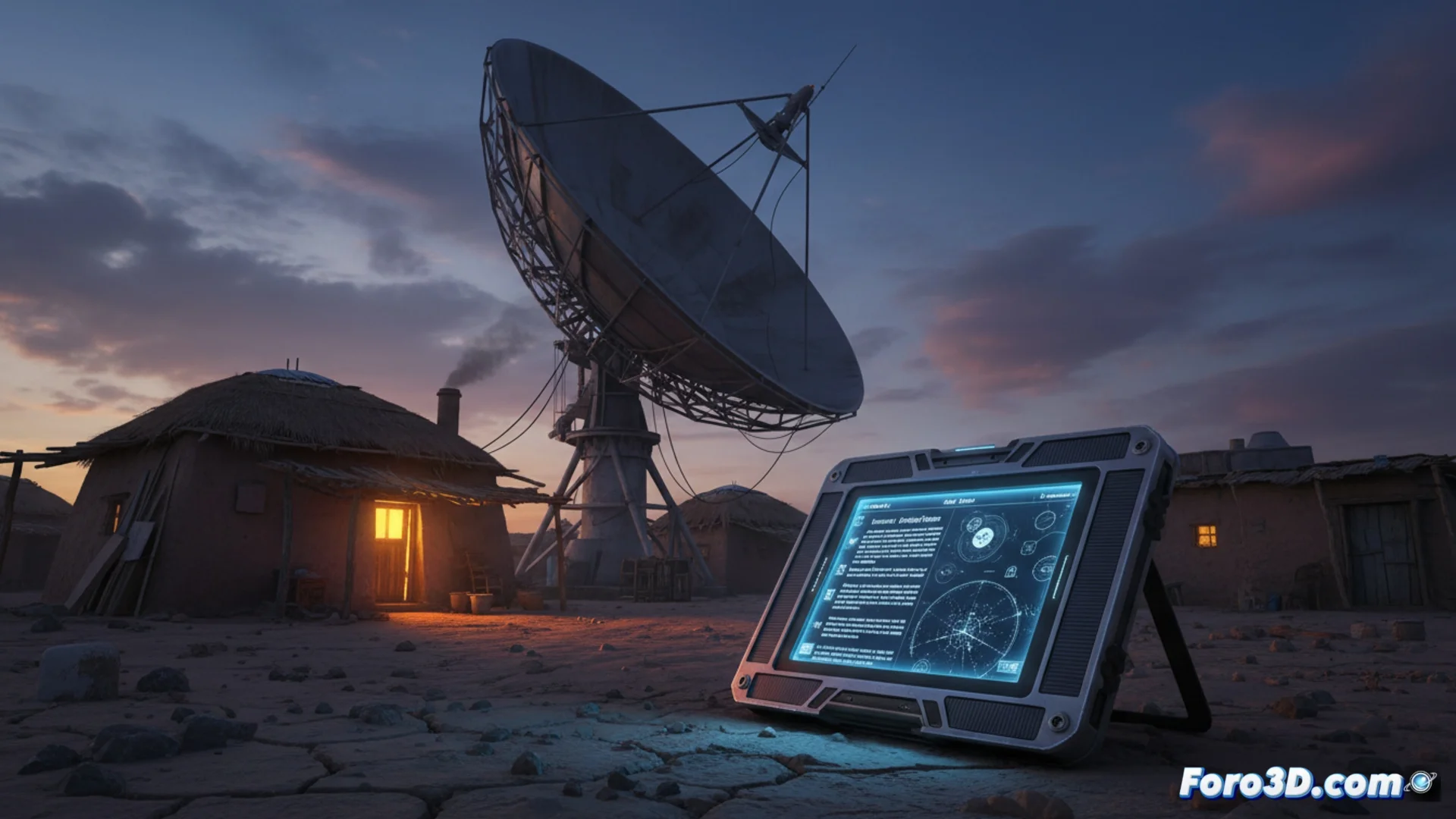
What Would Gutenberg Launch Today? A Universal Digital Press
Imagine Johannes Gutenberg in the 21st century. He would find a landscape where access to knowledge, which he championed, is threatened by deepfakes and fake data. His natural reaction would not be to look back, but to innovate again. He would likely drive a global project for a Digital Press for the Masses, a tool to bring reliable information to every corner of the planet. 🌍
Hardware Designed to Survive and Empower
The core of this vision would be an e-reader built for hostile environments. It would feature an e-ink screen readable in sunlight, a waterproof and shockproof case, and be powered by an integrated solar panel. This would eliminate dependence on power outlets, making the device completely autonomous. Its interface would be extremely simple, so anyone could use it without a complicated manual.
Key device features:- E-ink screen: No glare and very low energy consumption, ideal for outdoor reading.
- Rugged construction: Resistant to water, dust, and occasional drops, designed to last years.
- Solar power: A built-in panel that charges the battery, freeing the user from searching for electricity.
- Minimalist interface: Physical buttons and simple menus to navigate the digital library.
"The movable type press fought ignorance; its digital successor would fight manipulation."
A Dedicated Network for Reliable Content
The true revolution would not be just in the device, but in how it receives information. Instead of connecting to the conventional internet, these readers would use a private satellite network. This network would transmit exclusively material endorsed by an alliance of institutions such as libraries, universities, and scientific academies. The catalog would include everything from encyclopedias and textbooks to universal literature and rigorously validated news.
Content available on the network:- Educational texts: Manuals, courses, and encyclopedias to learn any discipline.
- Fundamental literature: Classic and contemporary works that are part of the cultural heritage.
- Practical information: Guides on agriculture, public health, and techniques to improve daily life.
- Verified news: Reports that pass through a strict filter to ensure their veracity.
A Shield Against Digital Disinformation
To protect the integrity of the system, a text-only mode could be implemented that would block any multimedia files. This feature would act as a final filter, ensuring that neither manipulated images nor videos can sneak into the satellite network. The goal is clear: create an oasis of reliable knowledge in a digital landscape often poisoned. This would be Gutenberg's modern legacy: using technology not only to spread information, but to protect its truth. ⚔️📚