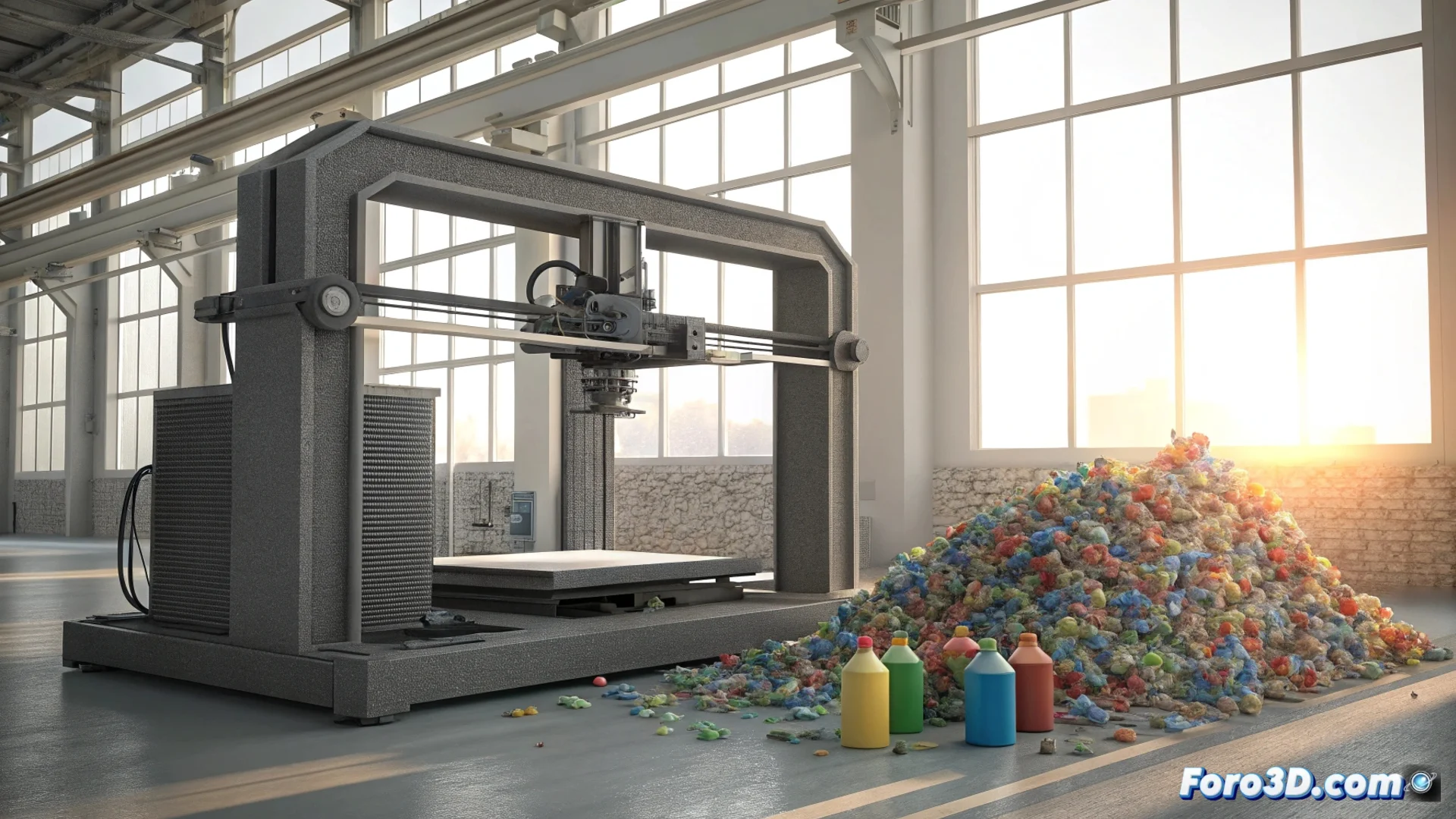
What if your plastic bottle turned into a beam?
Imagine a future where discarded packaging doesn't end up in landfills, but instead becomes the primary structures of new buildings. This scenario is not science fiction; it's the real work being done by MIT scientists. ♻️
A giant printer that builds with waste
The team uses large-scale 3D printing technology, but for a monumental purpose. Instead of creating decorative objects, they manufacture functional architectural components. They use a huge machine that processes shredded recycled plastic as building material. With it, they produce modular beams and trusses that rival wood in strength and are also lighter. 🏗️
Key advantages of this method:- Transform waste: Converts single-use plastic into long-lasting resources.
- Reduce environmental impact: Decreases the need to cut down trees and manufacture cement, processes with a high carbon footprint.
- Modular and lightweight: The produced elements are easy to transport and assemble on site.
Using existing plastic, giving it a very long second useful life, and reducing tree felling and CO2 emissions from the construction process.
A solution to a global-scale problem
The context makes this innovation crucial. It is estimated that around one billion new homes are needed worldwide. Conventional construction, based on wood and concrete, generates an immense ecological cost. This is where this idea stands out, proposing a radical change in the material cycle. 🌍
Potential impact of the process:- Address the housing crisis: Offers an alternative and potentially faster construction method.
- Manage plastic pollution: Diverts tons of waste from landfills and the environment.
- Create circular architecture: Closes the material cycle, from packaging to building.
Rewriting the fate of plastic
This research poses a complete narrative twist for polymers. From being a symbol of pollution, recycled plastic could become a fundamental material for building shelters and communities. It demonstrates that the next frontier of sustainable architecture could literally be in our recycling bin. 🏠