What if your graphics card could earn money while you sleep?
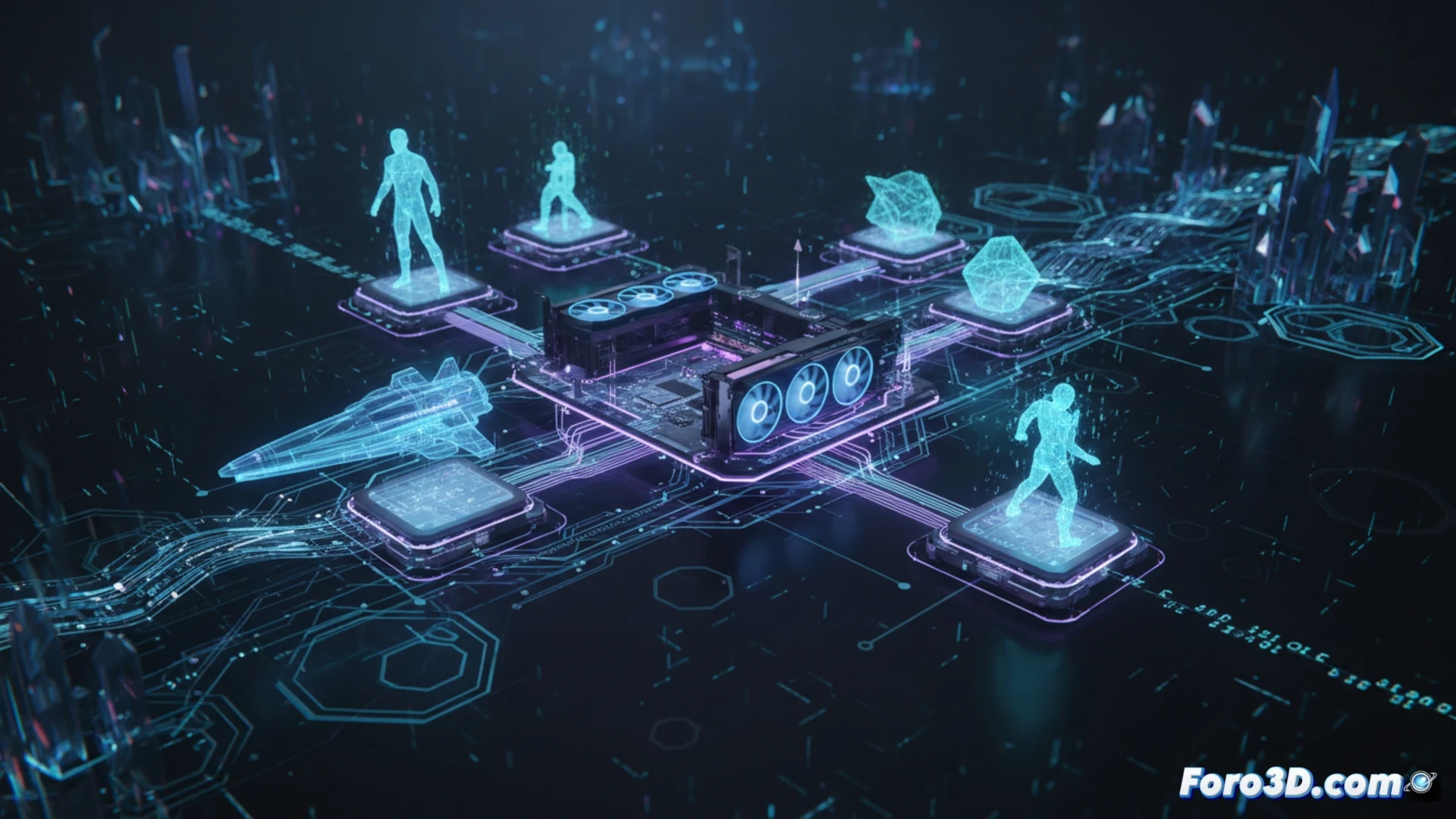
Think about a complex render for a video game or visual effects that could paralyze your machine for days. Now imagine accessing the combined power of thousands of GPUs in minutes, as if renting a global graphical supercomputer. That's the principle of Render Network, a decentralized marketplace for visual computing power. 🚀
A circular ecosystem for idle resources
The network works by connecting two groups: those who need to process 3D projects or train artificial intelligence models, and those who own powerful graphics hardware that they don't use to its full potential. It creates an economy where payment is made with the RNDR token for using that power, and GPU owners receive RNDR in return. This leverages resources that would otherwise be wasted. The recent inclusion of RNDR in Notbank simplifies entry into this system.
Fundamental pillars of the network:- Decentralized marketplace: Eliminates intermediaries, directly connecting creators with power providers.
- RNDR utility token: It is the native currency for paying and receiving compensation for computing.
- Leveraging idle resources: Turns your GPU's idle time into an asset that generates value.
The future of rendering is not just in the cloud, but in a worldwide distributed network of graphics farms, where any PC can contribute.
Roots in the professional industry
This project has a solid foundation in the real world of 3D. It is driven by Jules Urbach, founder of OTOY, a rendering company with a great reputation in Hollywood. The technology has already been used to produce visual effects in movies and series, demonstrating its practical use case beyond theory. It's not a new idea; it has been operating and scaling for years. 💡
Key data on its origin:- Experienced founder: Jules Urbach, from OTOY, gives it technical and industry credibility.
- Use in real production: It is already used in professional audiovisual projects, validating its technology.
- Focus on utility: Its main value lies in solving a real processing problem, not speculation.
The future landscape of distributed computing
This model points toward a paradigm where graphics and data processing power is distributed globally. Your own computer could become a contributing node in a vast network, helping to render the next big movie while earning tokens. It's a mindset shift: the graphics card stops being just a cost to become a resource that can generate income and pay for itself. The potential to democratize access to supercomputing is enormous.