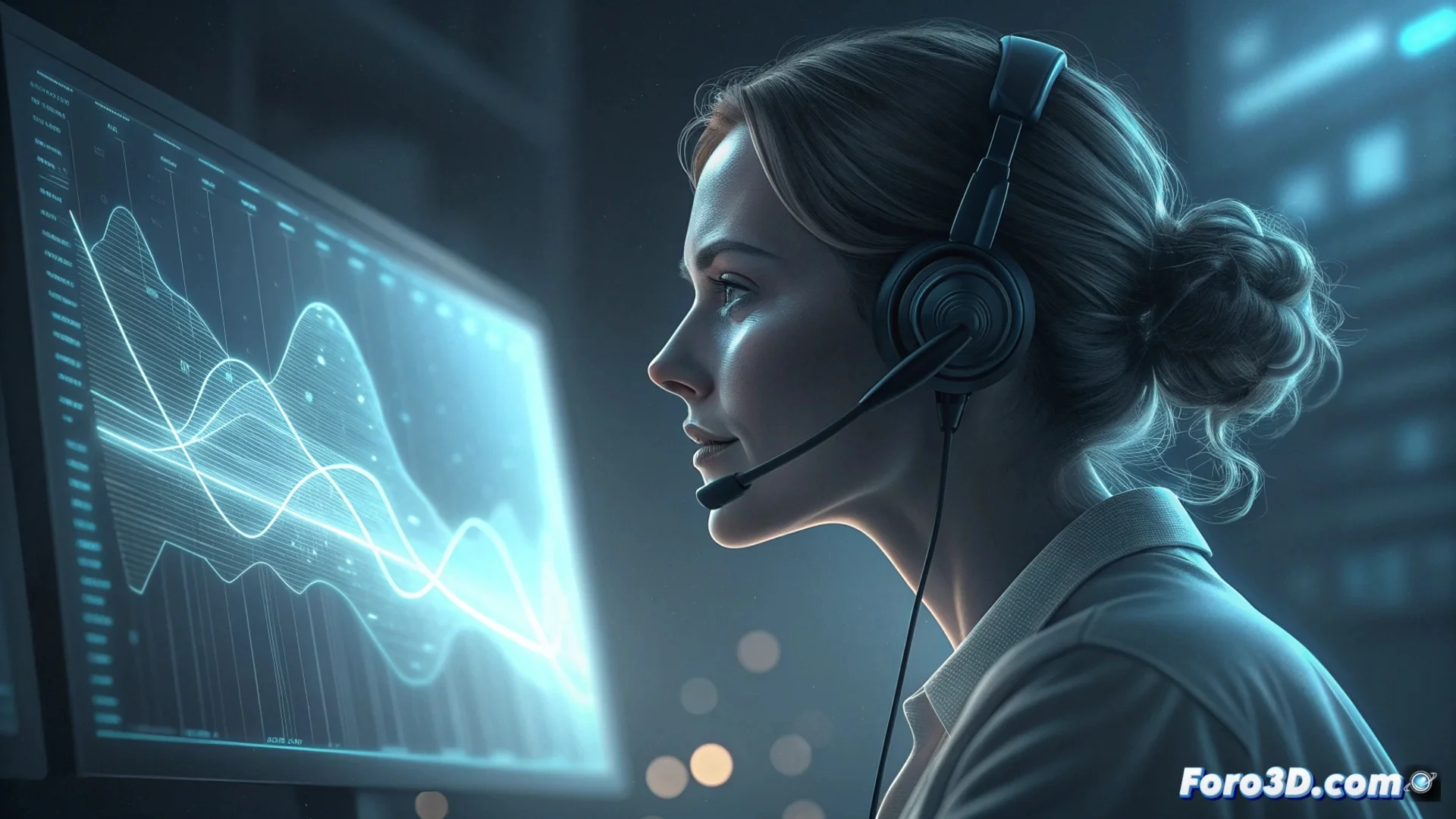
What if your anger sounded like a whisper? The AI that modulates angry voices
Imagine contacting technical support, frustrated by a problem. On the other side, an operator listens to your complaint, but your voice arrives transformed, calmer and lower. This is what SoftBank implemented in Japan: an artificial intelligence service designed for call centers that modulates the voices of upset customers. 🤖
The mechanism of the kindness filter
The AI analyzes the audio in real time. It identifies elevated, rough tones or those perceived as aggressive. Then, it applies a process that modifies those frequencies, reducing the overall pitch and smoothing the rough edges of the sound. It works like an automatic equalizer that turns a shout into an intense conversation, but more manageable. The goal is to reduce the pressure on the agent and maintain calm during the dialogue.
Key features of the system:- Process audio in real time without perceptible delays.
- Detect and isolate vocal frequencies associated with anger or frustration.
- Modulate the sound to generate a smoother output, without distorting the words spoken.
It's a fascinating approach: instead of just training people to control their anger, we also train machines to handle the anger they receive.
What the technology does not do (and a curious detail)
This system does not alter the verbal content. The customer's words remain intact; only the accompanying emotional tone is transformed. An interesting aspect is that the agent has control: they can activate or deactivate the filter as needed. The premise is that, feeling less attacked, the operator can provide more effective assistance. 🎚️
Points to consider:- The tool focuses on the sound parameter, not on semantic meaning.
- It seeks to protect the well-being of the worker in a high-demand environment.
- It raises a future where AI mediates human interactions to soften conflicts.
Reflections on a modulated future
It seems like science fiction, but it's already real: a future where machines not only understand us, but help us understand each other better, smoothing the rough edges of communication. However, an inevitable question arises: how far should this modulation go? Could it reach a point where AI decides we all must sound uniformly calm, or even like fictional characters? This SoftBank development opens the door to debating the ethical and practical limits of using AI to manage human emotions in real time. 🤔