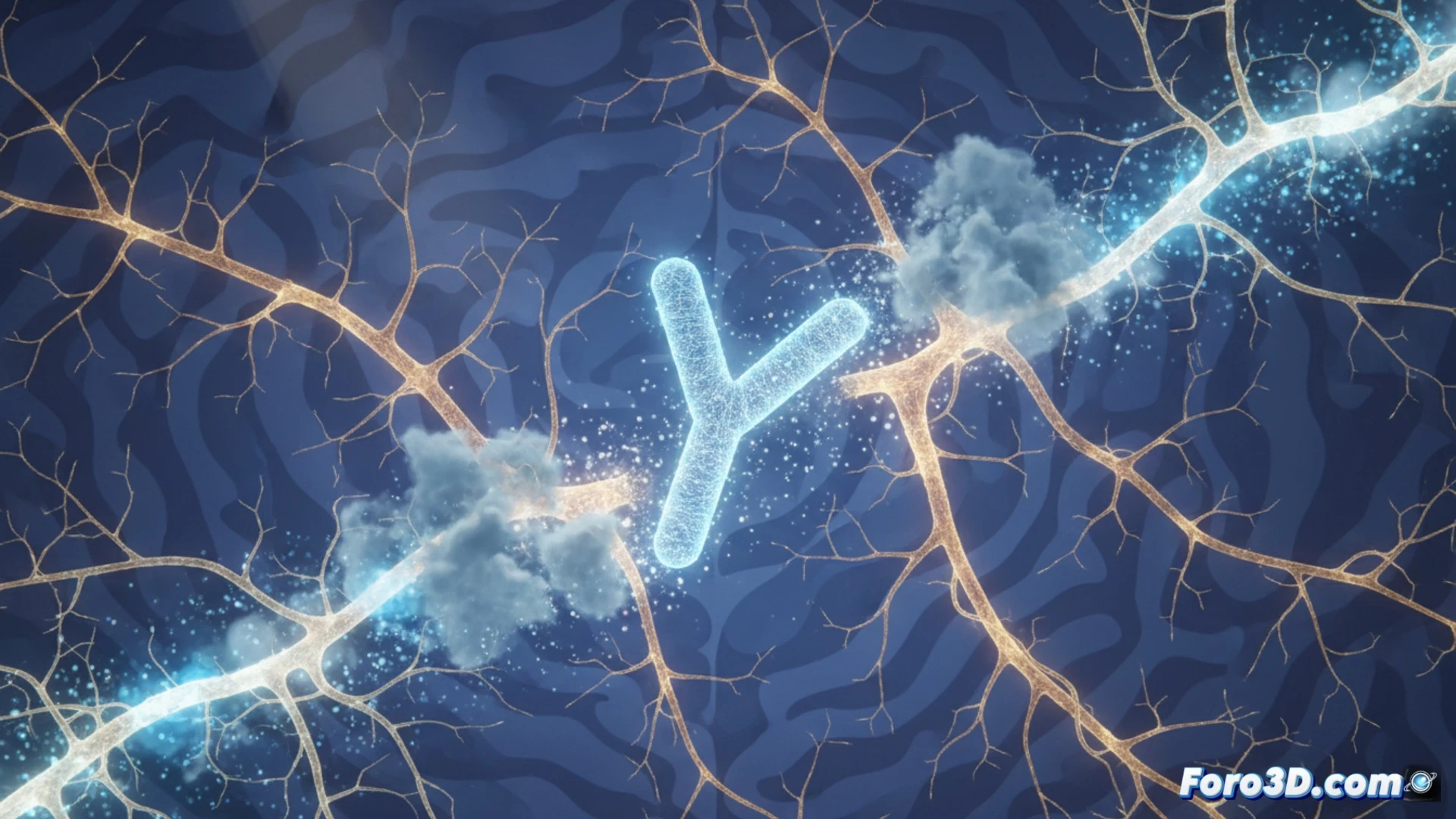
What if we could slow down Alzheimer's from the beginning?
Think of the brain as a complex metropolis 🏙️. Neurons form its communication avenues. In Alzheimer's disease, beta-amyloid proteins aggregate and block these pathways, like thick garbage stopping all traffic. What if there was a special cleaning service for this problem? That's where lecanemab comes in.
A biological agent with a clear mission 🧠
Lecanemab is not a traditional chemical compound, but a monoclonal antibody. It is a protein designed in the laboratory for a single purpose: to locate, bind to, and facilitate the body's elimination of beta-amyloid clumps. It acts as a precision tool that helps the brain clear the blockages affecting memory and thinking ability.
Key features of this approach:- Specific: It targets almost exclusively the harmful amyloid plaques.
- Targeted: Its molecular design allows it to act with high precision.
- Potential: It offers a novel mechanism of action against the biological root of the disease.
It's like gaining precious time in a race against deterioration.
A tangible, though moderate, result ⏳
This treatment is specifically indicated for people in the early stages of Alzheimer's. It does not repair already occurred neuronal damage, but clinical trials showed it can delay cognitive decline by around 27% over a period of one and a half years. It is the first drug of its class to clearly demonstrate that it can alter the course of the disease, marking a milestone.
Crucial aspects of the advance:- Modest but historic: The effect is not revolutionary, but it represents a paradigm shift.
- For early stages: Its utility focuses on the beginning of the pathological process.
- Proof of concept: It validates that targeting the beta-amyloid protein is a viable therapeutic pathway.
A beacon in research 🧭
Lecanemab represents a realistic light of hope. It is not a cure, but it confirms that science is on the right path to understand and combat Alzheimer's. Every discovery, no matter how small it may seem, strengthens the foundations for more effective future treatments. Research advances step by step, and this is a firm and promising one.