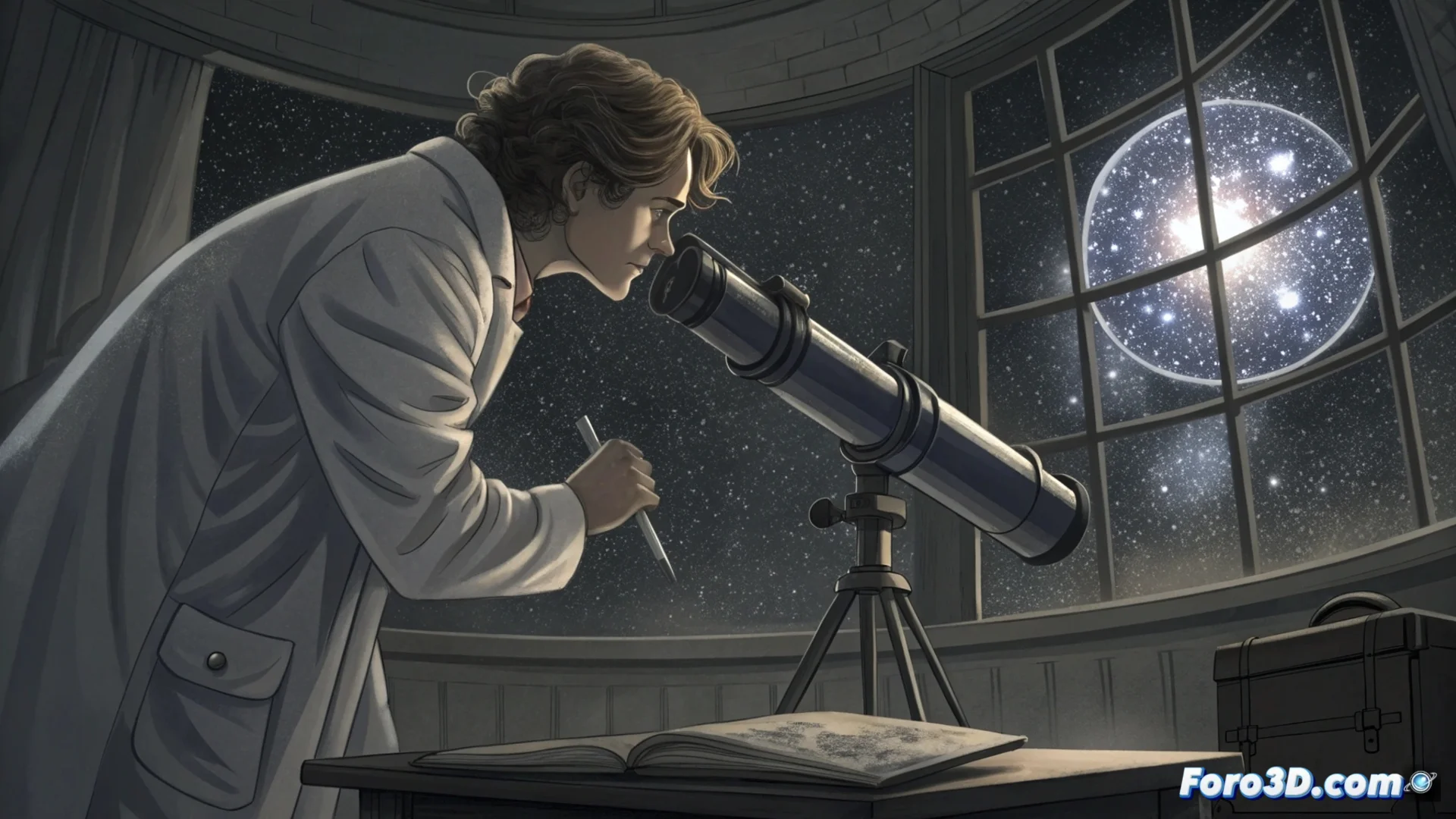
What if the United Kingdom runs out of stars?
Imagine wanting to decipher the secrets of the cosmos and having the tools to do so taken away from you. 🔭 This is the reality facing numerous researchers in the United Kingdom, where drastic reductions in funding for fundamental science jeopardize essential lines of study.
The cost of not investing in the unknown
Budget decreases, which can reach a third in areas like particle physics and astronomy, have a paralyzing effect. Research teams at top-tier facilities, such as the Large Hadron Collider, are forced to slow down or halt their work. This is not an abstract problem: research that seems like pure theory often generates the technologies we use daily afterward, from the world wide web to medical scanners. 💡
Immediate consequences of the cuts:- Slowing down or stopping experiments in large international scientific infrastructures.
- Losing the opportunity to train the next generation of specialists in these fields.
- Risking that potentially revolutionary discoveries never happen.
By prioritizing science that yields quick economic returns, they may be strangling the source of tomorrow's innovation.
The paradox of basic research
Exploring fundamental science is akin to sowing without knowing exactly what will grow. When investigating the smallest components of matter or the most distant galaxies, the most valuable findings are often those that were not initially sought. These budget cuts not only endanger those future findings but also incentivize promising young minds to seek opportunities in other nations. 🧠✈️
What is lost by not funding basic science:- The possibility of serendipitous findings that change paradigms.
- The foundation of knowledge that later enables practical applications.
- A country's ability to retain and attract brilliant minds.
Looking beyond the immediate horizon
There is an evident contradiction: by trying to focus only on what brings short-term benefits, the capacity to generate transformative knowledge for the future may be undermined. Often, to come up with practical solutions and applied technologies, it is first necessary to ask questions that, apparently, have no direct utility. True technological progress is nourished by the freedom to research without an immediate goal. 🌱