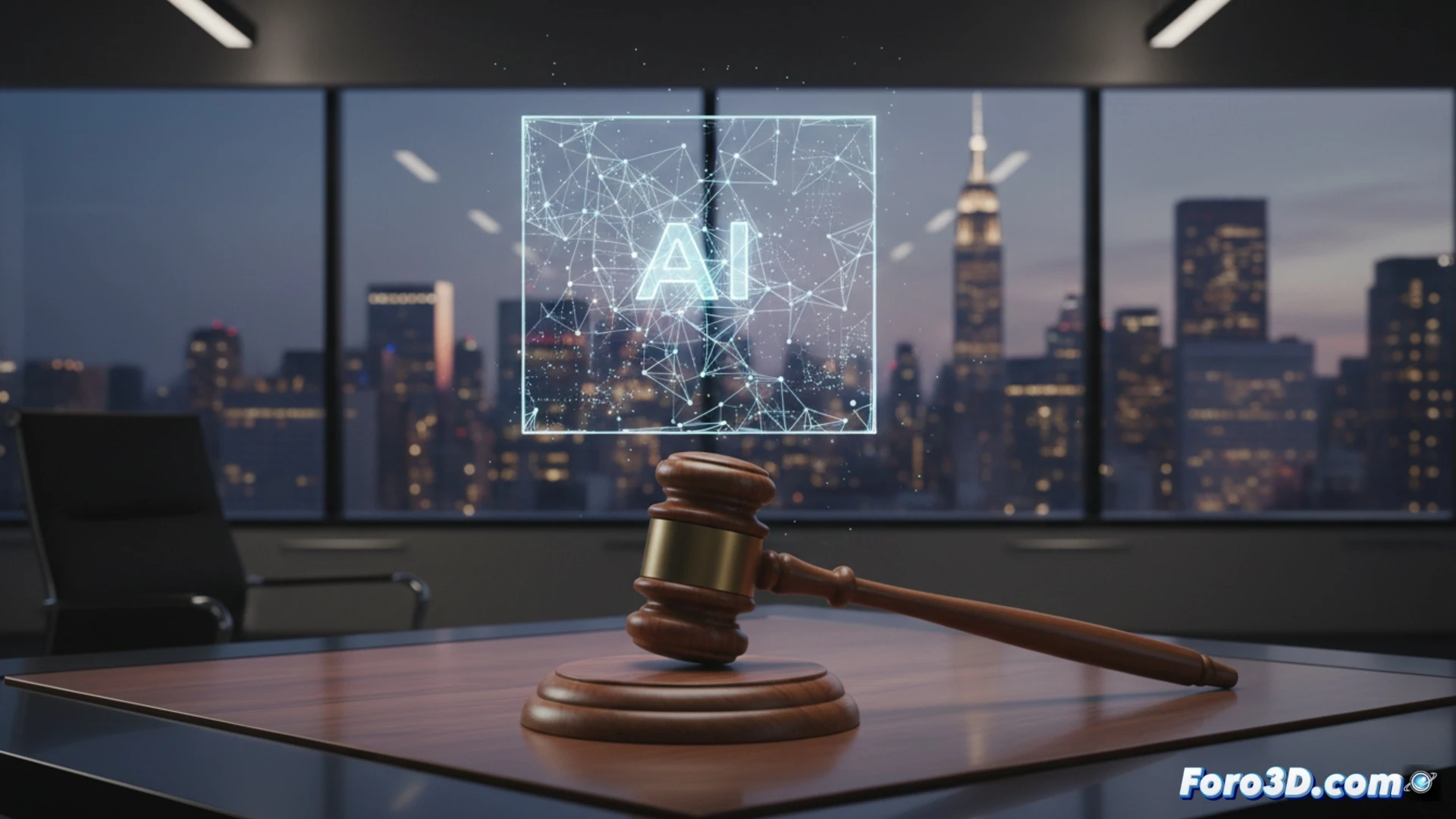
What if New York Sets the Rules for Artificial Intelligence?
Think of artificial intelligence as a new tenant in the building. It's capable and promising, but it often operates without consulting and its boundaries are blurry. 🏙️ This is the dilemma that New York is addressing, where two legislative initiatives are being debated to define a clear framework of action for this technology.
The goal: A code of conduct for algorithms
The goal is not to ban AI, but to implement basic operating principles. One of the proposed laws would force companies to disclose when they use automated systems to make decisions in sensitive areas, such as granting credit or selecting personnel. The other initiative seeks to independently review these systems to detect and correct biases. Essentially, it aims to ensure that machines do not harm people based on their origin, gender, or place of residence. 🤖⚖️
The pillars of the legislative proposal:- Mandate transparency: Companies must report when an algorithm makes critical decisions affecting citizens.
- Audit to avoid biases: Implement external evaluations to ensure systems do not discriminate.
- Create accountability: Establish who is responsible if the technology causes harm or an unfair decision.
The future of AI is not written solely with code, but also with laws. We need a driver's license for this powerful technology.
The origin: A response to citizen concern
These rules do not come out of nowhere. They are a direct reaction to growing concern about how personal data is used to train AI models. Social awareness has grown, recognizing the urgency of providing a legal framework for tools with such profound impact. New York has the opportunity to become the first state in the United States to approve comprehensive legislation of this type, possibly setting a national trend. 🇺🇸
Context and key motivations:- Public pressure for the ethical use of data in artificial intelligence development.
- Need to anticipate risks in sectors like finance, employment, and justice.
- Position New York as a pioneer in governing emerging technology.
A horizon with clear rules
It seems evident that the path of artificial intelligence will be increasingly tied to law and regulation. Advancing with defined rules allows all actors, from developers to end users, to know what to expect. Thus, when our algorithmic neighbor acts, it will do so within socially agreed limits, seeking to benefit without harming. 🔍📜