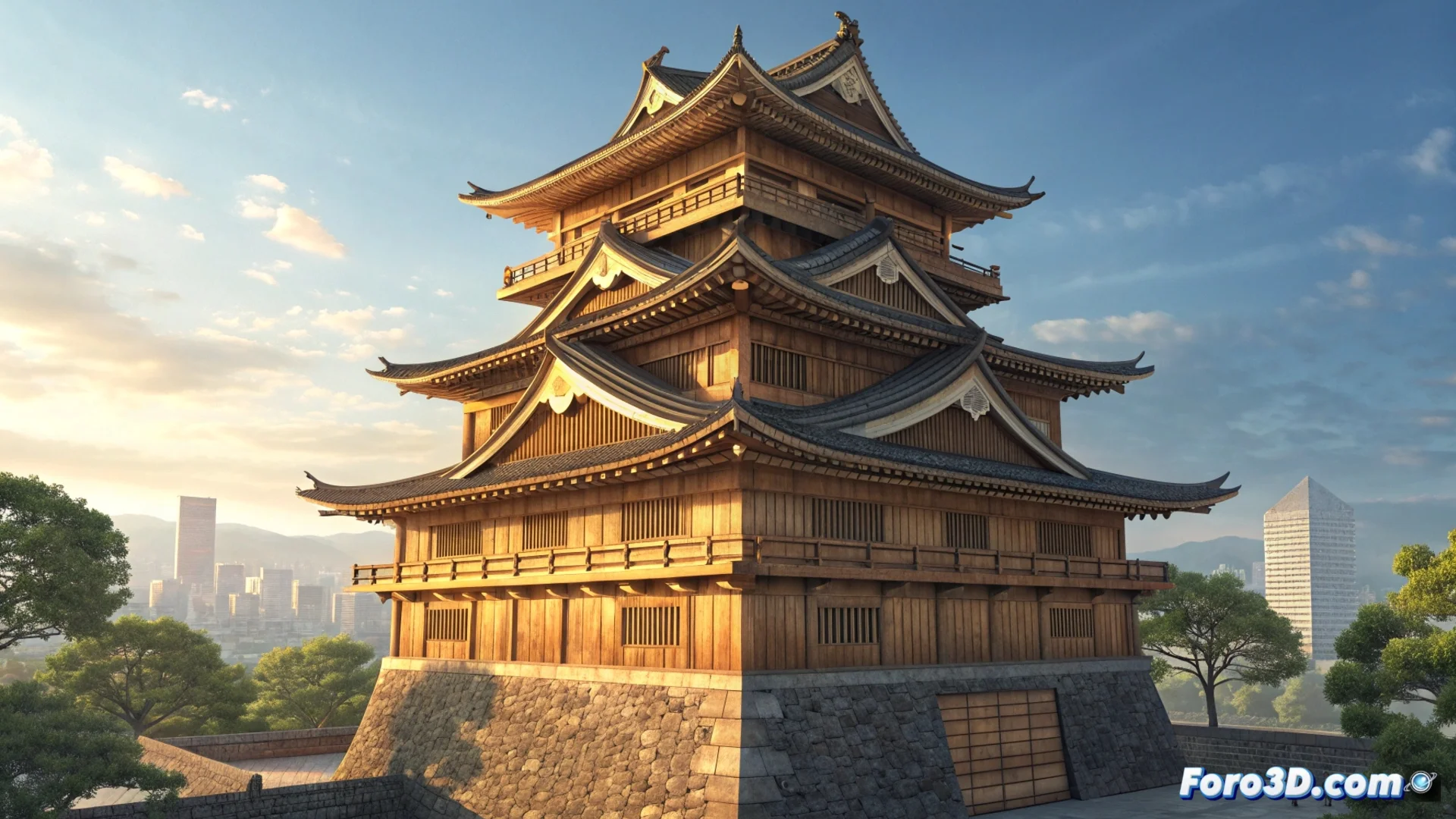
What if a castle were reborn from its ashes with wood?
Imagine repairing a valuable object, but instead of imitating it with modern materials, you decide to use the original ones and ancient methods. That's what's proposed for Hiroshima's symbol: replacing the concrete tower with an authentic wooden structure, thus recovering its original spirit lost decades ago. 🏯
A journey back to the essence
The fortress we see today is a postwar concrete copy. The new goal is not just to change the building material, but to return the character and warmth that only wood can offer. This involves respecting to the maximum the ancestral Japanese carpentry techniques, creating a direct physical link with the past.
Fundamental pillars of the project:- Abandon concrete to use solid wood as the main material.
- Apply traditional assembly methods, dispensing with nails or modern adhesives.
- Recover the warmth and soul of the architectural style that defines historic Japanese castles.
It's not just about restoring a building, but honoring memory with authenticity.
The enormous technical and artisanal challenge
The challenge is colossal: obtaining logs of monumental dimensions, carving them, and joining them to erect a five-story tower. It's an exercise in large-scale craftsmanship. Additionally, wood has a particular seismic behavior; it can absorb and dissipate energy by moving flexibly during an earthquake, which sometimes makes it more resistant than other rigid materials.
Key aspects of the construction challenge:- Manage the logistics to obtain logs of large size and quality.
- Master the complex art of assembly Japanese style without metal elements.
- Leverage the natural properties of wood to improve resilience against earthquakes.
A symbol beyond architecture
This initiative transcends the realm of construction. It represents a statement on collective memory, the capacity to recover, and the profound value of doing things with the integrity they deserve. The choice between concrete and wood thus encloses a narrative loaded with history and meaning. 🌳