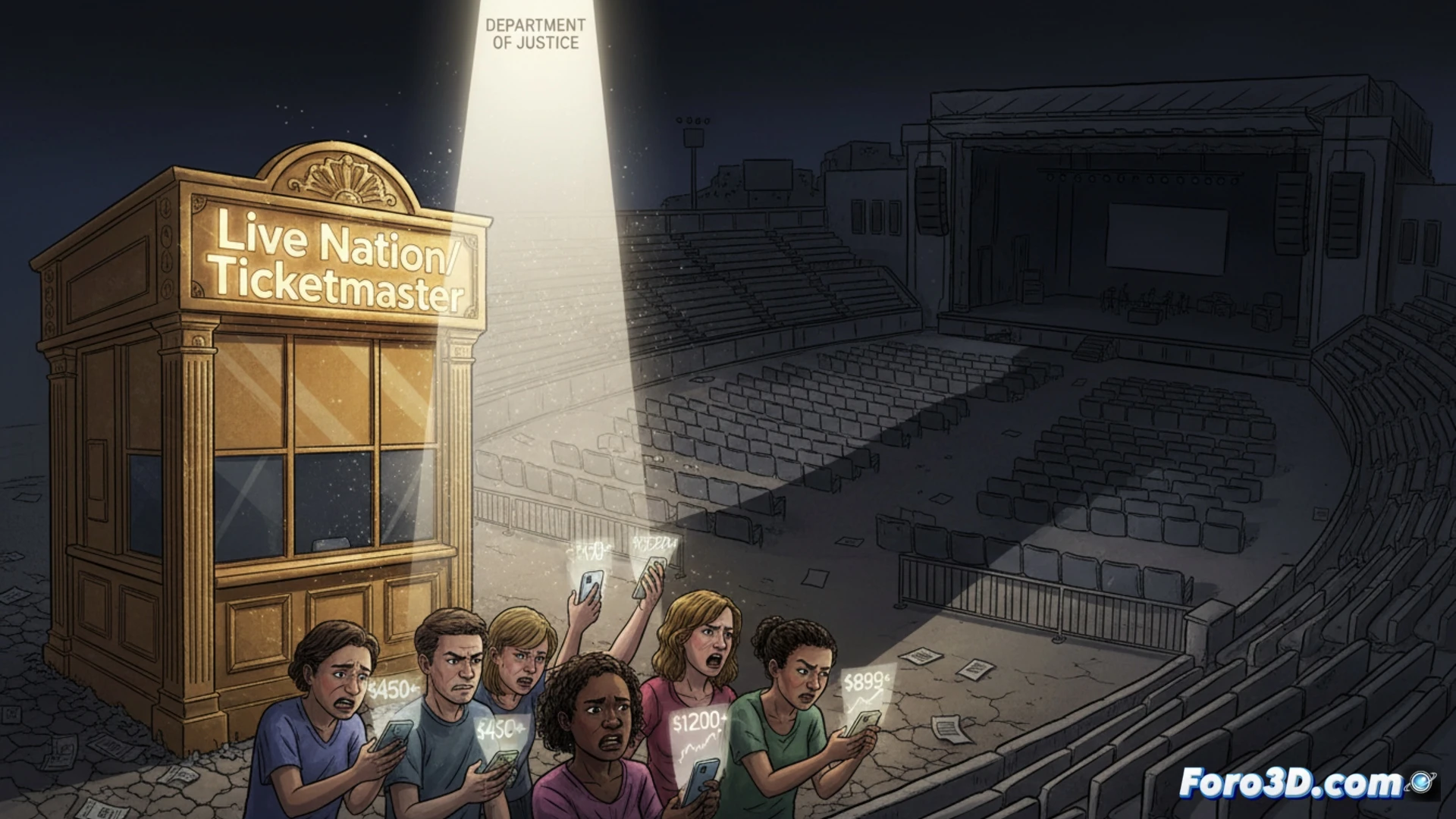
What Happens When the Concert Giant Negotiates with the Government?
Think about the frustration of searching for tickets to your favorite artist and only finding a website with exorbitant fees. This is the reality that the U.S. Department of Justice is addressing in its conversations with the conglomerate Live Nation/Ticketmaster. The goal is to examine whether their market dominance harms fans. 🎤
The Near-Total Dominance of a Sector
Essentially, Live Nation and Ticketmaster operate as a single entity. This merger allows them to organize events, manage venues, and sell access, thus controlling the entire chain. Authorities claim that this vertical integration stifles competition and inflates costs for the end consumer.
Keys to their business model:- Comprehensive control: from show production to final ticket sales.
- Lack of real alternatives for promoters and consumers.
- Possible establishment of higher prices due to scarce competition.
A possible agreement now could avoid a prolonged and costly court litigation for both parties.
The Context of a Crucial Negotiation
These conversations are not casual. They are taking place on the eve of a historic trial for alleged antimonopoly practices. A settlement would allow the giant to avoid an uncertain legal process, while the government would impose transformative conditions on the sector.
Potential changes on the horizon:- Force the company to divest certain assets or business divisions.
- Open its platforms and contracts to other competitors.
- Establish new rules to make fees and additional charges transparent.
A Future with More Options for the Fan
In short, this process seeks to diversify the ecosystem. The goal is that, in the future, buying a ticket does not mean depending on a single dominant channel. More competition usually translates into better prices and higher quality service, something that would undoubtedly please any wallet. 💰