A recent study on fin whales has determined that their songs are not random sequences. Scientists have identified complex mathematical structures in their vocalizations, with patterns reminiscent of human language syntax and the construction of musical pieces. This finding indicates that their communication system possesses a layer of sophistication that was not previously documented.
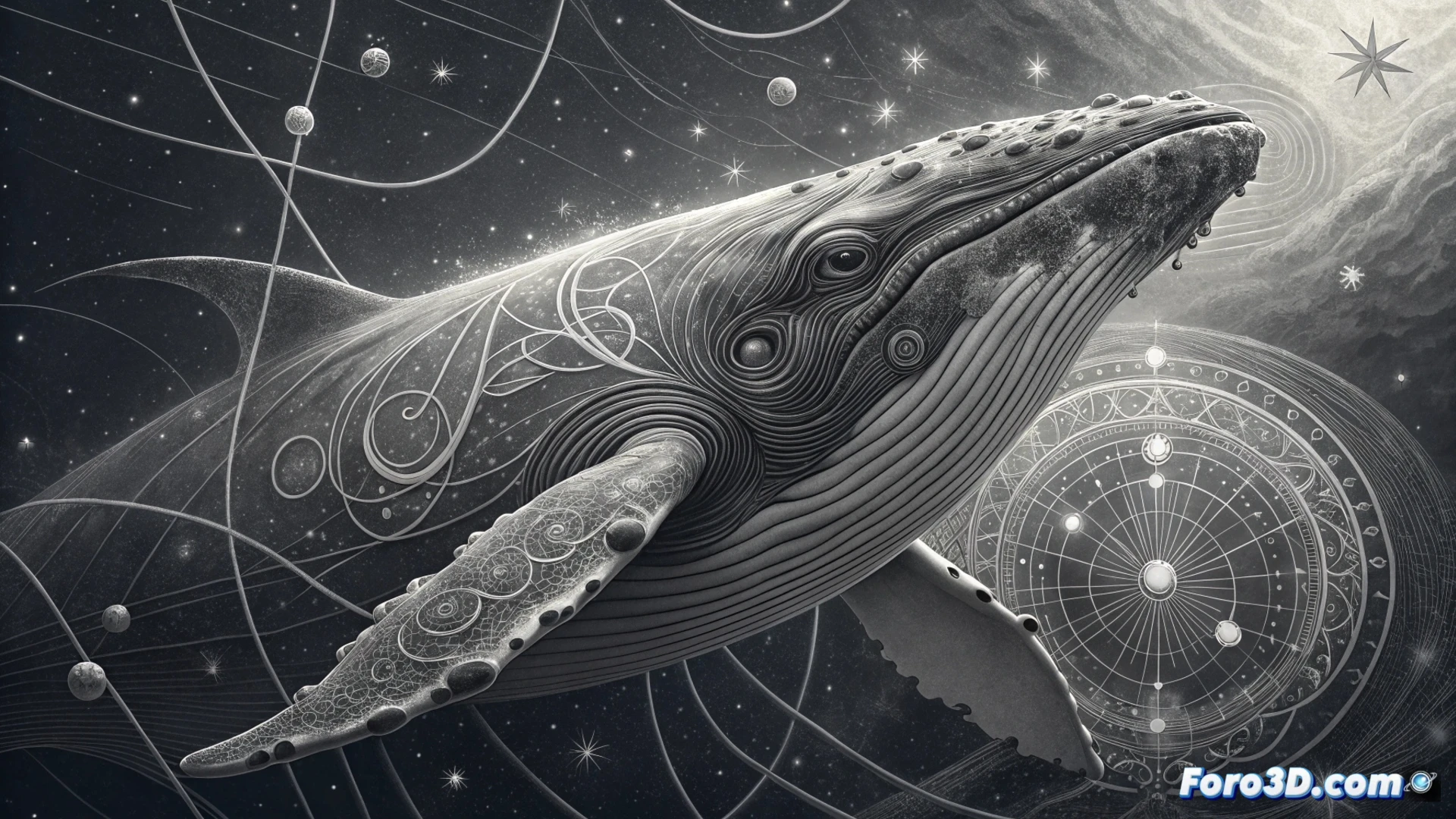
Algorithms and spectral analysis in bioacoustic studies 📊
The discovery is based on digital signal processing and spectral analysis of long recordings. Researchers applied mathematical models to decompose the songs into repetitive and hierarchical units, similar to phonemes and phrases. This technical approach, which uses pattern detection algorithms, allows visualizing the grammar of sounds, opening a pathway to interpret their possible functional meaning through computational techniques.
Will we soon need to debug the whales' source code? 🐳
With these advances, it's only a matter of time before some team announces the first Hello, world! translated from cetacean. Imagine the final sprint to launch the human-whale interoperability API, or the debate in technical forums about whether their syntax resembles Lisp more or a low-level language. Perhaps we'll discover they've been transmitting firmware patches for migration for millennia, and we've been oblivious here.