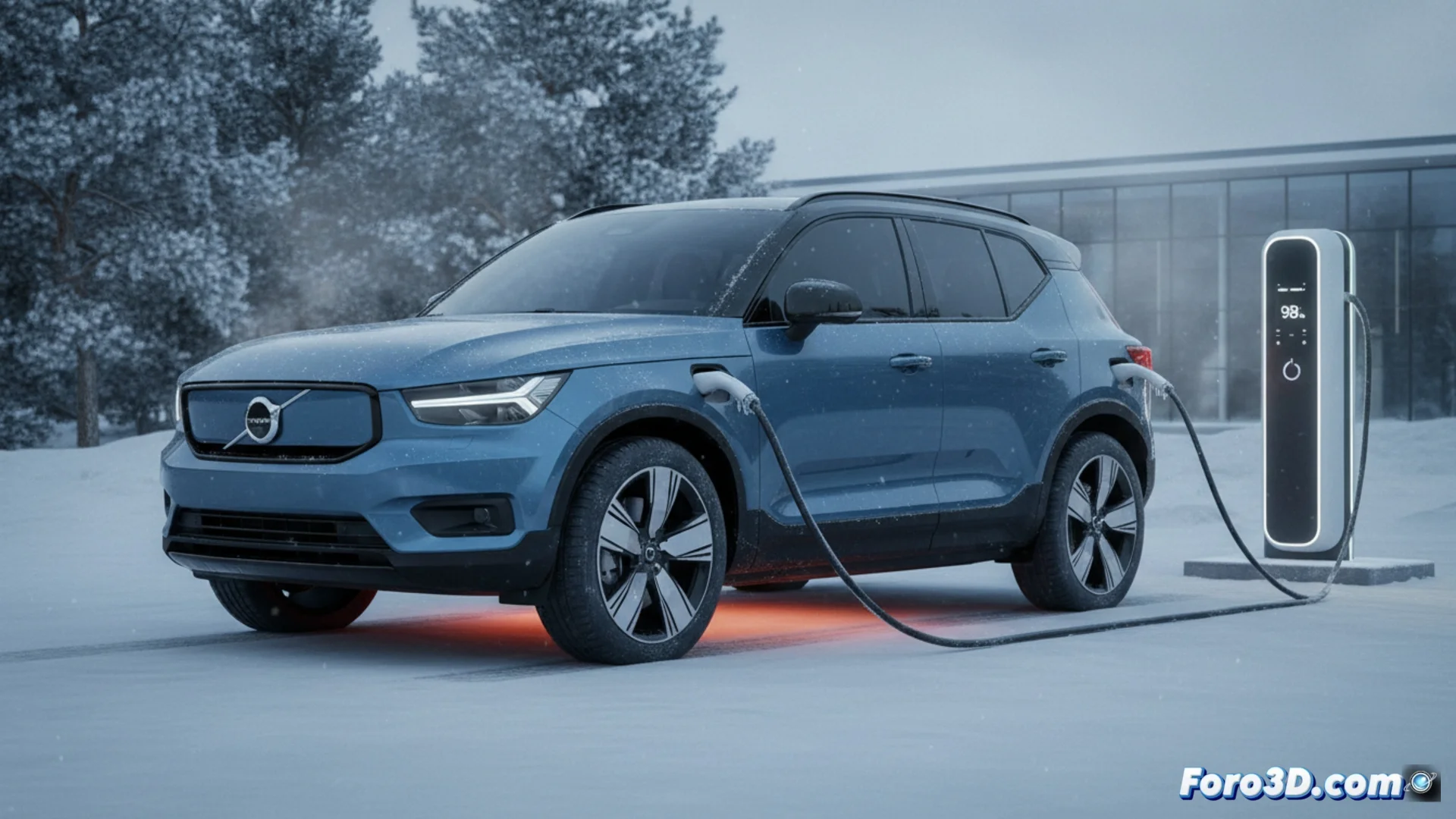
Volvo Innovates with a System to Optimize Battery Charging in Cold Climates
The Swedish brand has presented a technological solution that addresses one of the biggest drawbacks for electric vehicles during winter. In low-temperature conditions, lithium-ion batteries usually require significant preheating before they can accept fast charging, a step that slows down the entire process if the driver does not anticipate it. 🔋
A Real-Time Adaptive Approach
The novelty of Volvo's system lies in its ability to manage the battery dynamically. Unlike traditional methods that rely on fixed temperature thresholds, this technology continuously analyzes the internal state and temperature of the cells. With this information, the vehicle instantly adjusts its thermal control strategy.
Key Advantages of the Method:- Allows starting fast charging sessions even with a cold battery, without the need for prolonged prior heating.
- By monitoring in real time, the system only activates heating elements when and where they are strictly necessary.
- This precision avoids overheating or insufficient heating, protecting the long-term health of the battery.
Efficiency does not come from heating more, but from heating more intelligently and only when the charging process requires it.
Positive Impact on Efficiency and Range
By optimizing how and when the battery pack is heated, the vehicle can allocate less energy to this auxiliary task. The energy saved by avoiding inefficient preheating remains available in the battery to propel the car.
Direct Benefits for the User:- Possible increase in usable range during winter trips, by reducing energy expenditure on battery conditioning.
- Less total time spent charging on long trips, by shortening or eliminating the waiting phase before connecting the fast charger.
- Reduction of thermal stress on the battery, which can contribute to preserving its capacity over time.
The Pending Challenge in Infrastructure
While Volvo's innovation promises to substantially improve the user experience, its full effectiveness also depends on external factors. The vehicle's technology must be complemented by a reliable and operational charging infrastructure, even on the coldest and snowiest days. The next logical step is for charging stations to operate with the same robustness promised by this new system. ⚡