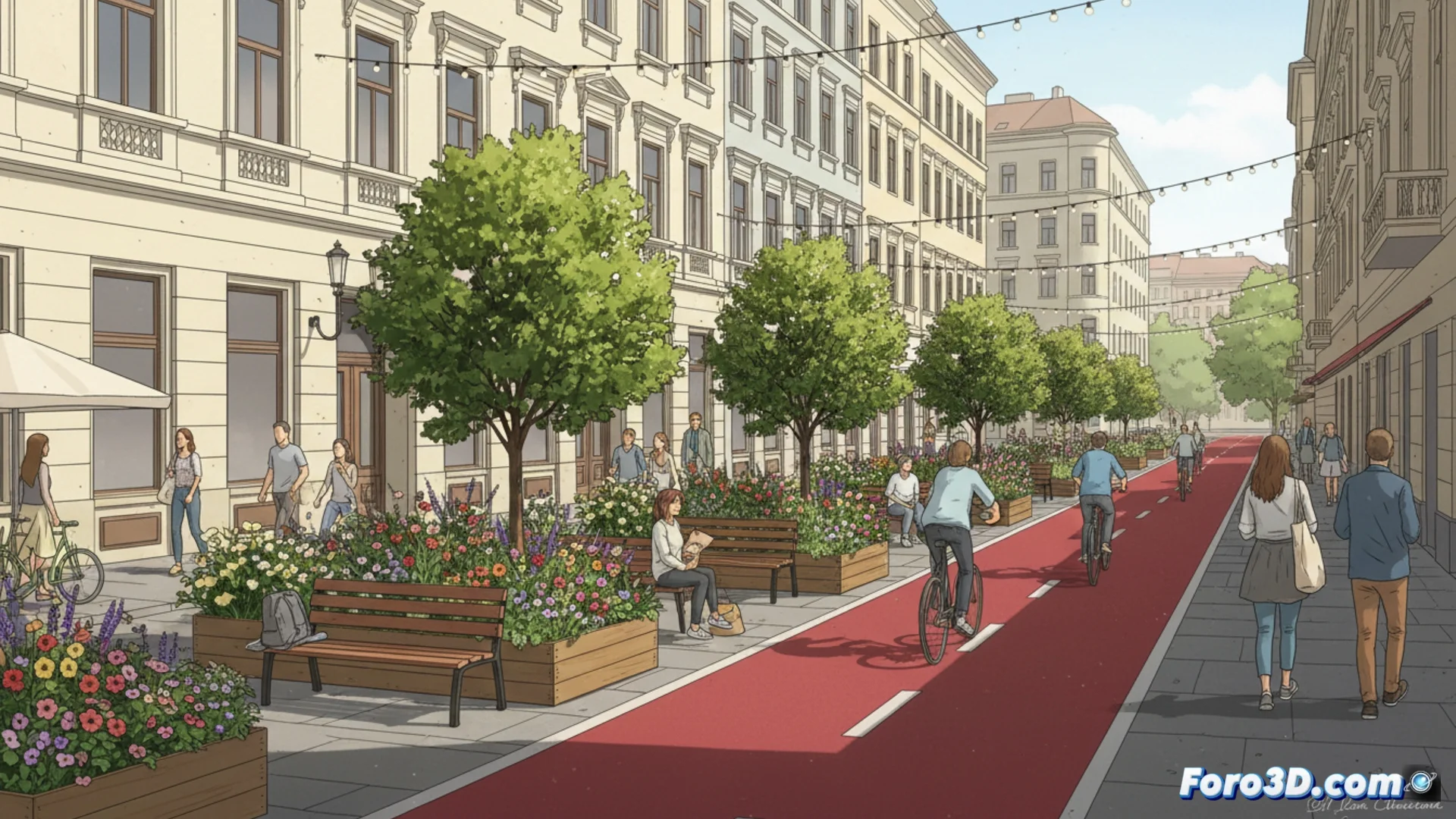
Vienna Transforms Parking Spaces into Green and Pedestrian Areas
The Austrian capital is implementing a comprehensive plan to reduce the dominance of the car and recover square meters of street for citizen enjoyment. With the aim of meeting its climate goals and improving well-being in the city, the city council removes entire rows of parking spaces. 🌳
From Car Asphalt to Community Oases
This urban metamorphosis is materialized in more than 350 interventions. Where there was only asphalt and vehicles before, now parks emerge, sidewalks are expanded, and new bike routes are created. An innovative municipal program even allows residents to personally request converting a parking space in front of their home into a small garden or rest area.
Tangible Changes in the Urban Landscape:- Trees are planted and planters and benches are installed in the freed space.
- Active mobility gains prominence with safe infrastructure for bicycles.
- Direct participation of neighbors has been key to generating support for the initiative.
Now neighbors discuss which plant species to put, instead of who has taken their parking space.
The Citizenry Supports the Transformation
Despite initial reluctance to lose parking spots, public sentiment has changed as they experience the benefits. The population values having more places to socialize, walk, or relax outdoors.
Positive Impact of the Strategy:- Social cohesion in neighborhoods is fostered.
- Carbon footprint and noise pollution decrease.
- The urban heat island effect is mitigated by replacing asphalt with vegetation.
A People-Centered City Model
Vienna demonstrates with facts that public space can be reorganized prioritizing pedestrians, urban greenery, and sustainable mobility over private vehicles. This process not only beautifies the city but redefines how its inhabitants live and relate to their immediate environment. 🚶♂️✅