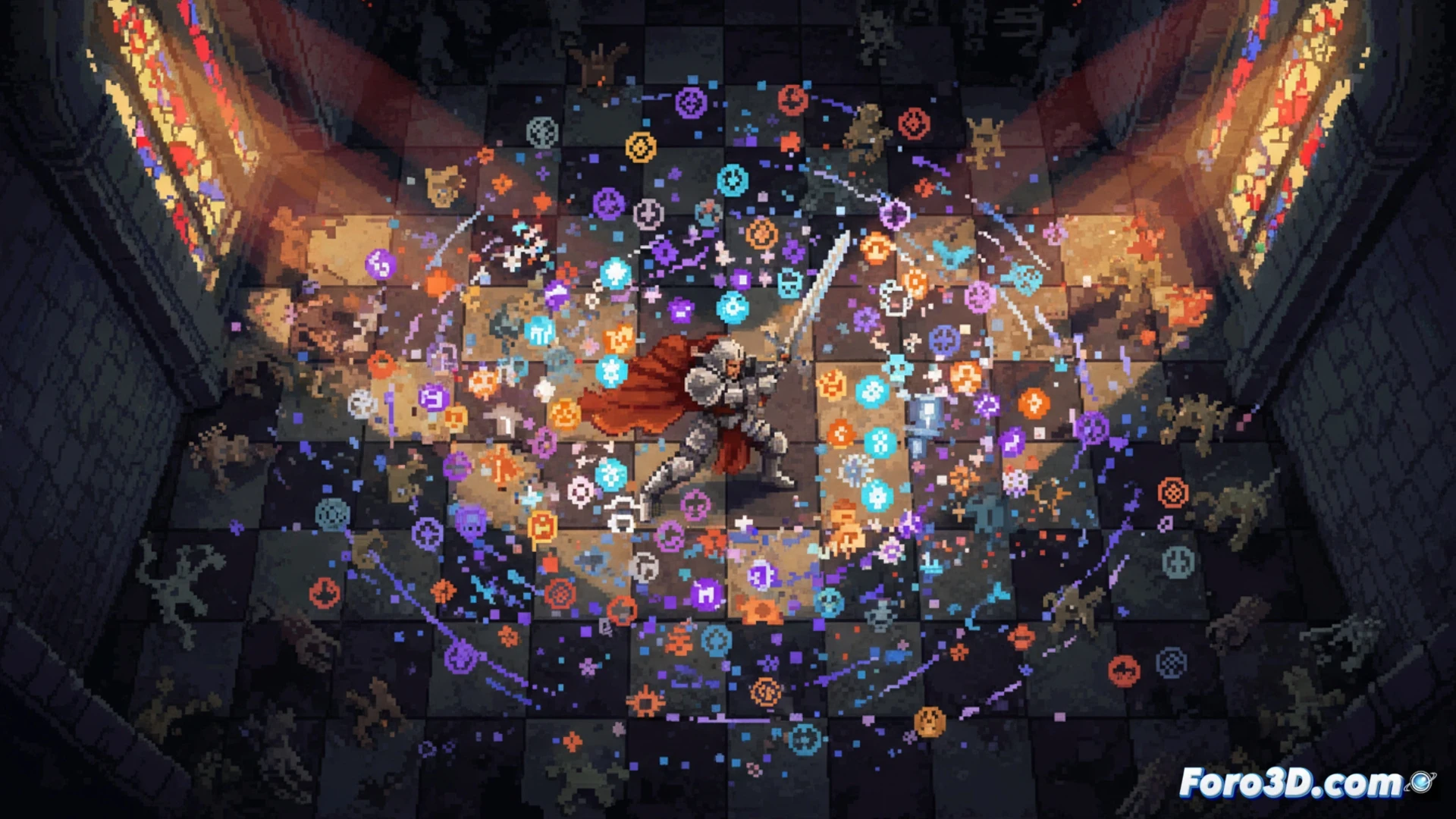
Vampire Survivors Changes Engine to Optimize Sprites
The technical story of Vampire Survivors is a clear example of how a project's needs can force a radical change in its technological base. 🎮 What began as an experiment in a web framework ended up migrating to a full video game engine to support its own success.
The Necessary Technological Leap
Initially, the team built the game using Phaser, a library designed for creating HTML5 experiences. However, they soon hit a wall: the original engine could not handle the astronomical number of entities demanded by the gameplay. To launch the title on console platforms and ensure stable performance, the decision was to move the entire project to Unity. This engine gave them the tools to manage thousands of sprites and calculate collisions in real time without the framerate collapsing.
Key advantages of the change:- Superior performance management: Unity allows efficiently handling thousands of objects on screen simultaneously.
- Portability to consoles: The engine facilitates exporting the project to multiple platforms, something critical for its expansion.
- Control over collisions and physics: More robust systems to process interactions between the avalanche of elements.
The real challenge was not making complex graphics, but making a simple system withstand absolute chaos without breaking.
A Retro Aesthetic with a Modern Challenge
The visual section deliberately adopts a retro pixel art style in 2D. This artistic choice prioritizes visual clarity and performance. The main technical challenge was not creating detailed assets, but optimizing the code so that the game ran smoothly despite the overwhelming number of elements drawn and updated every fraction of a second. 🖥️
The Toolkit Behind the Chaos
To build this experience, the team used a set of professional software. Unity was the core of development. The pixel art was created with specialized applications like Aseprite or Pyxel Edit. The game logic was programmed in C# using Visual Studio, and to integrate and manage sound they used the middleware FMOD. This tool stack was fundamental for iterating, testing, and polishing every aspect of the game. 🔧
Software used in development:- Main engine: Unity.
- Art and animation: Aseprite / Pyxel Edit (for pixel art sprites).
- Programming: C# in the Visual Studio environment.
- Audio: FMOD for designing and implementing effects and music.
Lesson from an Unexpected Success
The triumph of Vampire Survivors demonstrates a key principle in video game development: often, the greatest complexity lies in making an apparently simple mechanic work at massive scale. The migration from Phaser to Unity was not a whim, but a pragmatic solution to a scalability problem. The final result proves that, with the right tools and meticulous optimization, playable and tremendously satisfying chaos can be created. 💥