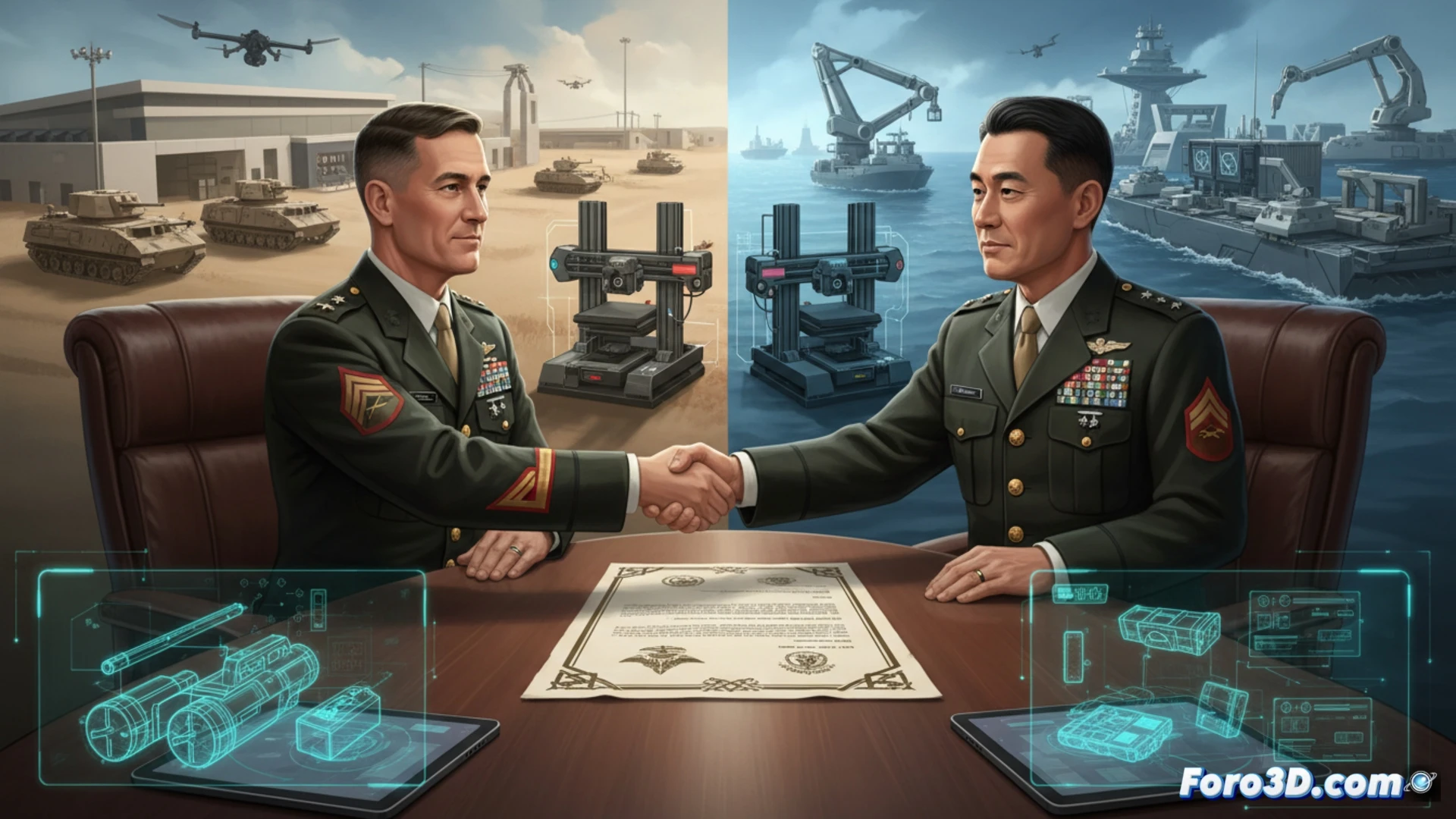
The United States Marine Corps has established a new agreement with Japanese companies to transform its maintenance strategy. The goal is to integrate advanced manufacturing, such as 3D printing, to produce spare parts locally. This reduces dependence on extensive supply chains and aims to accelerate the availability of critical parts in theater, increasing operational resilience.
The Bet on Distributed Manufacturing and Tactical 3D Printing ⚙️
The agreement focuses on creating agile manufacturing capabilities near potential operational zones. 3D printing of metals and specialized polymers enables on-demand generation of spare parts, from vehicle components to tools. This localized production shortens wait times from months to days or hours, and mitigates risks of global supply disruptions, aligning with the doctrine of distribution and agility.
Farewell to Spare Parts Paperwork, Hello to "Shall We Print It or Order It?" 🖨️
Imagine the scene: instead of a warehouse full of dusty boxes with impossible part numbers, a Marine with a laptop reviews a CAD model. The critical decision is no longer just attack or retreat, but Is it worth waiting six months for the shipment or shall we just print it this afternoon? The maintenance workshop becomes an on-the-go design studio. That said, the archenemy will be a layer failure or an attack from the dreaded humidity in the filament.