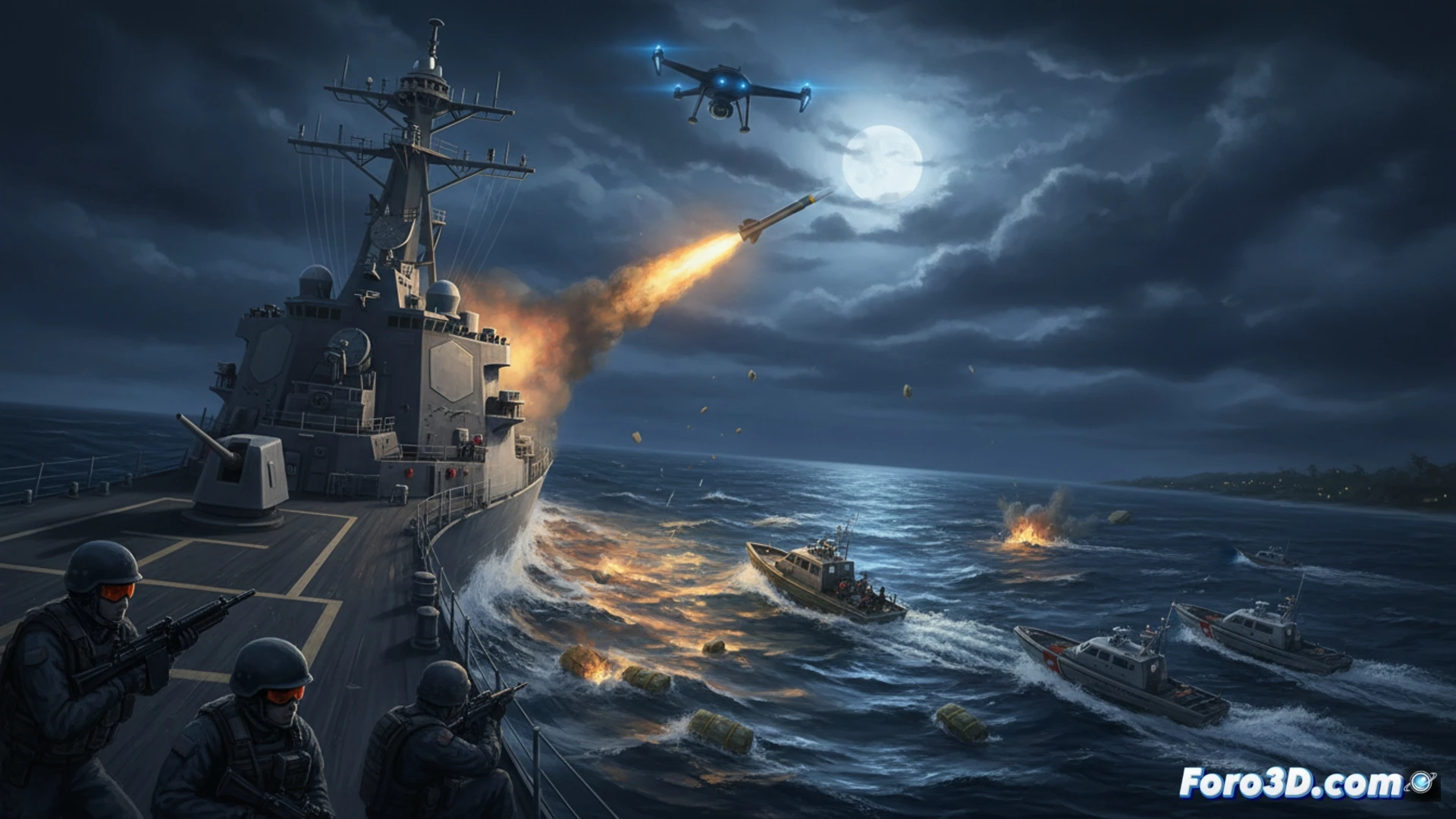
The US military reported a new attack in Caribbean waters against a suspicious vessel, with a toll of three presumed narcoterrorists killed. This operation is part of an expanded military campaign that, since September, includes at least 44 similar actions and more than 150 deaths. The Trump administration defends its strategy as crucial to stopping drug trafficking, despite criticisms about its legality and the real effectiveness in halting the flow of fentanyl, which mostly enters through the land border with Mexico.
The Maritime Surveillance Technology Behind the Interdictions 🛰️
These operations rely on a complex technological network. Maritime patrol aircraft like the P-8 Poseidon, equipped with synthetic aperture radar (SAR) and infrared vision systems, track light vessels in the high seas. Intelligence is complemented by satellite data and listening systems, allowing the identification of trafficking patterns. Designating gangs as terrorist organizations facilitates the use of broader legal and surveillance tools, originally designed for the war on terrorism, now applied in a police context in international waters.
Operation Fentanyl Express: the route no one wants to block 🤔
It is curious the insistence on intercepting speedboats in the Caribbean, when the main fentanyl supply channel to the US is well known and operates by land. It seems like the classic strategy of looking for the keys where there is a streetlight, not where they were lost. While million-dollar planes are deployed over the sea, the critical cargo crosses calmly through land border crossings. Perhaps it is more cinematic to chase boats than to audit containers in ports or inspect trucks, a less glamorous task for a press release.