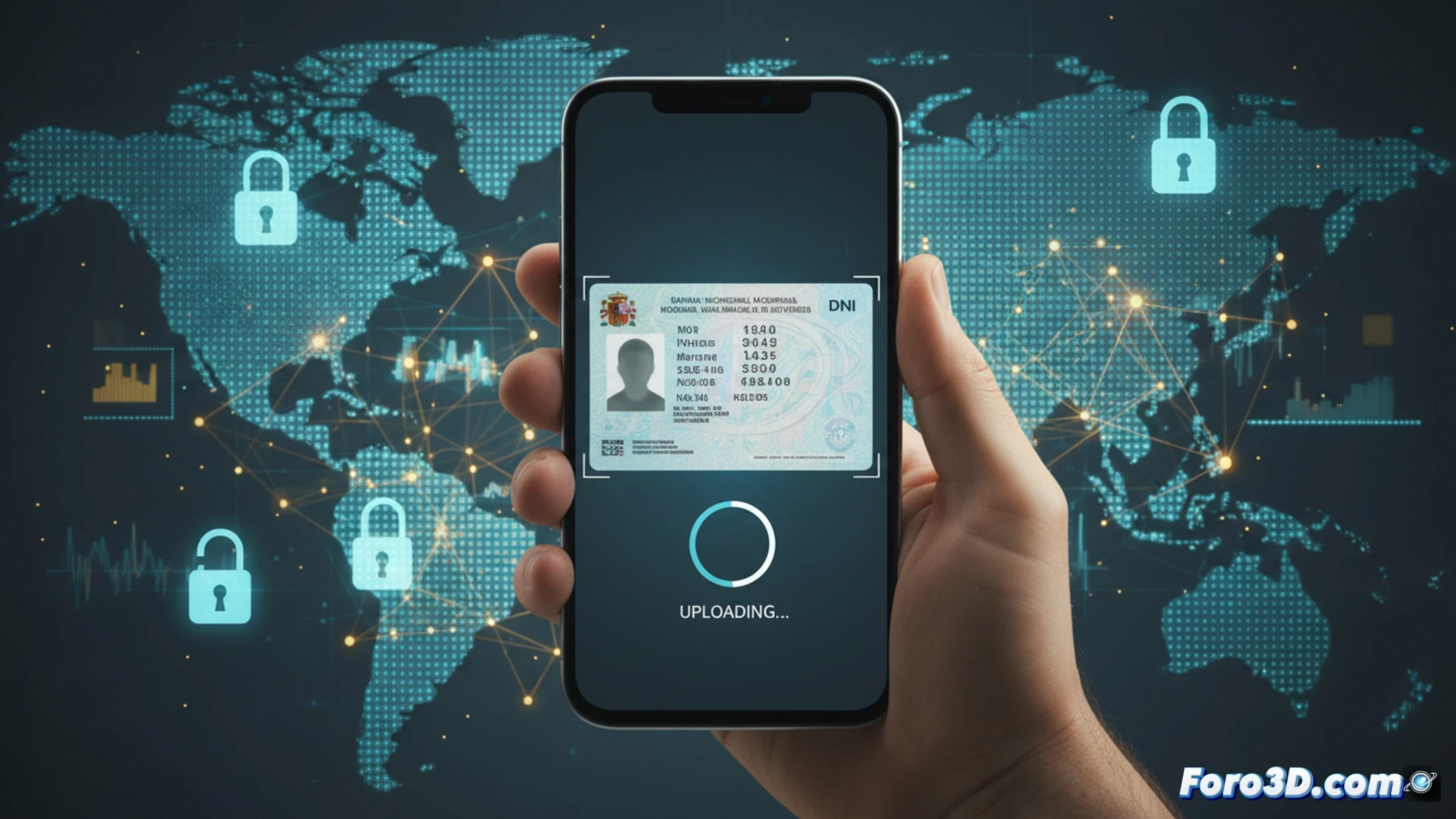
Uploading your ID to use an app: this is the battle for your identity
Have you encountered the requirement to provide a photo of your identity document to register on a new platform? 🧐 This is no longer an exception, but a growing trend. Behind this request lies a constant tug-of-war between facilitating access, ensuring security, and protecting the most valuable asset: your personal information. Let's unpack why this mechanism has become normalized in the digital environment.
The balance between confirming who you are and protecting your data
Think of the web as a space that was once more open. Now, companies managing these spaces need to verify that their users are real. By sending an image of your ID, you're essentially proving your identity. This helps limit fraudulent activities and fake accounts. However, the trade-off is clear: you give up an extremely sensitive piece of data in exchange for a potentially safer environment. It's a delicate transaction. 🔒
How does this verification process work?- It's not a person who reviews your document, but specialized artificial intelligence algorithms.
- These systems are trained to detect forged documents by analyzing micro-details such as printing patterns, holographic security elements, or the material's texture.
- The big question arises afterward: where do they store that image? The potential risk of that database suffering a security breach is the main concern.
Your digital ID is not just a formality; it is the battlefront where it is decided how much you value your convenience over your privacy.
What accepting and sharing your identity implies
When you authorize an app to store a copy of your document, you delegate control over a key piece of data. The convenience of quick access clashes with the latent danger that this information could leak or be used for other purposes. It's not just about distrusting, but about being aware of who you give it to and for what.
Reflections for the next time they ask you for it:- Evaluate the platform's reputation and the real need to request that data.
- Check their privacy policy to know how they will process and protect your information.
- Consider that you are participating, whether you like it or not, in the broad system of digital authentication that redefines how we prove who we are on the internet.
A new digital landscape that forces us to decide
This practice evidences a profound transformation. Proving that you are yourself can be as simple as taking a photo, but it also entails a shared responsibility. Platforms must protect data with maximum rigor, and users must understand the implications of what we share. The battle for identity in the digital era has just begun. ⚔️