Many users think that by just changing the graphics card, their old PC will run the latest games. Reality is often different. The bottleneck, where the processor can't keep up with a new GPU, limits the gains. In systems over six years old, the CPU is usually the component that holds back the entire system. This article explains why sometimes just changing the graphics card isn't enough.
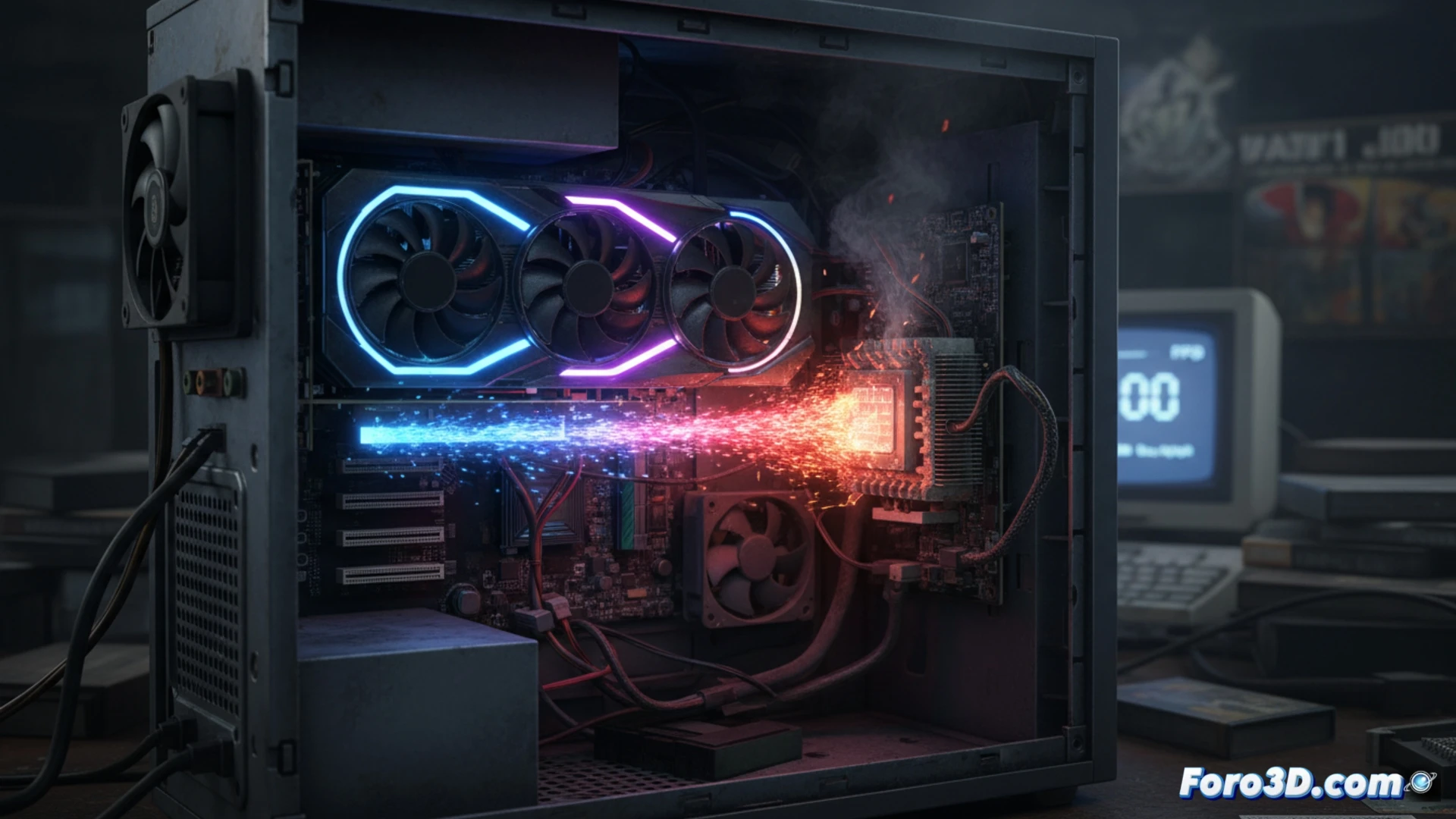
Technical Analysis of the Bottleneck: CPU, PCIe, and RAM ⚙️
Game performance is a chain. If the CPU is slow, it doesn't prepare the frames on time for the GPU to render them, leaving it underutilized. Tools like MSI Afterburner show this imbalance: 100% CPU usage with GPU below 60%. Additionally, a motherboard with old PCIe can strangle the bandwidth of a modern graphics card. Insufficient or slow RAM also worsens the problem, delaying data delivery to the processor.
Giving a Ferrari to a Donkey: The Upgrade Analogy 🐎
It's like putting an F1 engine in a horse-drawn carriage. The body (your CPU) doesn't have a chassis for that power, and the driver (the PCIe bus) is still using dirt roads. You'll see the shiny engine (the new GPU), but when you start it up, the donkey (the system) will refuse to gallop. In the end, you'll have spent money on a component that sits idle all day, waiting for orders that never arrive. An expensive lesson in computer physics.