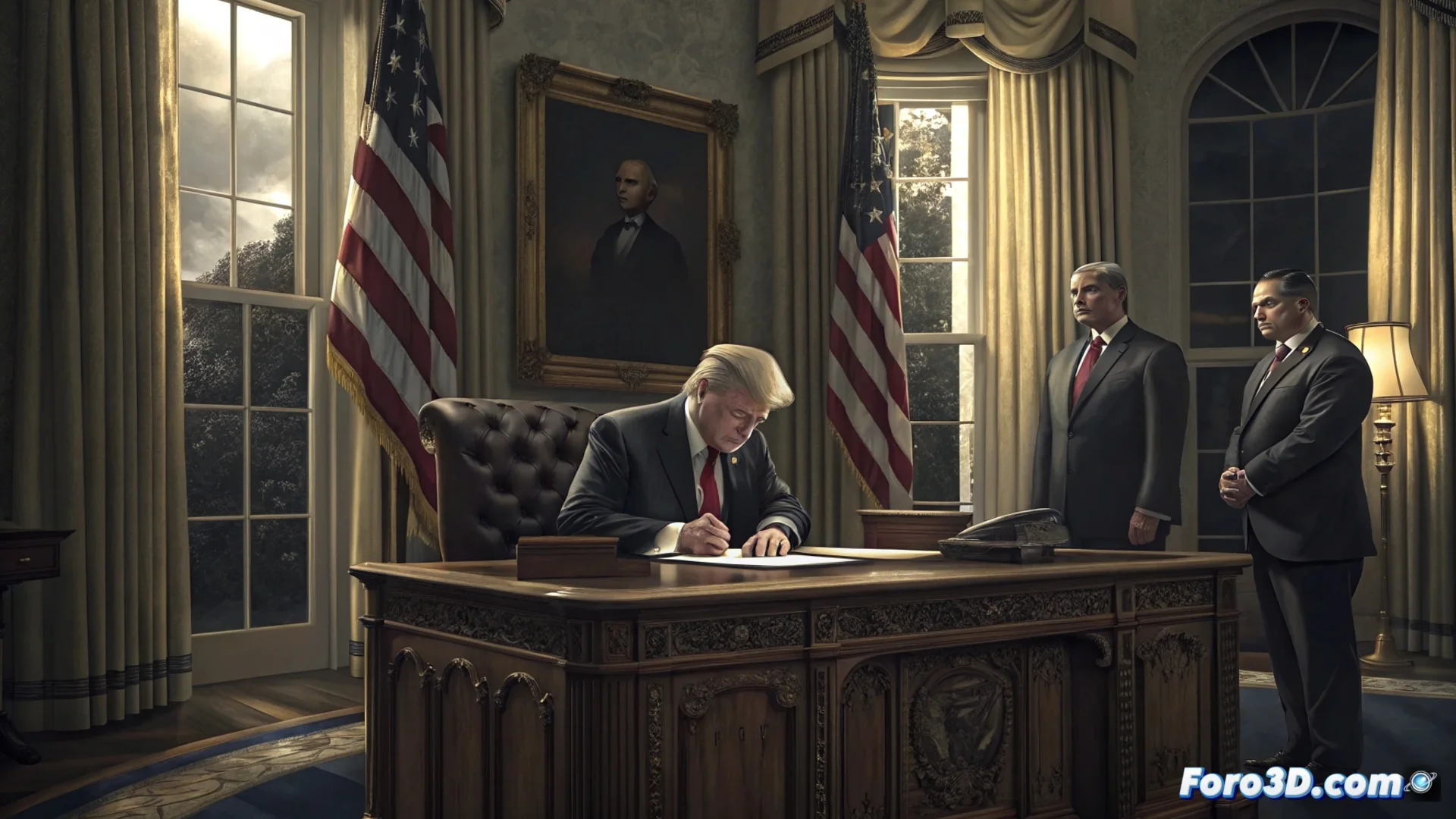
Trump signs the law that reopens the government after the longest shutdown
The U.S. president, Donald Trump, signed this Friday a law that allocates resources to the federal executive and ends the longest partial work stoppage in the country's history. This episode, which lasted 35 days, affected approximately 800,000 officials and paralyzed multiple public services. The signing occurred after Congress approved a short-term spending bill that expressly omits the money the president requested to build a barrier on the border with Mexico. 🇺🇸
The agreement omits resources for the border barrier
The understanding reached to reactivate government operations does not allocate funds to build the wall, which was the president's main request. Instead, it provides provisional funding until February 15, giving lawmakers room to seek broader consensus on border security. Trump warned that if a satisfactory agreement is not reached for his administration, institutions could shut down again or he could declare a national emergency to obtain the resources.
Immediate impacts of the shutdown:- Nearly 800,000 federal employees were affected, many without receiving their salary for weeks.
- Significant delays were recorded at several major airports in the country.
- The operation of national parks and other public services was severely limited.
"The political battle only takes a technical pause, demonstrating that in Washington you can shut down the government, but rarely the disagreements."
Repercussions and the political path ahead
The shutdown caused considerable administrative chaos. Now, Congress has three weeks to try to resolve the conflict around immigration policy and border protection. The central dispute over the wall remains unanswered, keeping the threat of a new shutdown next month alive if talks do not progress.
Key next steps:- Legislators must negotiate a border security agreement before February 15.
- The possibility of Trump declaring a national emergency remains on the table.
- Federal workers resume their duties, but with the uncertainty of a possible new shutdown.
A fragile truce in Washington
While officials breathe a sigh of relief upon returning to their posts, the political confrontation is far from over. This episode underscores the deep division in the capital and how ideological disagreements can paralyze the machinery of the State. The pause is only temporary, and the specter of a new government shutdown looms over the upcoming negotiations. 🏛️