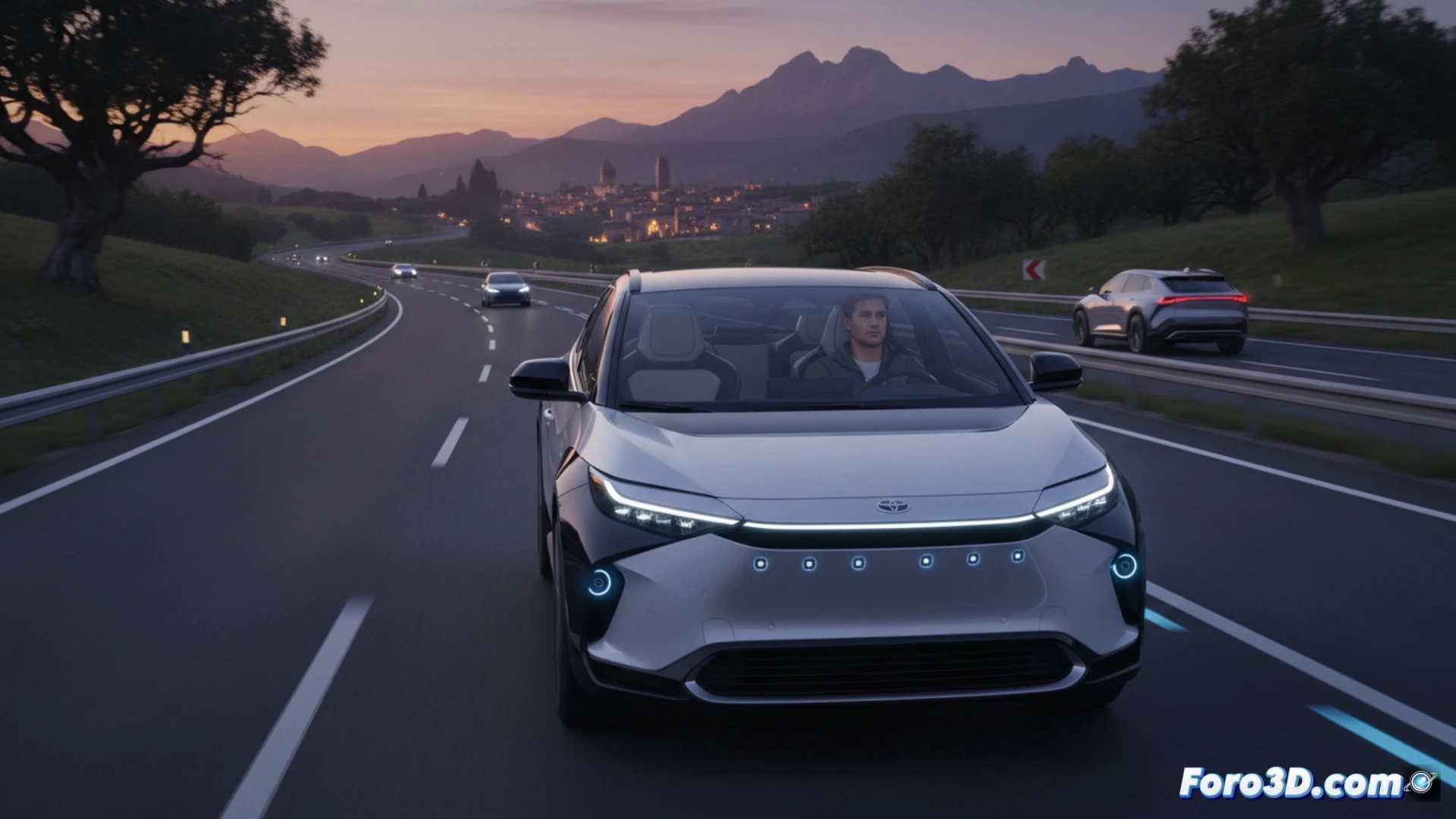
Toyota Plans to Implement Autonomous Driving in Europe by 2027
Have you ever thought about getting into your car, setting a destination, and letting it handle everything while you relax? 🚗 This vision, which once seemed like something out of a movie, is about to become reality. Toyota is positioning itself to be a pioneer in bringing this technology to Europe's roads.
Toyota's Strategy with a Deadline
The Japanese manufacturer confirmed that it aims to commercialize, in the European market, a level 4 autonomous driving system for its electric vehicle bZ4X. This level of autonomy allows the car to operate on its own in defined conditions, such as on highways, without requiring the driver to intervene. It's like having a very advanced autopilot that takes care of monotonous stretches, although the ultimate legal responsibility falls on the person.
Key features of the system:- It is designed to operate in specific situations, mainly on high-speed roads.
- The driver can disengage from the controls of steering and pedals during its operation.
- It represents a crucial step toward automated mobility on the continent.
It would be like having a robotic chauffeur that takes care of the boring stretches.
The Technological Collaboration Behind the Project
Toyota is not developing this complex technology alone. To achieve its goal, it established a strategic alliance with Moment, a U.S. company expert in this field. Together, they create the vehicle's "intelligence," integrating multiple sensors to perceive the environment in great detail.
Components of the perception system:- Cameras high-definition for computer vision.
- Radars to measure distances and speeds of other objects.
- LiDAR sensors (light detection and ranging) that generate precise 3D maps of the environment. 🧠
Reflections on the Future of Driving
This advancement points to a tomorrow where driving will involve less stress in traffic jams and more opportunity to enjoy the journey. However, it is natural for doubts to arise about fully trusting the machine. Many drivers will probably continue to keep an eye on the road, just in case the system encounters an unexpected distraction. The journey toward total automation is advancing quickly, but human adaptation will take time.