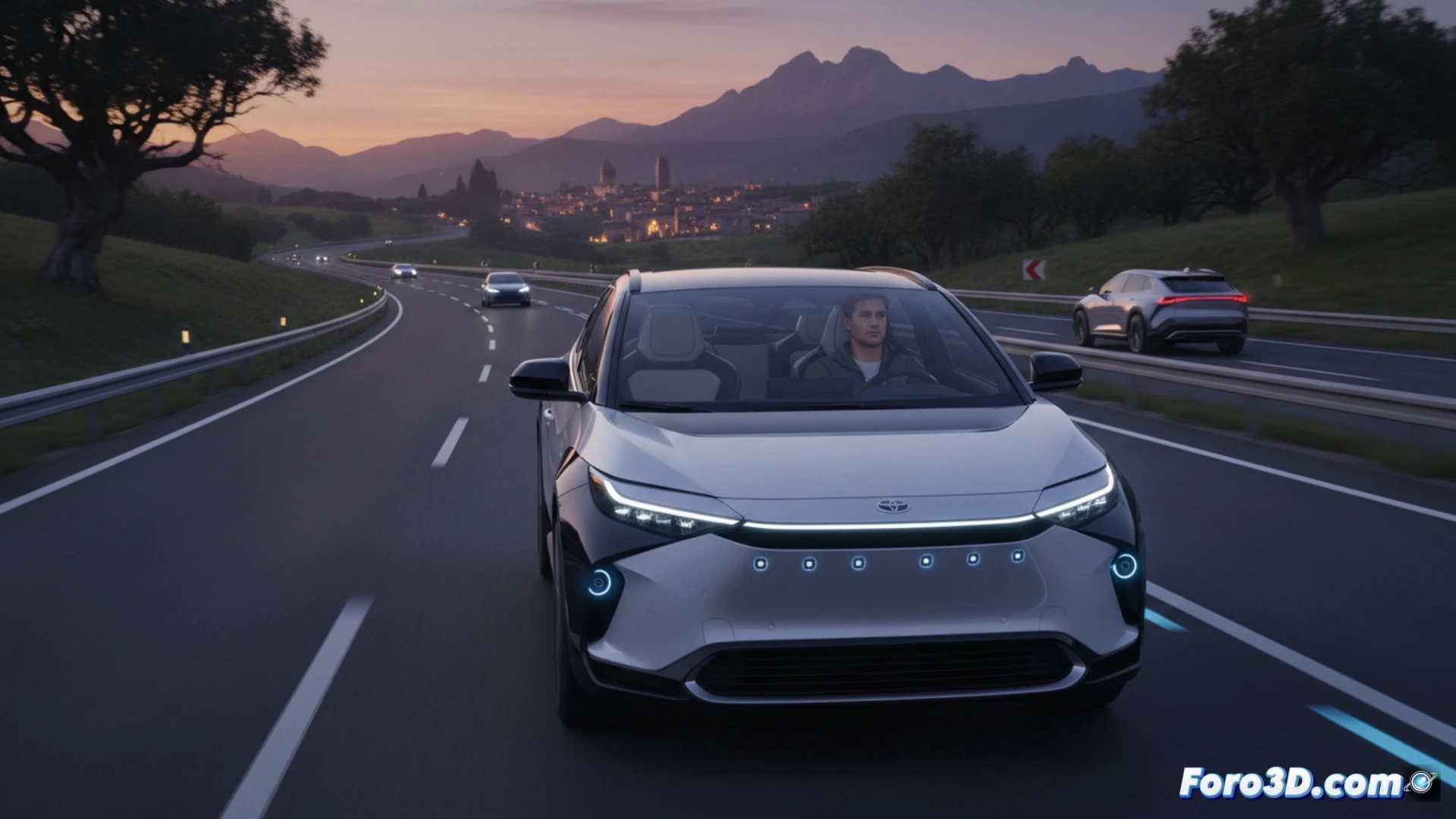
Toyota Plans to Implement Advanced Autopilot in Europe by 2027
Imagine getting into your vehicle, setting a destination, and letting the car handle everything while you relax. This scenario, once exclusive to movies, is about to become reality on European roads, and Toyota is positioning itself as one of the pioneers making it possible. 🚗✨
The Japanese Brand's Strategy for the Next Decade
The automaker has revealed its intention to introduce to the European market, around 2027, a level 4 autonomous driving system for its electric SUV, the bZ4X. This level of autonomy means the car can operate on its own in predefined conditions, such as on highways, without requiring constant driver intervention. It would function as a robotic copilot that takes control during monotonous stretches, although ultimate legal responsibility would still lie with the person at the wheel.
Key Features of the Autonomous System:- Level 4 (High Automation): The vehicle handles all driving tasks in a specific operational environment, without expecting user intervention.
- Activation Environment: Designed primarily to operate on expressways and highways, where conditions are more predictable.
- Control Transition: The system will alert the driver with sufficient time to take back control when exiting the designated operational area.
It would be like having a robotic chauffeur that handles the boring stretches, though you remain the ultimate responsible party for the vehicle.
The Technological Collaboration Behind the Project
To bring this advancement to fruition, Toyota is not acting alone. It has established a strategic alliance with Moment, a U.S. company expert in this field. Together, they are working on creating the vehicle's "intelligence," which fuses data from multiple sensors: high-resolution cameras, long-range radars, and LiDAR sensors (light detection and ranging). This combination allows the car to perceive and analyze the environment with extremely high precision, giving it superior perception capability.
Components of the Perception System:- Cameras: Provide computer vision to identify signs, lanes, and obstacles.
- Radar: Measures the speed and distance of surrounding objects, performing well in various weather conditions.
- LiDAR: Creates a detailed 3D map of the environment using laser pulses, essential for understanding the precise geometry of the road.
Reflections on the Future of Mobility
This development points to a future where driving could be less associated with traffic stress and more about making the most of travel time. The prospect of reading, working, or simply relaxing while the car drives itself is tempting. However, it naturally raises reflections about the trust we will place in these machines. Many drivers will likely continue to keep an eye on the road at first, unable to fully disconnect, in case the system encounters a complex unforeseen event. 🤔 The path to full autonomy is not only technological but also psychological.