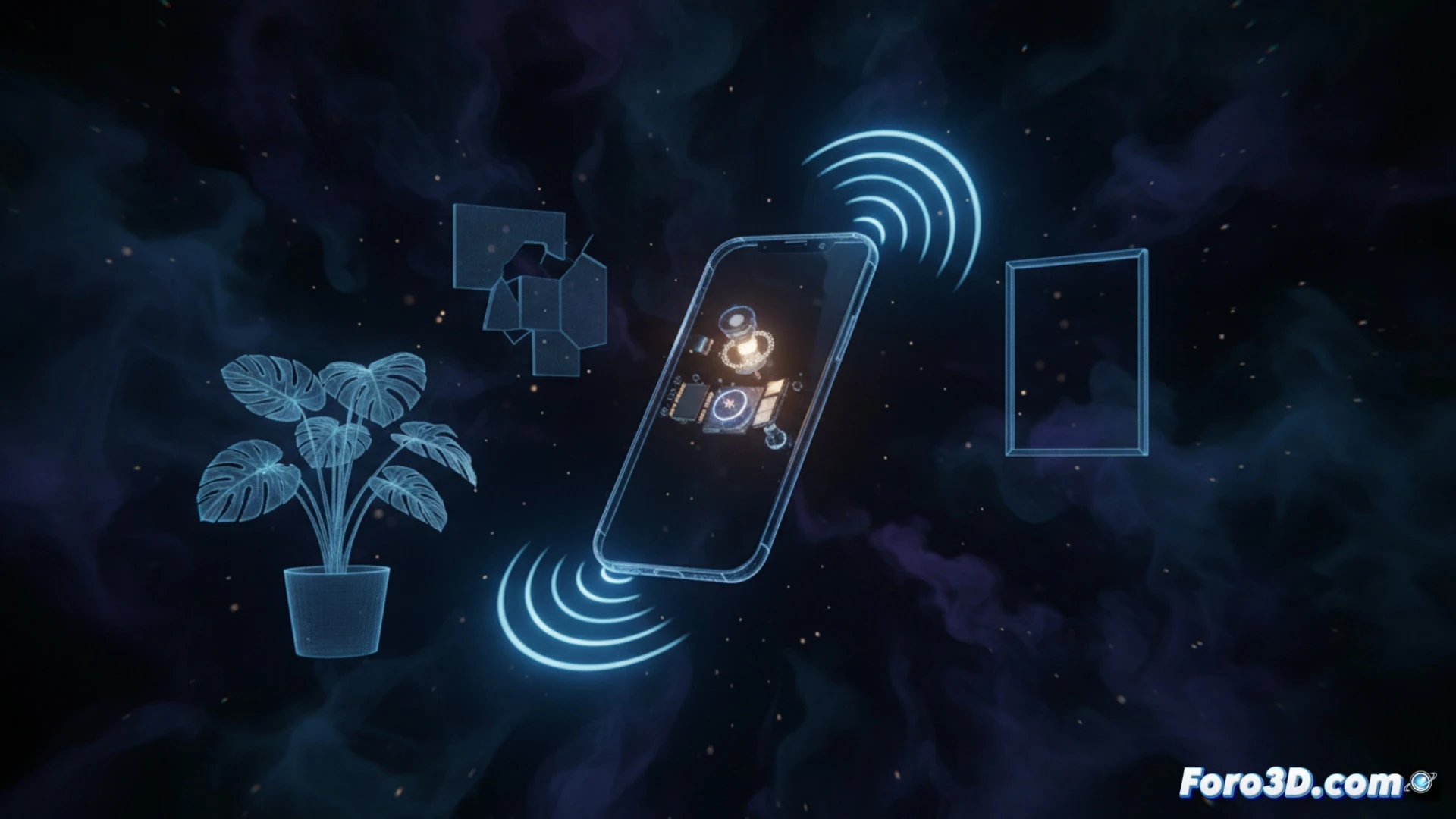
This is how your phone perceives the environment without using the camera
Imagine your device being able to understand its surroundings without activating the camera lens? 🧐 What seems like a magic trick is based on solid scientific principles. The key lies in exploiting the inertial sensors it already incorporates, transforming them into a spatial perception tool.
The principle of echolocation in your pocket
This technology is inspired by how bats navigate. These mammals emit sounds and interpret the echoes to create a mental map. Similarly, your phone's speaker generates sonic vibrations, many of them inaudible, which cause microscopic movement in the entire device. When these waves bounce off surfaces or objects, they alter their vibration pattern. Sensors like the gyroscope and accelerometer detect these subtle changes, allowing the system to deduce the presence and shape of nearby elements. It's as if the phone is touching its environment digitally. 🦇
How does it differentiate objects?- It analyzes the unique vibration signatures produced by different materials and shapes when reflecting sound.
- It processes sensor data with algorithms that compare the received patterns with predefined models.
- It can distinguish, for example, between the smooth texture of a curtain and the rigid surface of a picture on the wall.
The innovation is not in adding new chips, but in making the existing ones work in a completely new way.
Practical applications of this sensory perception
The most relevant thing is that it doesn't require modifying the hardware. Studies show that with the right software, a common smartphone can identify everyday objects. This unlocks functions where privacy is paramount or where the camera is not practical.
Possible immediate uses:- Adjust brightness or volume when detecting the proximity of a person.
- Create basic maps of rooms for augmented reality applications, without processing images.
- Activate power saving modes when it perceives that the device is in a bag or on a table.
A future that feels more than it sees
This evolution turns everyday technology into something much more intuitive and discreet. The next time you feel a slight vibration, think that your phone might be scanning the room's geometry silently. It proves that often, the most surprising capabilities are already installed, waiting for us to discover how to use them. 🔍