In South American forests, spotting a urutaú is a test of patience and sharp eyesight. This bird, called the ghost bird, possesses camouflage that allows it to mimic the texture and shape of a dry branch. Ornithologists like the Uruguayan Mauricio Silvera dedicate efforts to its study. Its skill goes beyond the folklore of its song; it is an example of adaptation where visual and olfactory crypsis combine for survival.
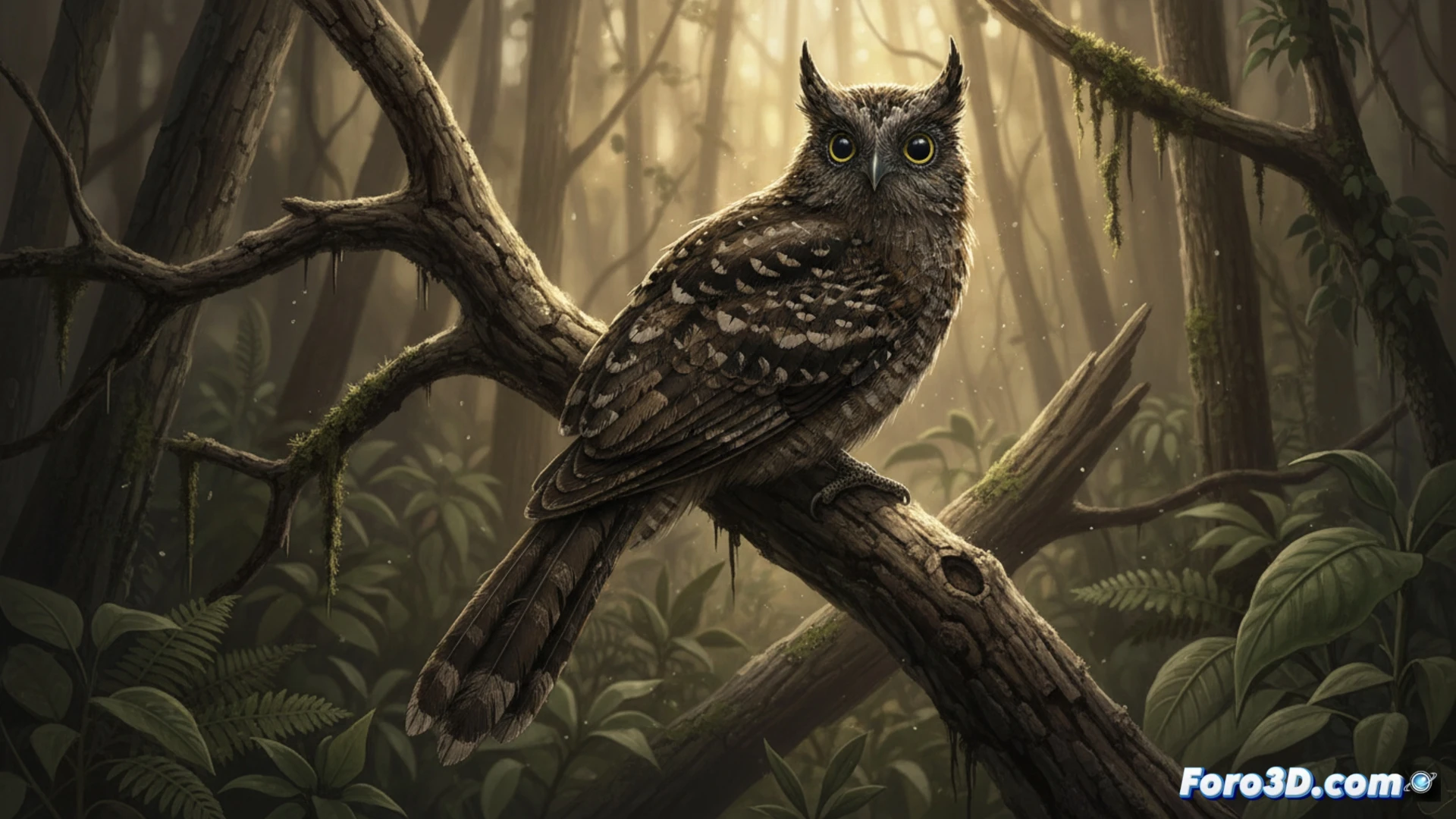
Crypsis and Mimicry: the Urutaú's Natural Rendering Algorithm 🧠
The urutaú's process works like an integrated system. First, the selection of the perch is a calculation of shape and color, seeking exact matching with its plumage. Its rigid posture and closed eyes complete the illusion. Studies indicate that this bird chemically modifies its odor according to the season, a process that avoids detection by predators that use smell. It is a multisensory concealment strategy, where the environment is an essential part of its defense.
The First "Airplane Mode" of Nature? ✈️
While humans debate digital camouflage and disruptive patterns, the urutaú has been executing a ctrl+C, ctrl+V of tree bark for eons. Its technique is simple: it perches, stays still, and closes its eyes as if shutting down two applications. It even adjusts its environmental fragrance settings with each seasonal update. A true master of stealth, although its strategy collapses if it gets an itch on its leg mid-session.