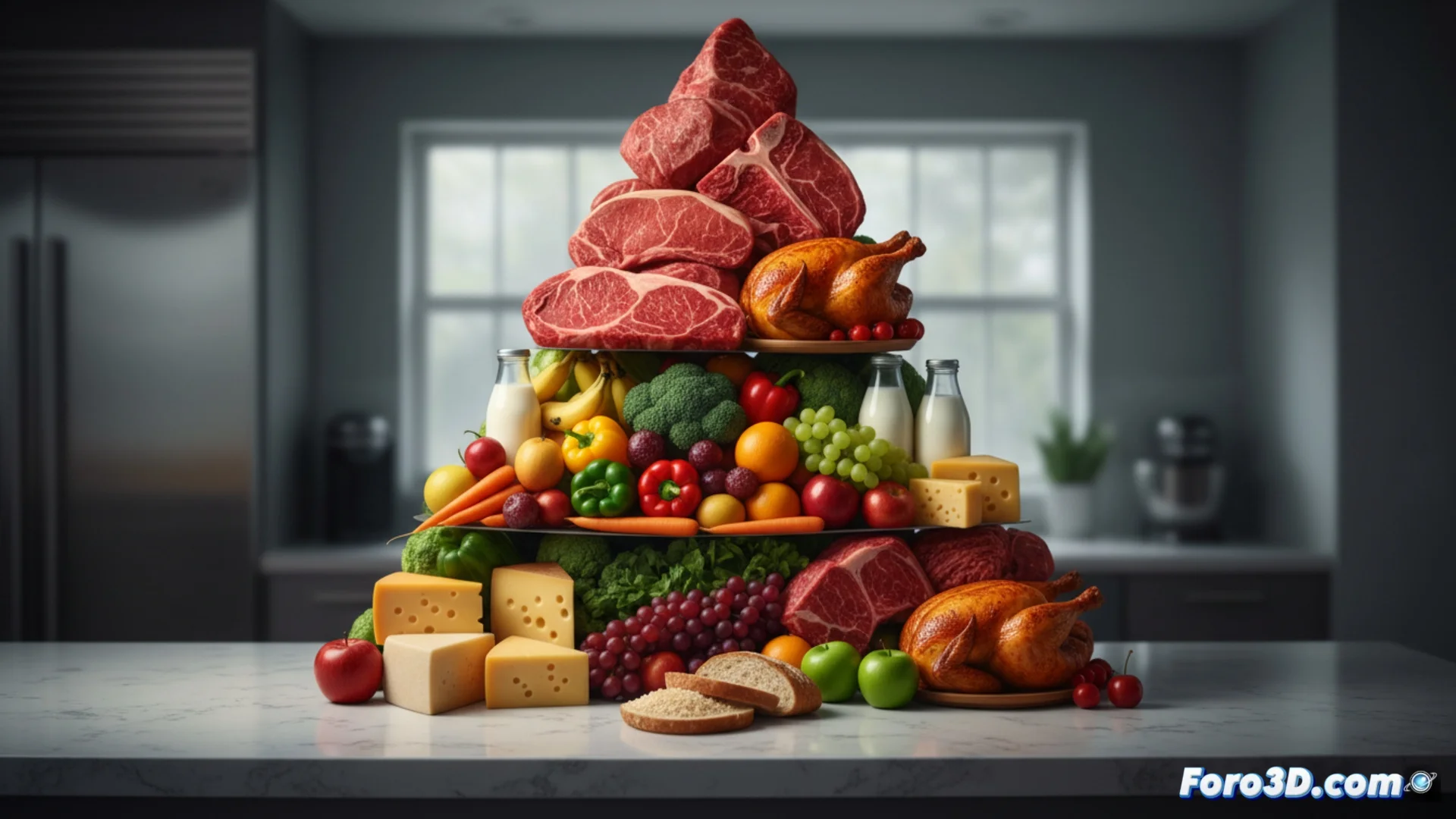
United States Proposes an Inverted Food Pyramid for 2025-2030
The U.S. government has unveiled its new official nutrition guidelines for the coming years, introducing a graphic model that completely changes the traditional scheme. Instead of the classic pyramid, an inverted figure is now proposed where foods like meats, poultry, whole dairy products, and cheeses occupy the widest and most priority base. This shift aims to encourage people to eat less sugars and ultra-processed products, promoting real ingredients with more protein. 🍖🥩
A Radical Change in Official Recommendations
This new visual scheme represents a profound shift in public nutritional policy. Grains and whole grains, which previously formed the base, are now placed in the smallest section at the top. Authorities argue that this reordering will better combat health problems associated with industrial food. However, this move is just beginning to generate intense controversy among health professionals. 🤔
Main Changes in the New Guide:- The main base now consists of animal proteins and full-fat dairy products.
- The visual space dedicated to grains, breads, and pastas is drastically reduced, even in their whole grain versions.
- The central message is to increase consumption of real and minimally processed foods, even if they are rich in natural fats.
Prioritizing meats and whole dairy products may lead people to ingest more saturated fats and salt, key risk factors for developing cardiovascular diseases.
The Scientific Community Expresses Concern
Numerous nutritionists and cardiologists have raised their voices to firmly question the foundations of this proposal. They point out that the model seems to openly favor the meat and dairy sectors, possibly due to the influence of their lobbying groups, rather than scientific consensus. Additionally, they criticize that the guidelines overlook crucial aspects such as the environmental impact of producing those foods or the need to maintain true balance on the plate. 🩺⚖️
Main Criticisms from Experts:- Cardiovascular Risk: Promoting whole dairy products and red meats may increase consumption of saturated fats and sodium.
- Lack of Solid Evidence: They doubt that the pyramid inversion is based on conclusive nutritional studies.
- Omission of Sustainability: The proposal does not consider the ecological cost of prioritizing animal production.
The Debate on the Ideal Diet Reignites
This controversy has managed to polarize the medical community again and reopen the eternal debate on how the population should eat to stay healthy. Some fear that, in trying to solve the problem of ultra-processed foods, another issue of similar magnitude is being created. The discussion underscores how complex it is to create universal rules that reconcile health, cultural customs, economic interests, and planetary care, without one aspect dominating over the others. 🌍🍽️
Thus, a balanced plate according to these rules might resemble an abundant barbecue more than the varied diet promoted by our grandmothers. A plot twist that many specialists are not willing to accept without asking many questions first. 💬