The Secret of the Pre-Columbian Empire: The Power of Guano
Have you ever wondered how the great empires of antiquity managed to expand? 🏛️ The key often lies in elements that today seem surprising to us. Eight centuries ago, the economic base of an entire kingdom depended on a resource that we currently perceive as... quite repulsive.
A Marine Fertilizer of Incalculable Value
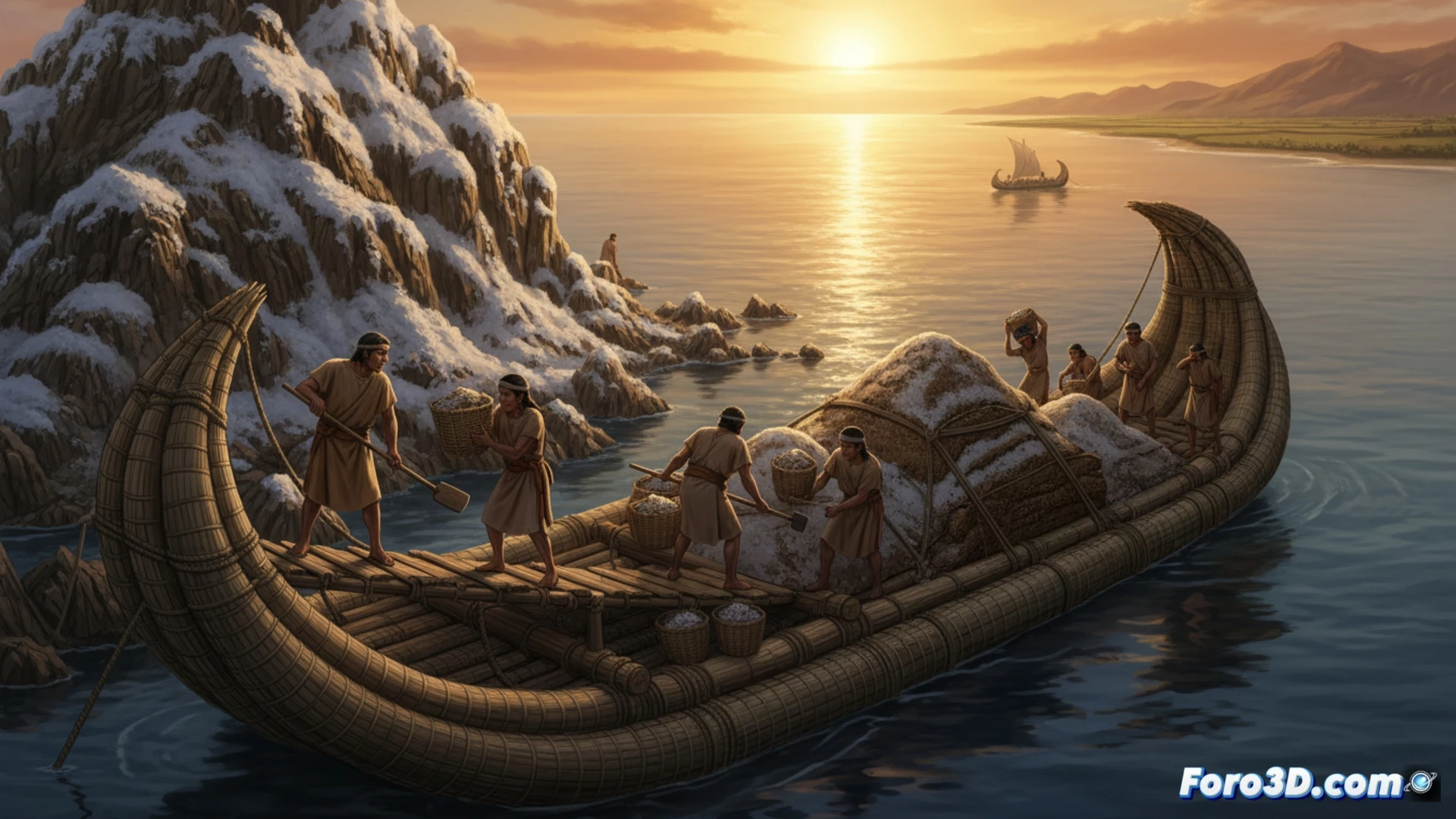
During the 13th century, the Kingdom of Chincha, located on the Peruvian coast, faced an arid territory. The solution was not on the continent, but in the ocean. They discovered that the waste from seabirds, known as guano, worked as an extraordinarily potent fertilizer. This material, rich in nitrogen and phosphorus, was the perfect nutrient for their crops. They extracted it from distant islands and brought it to their valleys, turning dry areas into fertile and abundant lands. 🌱
Key characteristics of guano:- Marine origin: Produced by pelicans, cormorants, and other birds that feed on fish.
- Potent composition: High concentration of essential nutrients like nitrogen and phosphorus.
- Landscape transformation: Allowed cultivation in initially sterile coastal valleys.
Basically, they built their fortune on a mountain of dried bird excrement.
The Engineering to Move a Stinky Treasure
What truly impresses is not just the resource, but the ability to move it. Coordinating the massive transport of guano across the Pacific using rafts represented a monumental logistical challenge for that era. This trade network gave them overwhelming economic superiority, facilitating exchanges with other groups and increasing their influence. 🚣♂️
Elements of their logistics:- Maritime transport: Use of sturdy rafts to cross oceanic stretches.
- Large-scale management: Organizing collection, packaging, and distribution from remote islands.
- Trade advantage: Control of this resource positioned them as a regional economic power.
The Legacy of a Humble Solution
This historical episode shows us how civilizations can find ingenious answers in the simplest resources to grow. Success, in this case, had an intense aroma of ammonia and fish. It is a clear example that innovation does not always require complex technology, but rather identifying and effectively exploiting what the environment offers, no matter how humble it may seem. 💡