The global framework established after World War II, supported by the UN and multilateral organizations, faces a crisis of legitimacy and effectiveness. Unilateral actions by powers and the weakening of key agreements have eroded its foundations. Analysts debate whether this system can be reformed or if we are heading toward a fragmented scenario with competing regional norms, in a context of growing geopolitical tension.
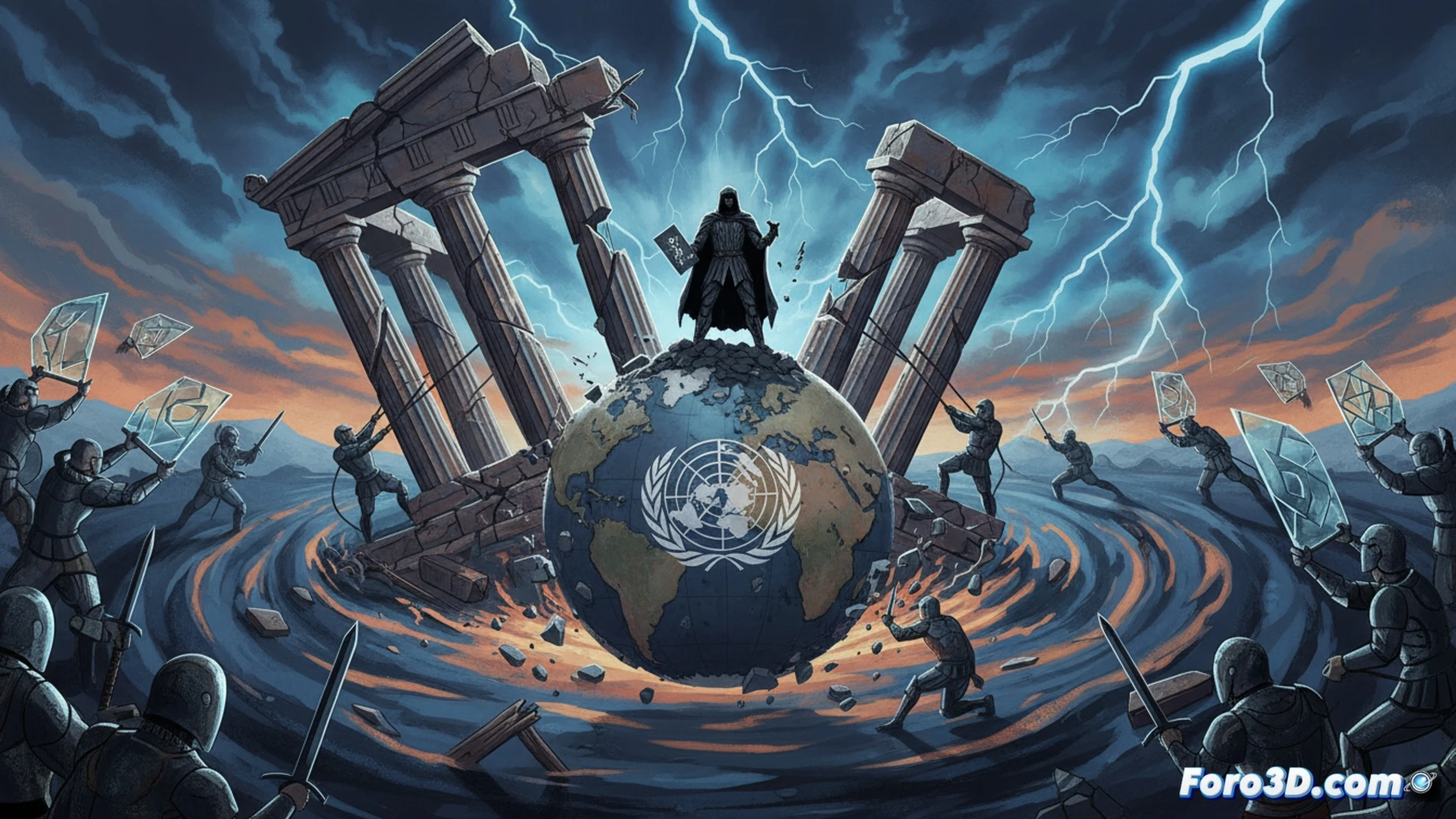
The Architecture of Global Governance as a Legacy System 🏛️
This order can be analyzed as a legacy software architecture: it was functional for its initial environment (the Cold War), but its base code (the UN Charter) has patches and obsolete dependencies. Consensus processes present bottlenecks, and scalability is compromised in the face of new actors and threats. Migration to a new framework is complex due to the lack of a common standard and the risk of incompatible forks emerging, leading to fragmentation of the global network.
User Manual for Dismantling a World Order in 10 Steps ⚙️
Step 1: Ignore security updates (treaties). Step 2: Blame the firewall (the UN) for slowing down your actions. Step 3: Create your own private network with different rules. Step 4: Announce your exit from shared servers (multilateral organizations). Repeat these steps until the original system stops responding. Error 404: Order not found. The international community is reviewing the logs, but it seems like a hardware problem... geopolitical.