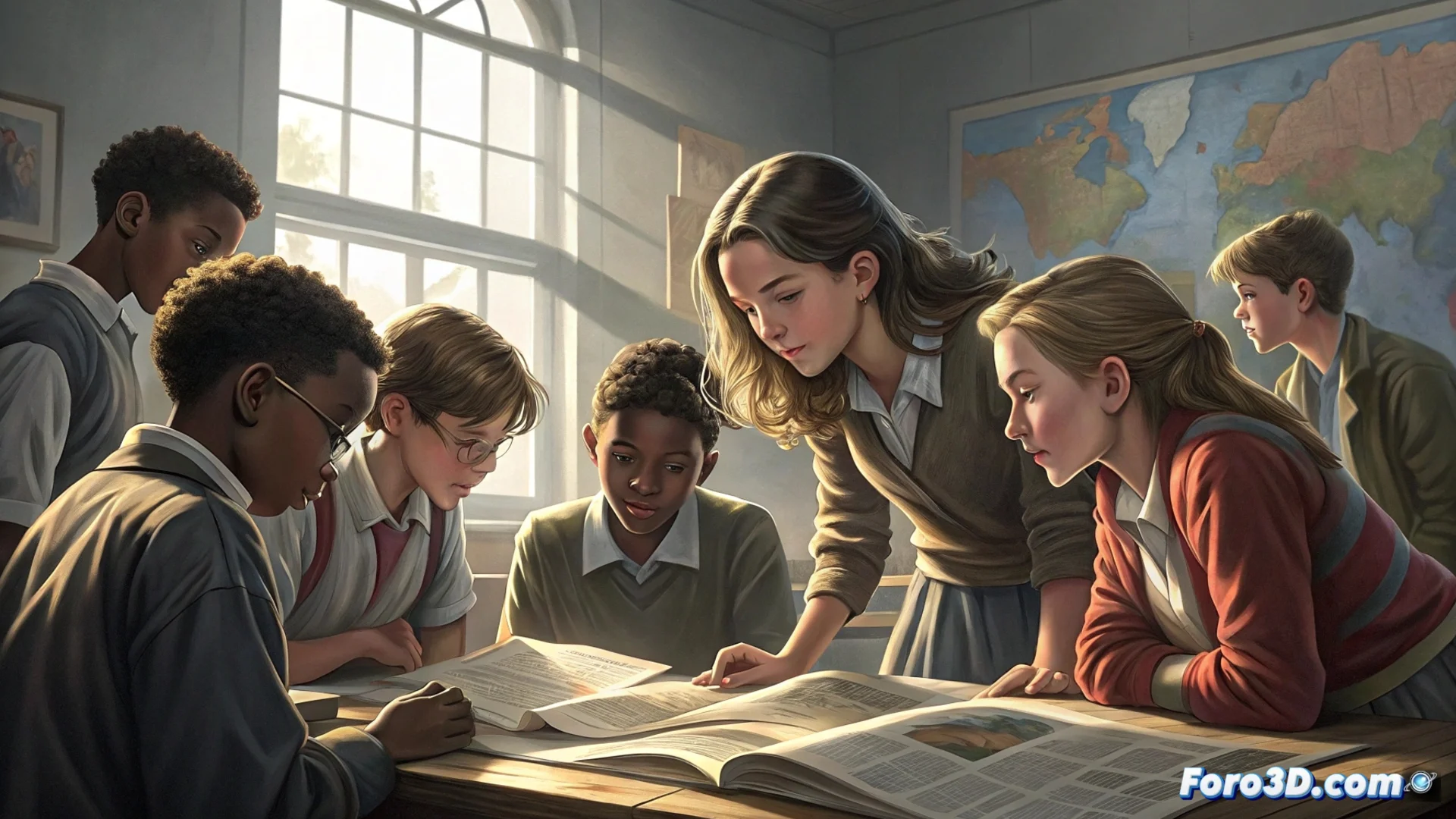
The Power of Newspapers to Shape Critical Citizens
Thinking about a democratic society is like imagining a game where everyone knows the rules. 🏀 A collective of editors in Japan has launched a proposal to the government: integrate print media into the school curriculum as the fundamental manual for that game. Their goal is for the new educational guidelines to detail the vital role of journalism and promote greater use of the newspaper... to read and understand it, of course. 📰
The Urgency of Anchoring Thinking in the Digital Era
Facing the fast torrent of data on social networks, a print newspaper acts as a fixed point. It forces one to stop, to read a complete story, and to observe multiple perspectives on the same fact. The Japanese editors' group sees this practice as an immunization against hoaxes. If from childhood one learns to analyze, contrast, and contextualize what is read, people are forged who are harder to manipulate. It's comparable to teaching someone to swim before they face the ocean of the Internet. 🌊
Key Benefits of Using Press in the Classroom:- Develop the capacity to read deeply and attentively.
- Foster the skill of asking questions and not accepting information passively.
- Create a habit of informing oneself with sources that offer context and verification.
A well-functioning democracy needs more detectives than mere spectators.
An Initiative with Proven Results
This idea doesn't come out of nowhere. In several nations, projects like "The Newspaper in the Classroom" have been implemented for years. Evaluations of these programs frequently indicate that students increase their reading comprehension and sharpen their critical reasoning. The goal is not to create reporters, but to train citizens who know how to question. In the end, the social fabric is strengthened when its individuals can discern the truth. 🧠
Elements that Stand Out in These Educational Programs:- Physical copies are used to break the constant screen dynamic.
- Debates are organized where students compare headlines and sources.
- Exercises are conducted to distinguish between fact, opinion, and propaganda.
Rediscovering the Analog for the Digital Future
It seems that in the digital age, the value of physical formats is reclaimed in the least expected place: in the education of new generations. Who would imagine that the future of a democratic system could literally depend on a student's hands getting stained with the fresh ink of a newspaper. It's a powerful reminder that to navigate the future, sometimes we must hold on to the proven tools of the past. 🔍