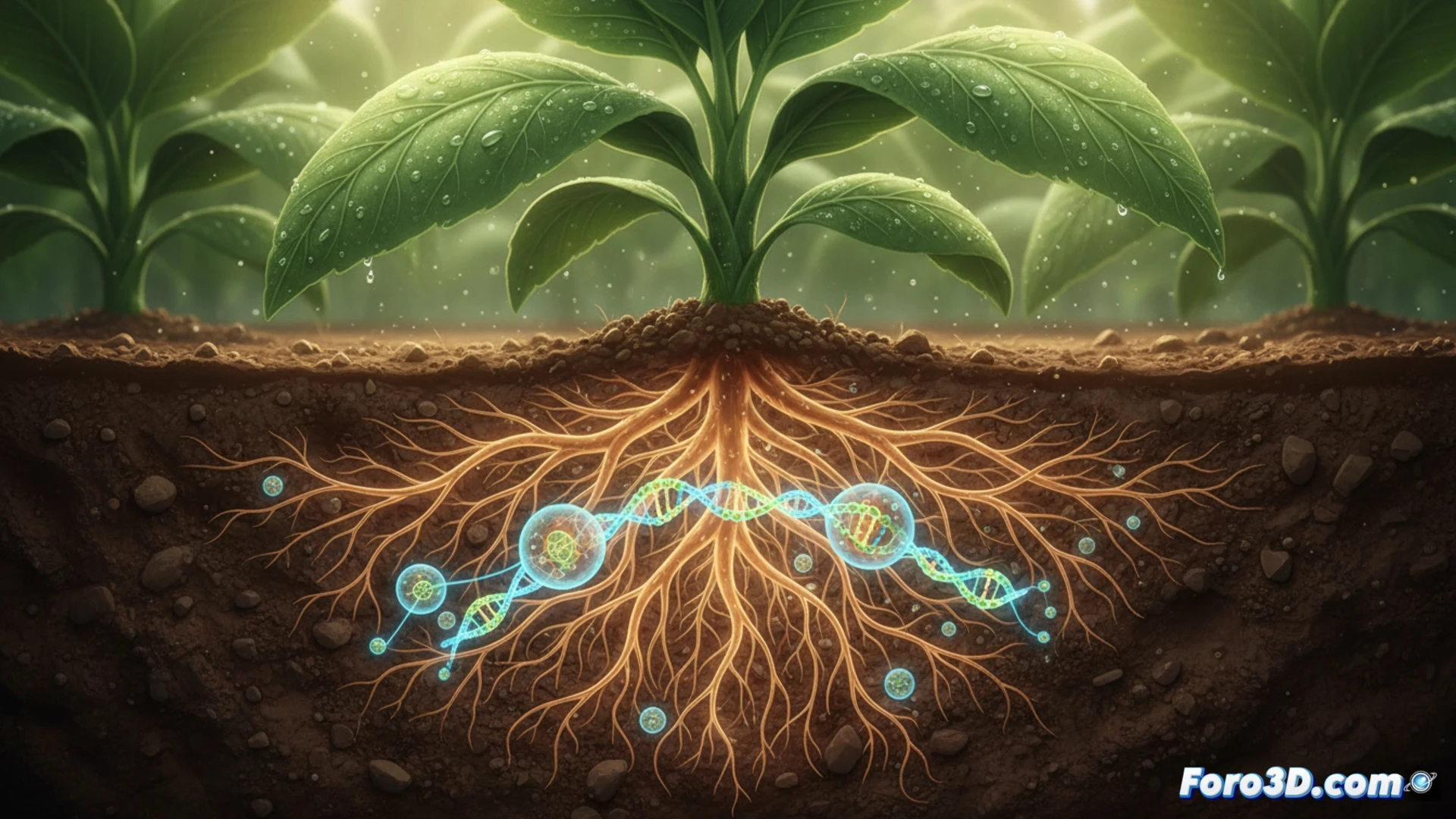
The Plant That Copied Bacteria to Manufacture Medicines
Think of a common plant on your terrace. Now imagine it has been observing and "hacking" the genetic code of microbes to learn how to create advanced compounds. Science has just confirmed that this is real: some plant species have incorporated genes from bacteria, using them to naturally generate complex molecules. It's a surprising evolutionary shortcut. 🧬
A More Efficient Method to Create Drugs
Producing a medicine in a traditional laboratory is usually a long and energy-intensive process. In contrast, these plants already have the integrated biochemical factory: they operate on sunlight and carbon dioxide. This discovery drives cleaner manufacturing of treatments. We could cultivate species designed to generate the necessary compounds directly and with less waste.
How Does This Genetic Exchange Work?- The process is called horizontal gene transfer, an exchange of genetic material between organisms from different kingdoms.
- It is more common than previously thought, acting as a natural network for sharing biological code.
- The plant not only acquired the bacterial gene but integrated it perfectly into its metabolic systems.
Nature has its own open-source genetic code library, and plants are excellent programmers.
The Hidden Potential in Alkaloids
What's fascinating is the result of this genetic adoption. Plants use these borrowed genes to synthesize alkaloids, which are the chemical basis of numerous current medications, from painkillers to cancer treatments. This turns every plant into a potential biofactory.
Advantages of Using Plants as Production Platforms:- They intrinsically use renewable resources (sun, water, CO2).
- They reduce dependence on complex and polluting industrial chemical processes.
- They allow scaling production through controlled agriculture in smart greenhouses.
Towards a Cultivated Pharmacy
This finding suggests that the future of the pharmaceutical industry might not depend solely on large reactors, but also on specialized crops. The next time you care for a plant, reflect: it might be holding the formula for the next big medical breakthrough. The line between the plant and microbial kingdoms is more porous than we thought, and that opens up a horizon full of green possibilities. 🌿