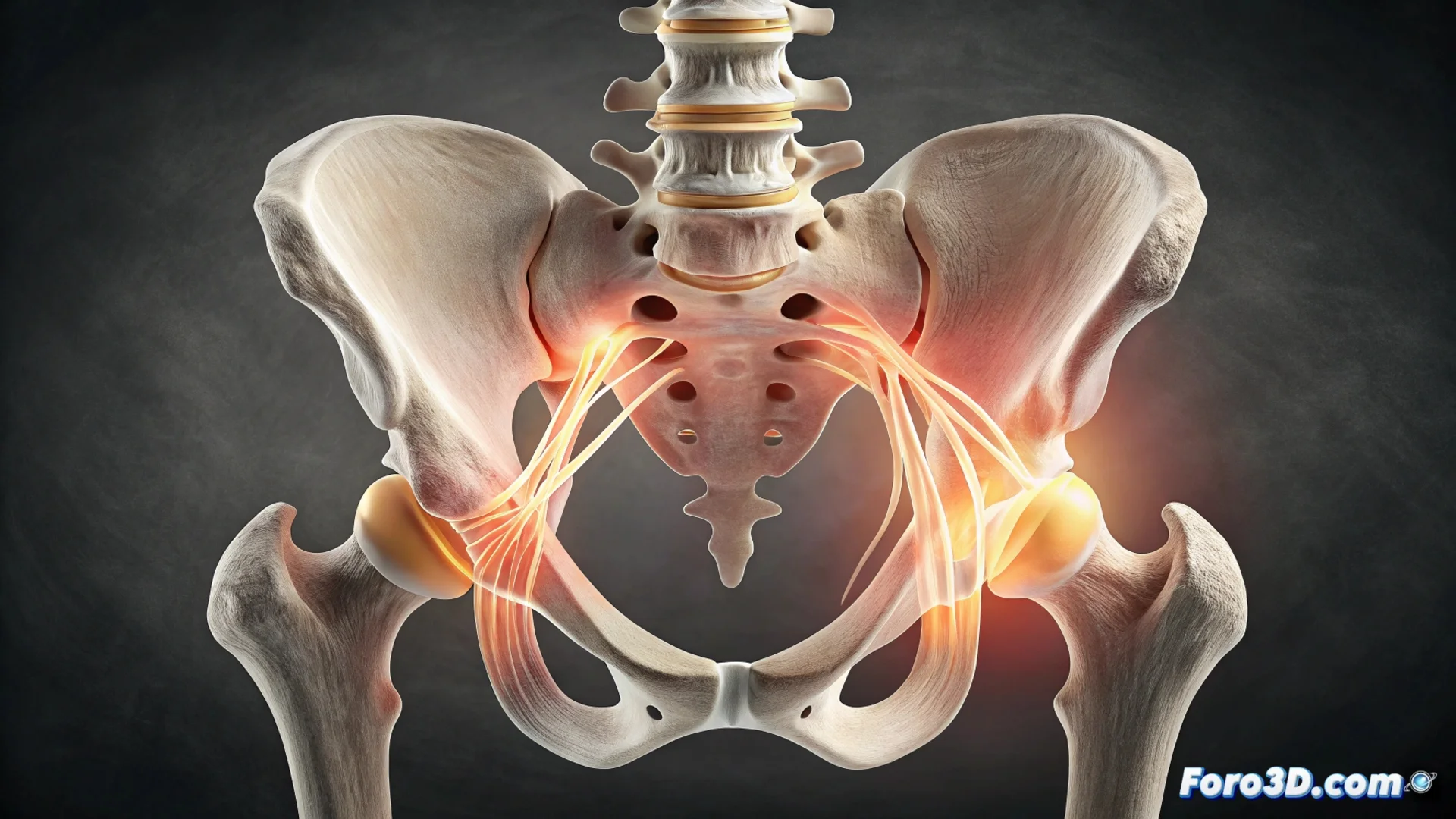
The Pelvis Is Not a Bottleneck, It's a Revolving Door
Do you think human birth is complicated due to a flawed design? A revolutionary view on pelvic anatomy is completely transforming this narrative. 🌀
Reimagining a Classic Concept
For years, the theory of the obstetric dilemma dominated: the woman's pelvis was a simple compromise between upright walking and giving birth. It was seen as a narrow and inevitable passage. However, current science shows it is a structure with movement capacity, more like an adjustment mechanism than a rigid tunnel.
Keys to the new perspective:- The pelvis has joints with a degree of specific mobility.
- Hormones like relaxin act to increase this flexibility during birth.
- This dynamic system helps the baby navigate the birth canal.
It's not a broken design, it's an ingenious dynamic adjustment system.
Hidden Adaptation Mechanisms
The true complexity of birth often does not lie in the size of the pelvis, but in other elements like fetal position or the person's stress level. Evolution endowed us with an adaptable pathway, not a dead end. 🧠
Factors that influence beyond the bone structure:- The baby's position during descent.
- The environment and emotional state during the process.
- The body's ability to use its natural flexibility.
A Conclusion That Changes the Perspective
Therefore, when you hear talk of a design flaw in human birth, evoke the image of the revolving door. Our biology incorporates surprising adaptation mechanisms. Nature often proves to be more ingenious than we suppose. 🌿