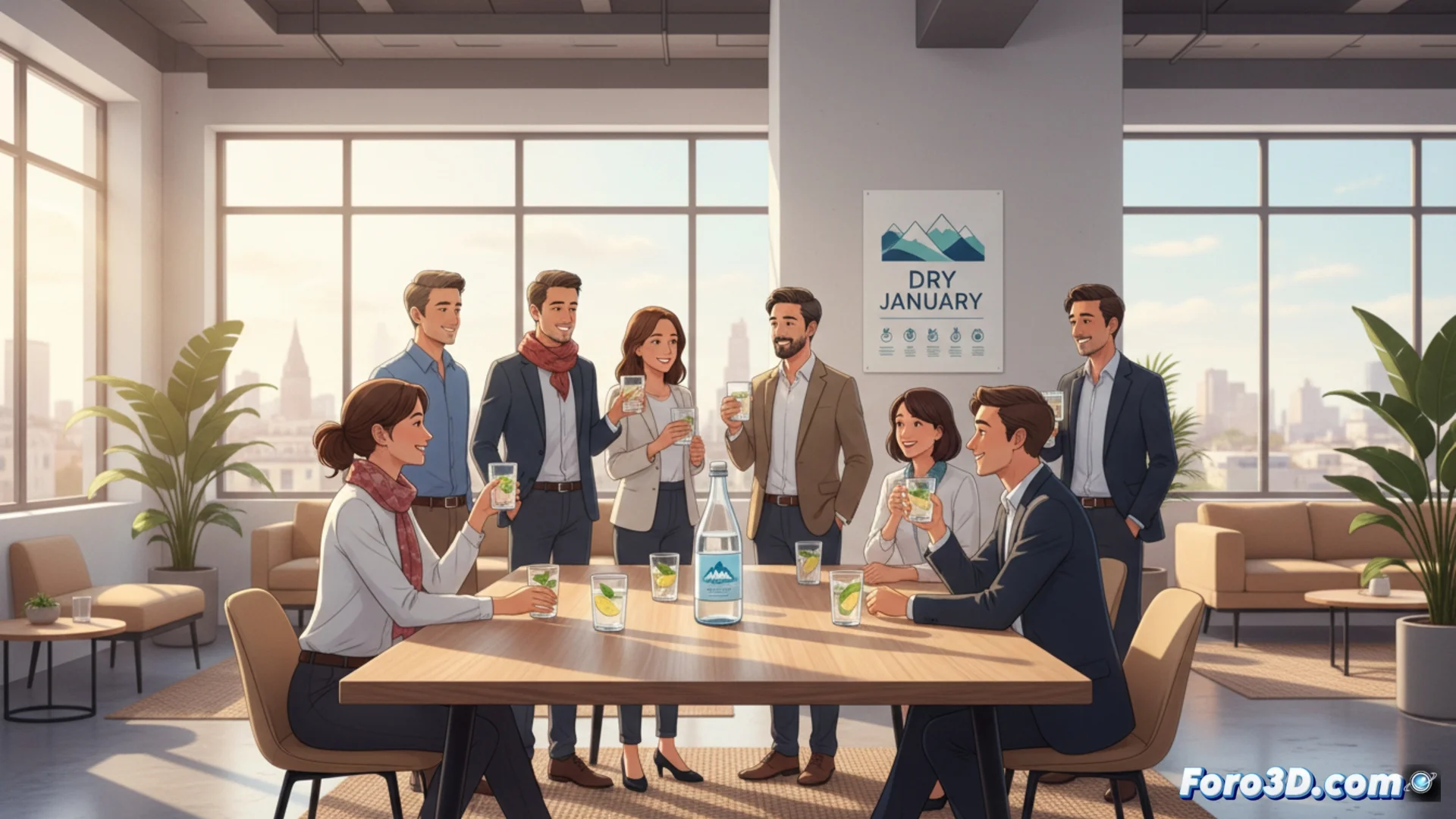
Happy Hour in the Office is Evaporating
Imagine a corporate environment where wine at lunches or beer to celebrate a success cease to exist. 🍷➡️💧 This is no longer a hypothesis, but a reality advancing in France, where corporations the size of EDF have chosen to remove alcoholic beverages from their facilities. This shift is part of a broader transformation that prioritizes well-being and prevention, influenced by movements like Dry January and greater awareness of workplace dangers.
The legislation does not ban, but risk prevention logic does
It is paradoxical: French legislation does not explicitly prohibit consuming alcohol during the workday. However, it does require companies to ensure the safety of their employees. Experts emphasize that even a minimal amount can impair concentration or the ability to handle complex equipment. Therefore, it is not an absolute prohibition, but rather assuming corporate responsibility. Many organizations are acting on their own initiative, anticipating possible stricter legal changes. 🏢⚖️
Key points of the change:- The impetus comes from a healthy culture and the need to protect workers.
- The law acts as a framework for safety obligations, not as a direct veto.
- Companies are leading this change voluntarily to avoid incidents.
“The real debate goes beyond the simple question of ‘alcohol yes or no’. It focuses on how these rules are implemented and who must follow them.”
An internal conflict: Are the rules the same for everyone?
The discussion intensifies when examining the practical application of these policies. Criticism from the workforce and some unions points out that, on occasions, exceptions are made for top management in events or private meetings. This disparity creates friction and questions the principles of consistency and exemplary conduct that should guide any internal rule. The resounding question is clear: Are the same criteria applied at all levels of the company?
Aspects that generate tension:- Perception of a double standard between management and the rest of the staff.
- Debates on equity and the message sent to the team.
- The difficulty in reconciling social traditions with new safety protocols.
Towards a more sober work future
Everything indicates that work environments are moving towards a more dry dynamic. However, this transition is not without friction and discussions. At its core, the challenge lies in finding a balance between deeply rooted social customs, like toasting, and the pressing need to ensure a safe and productive space. The future may bring more toasts, but with mineral water or soft drinks. 🥤✨