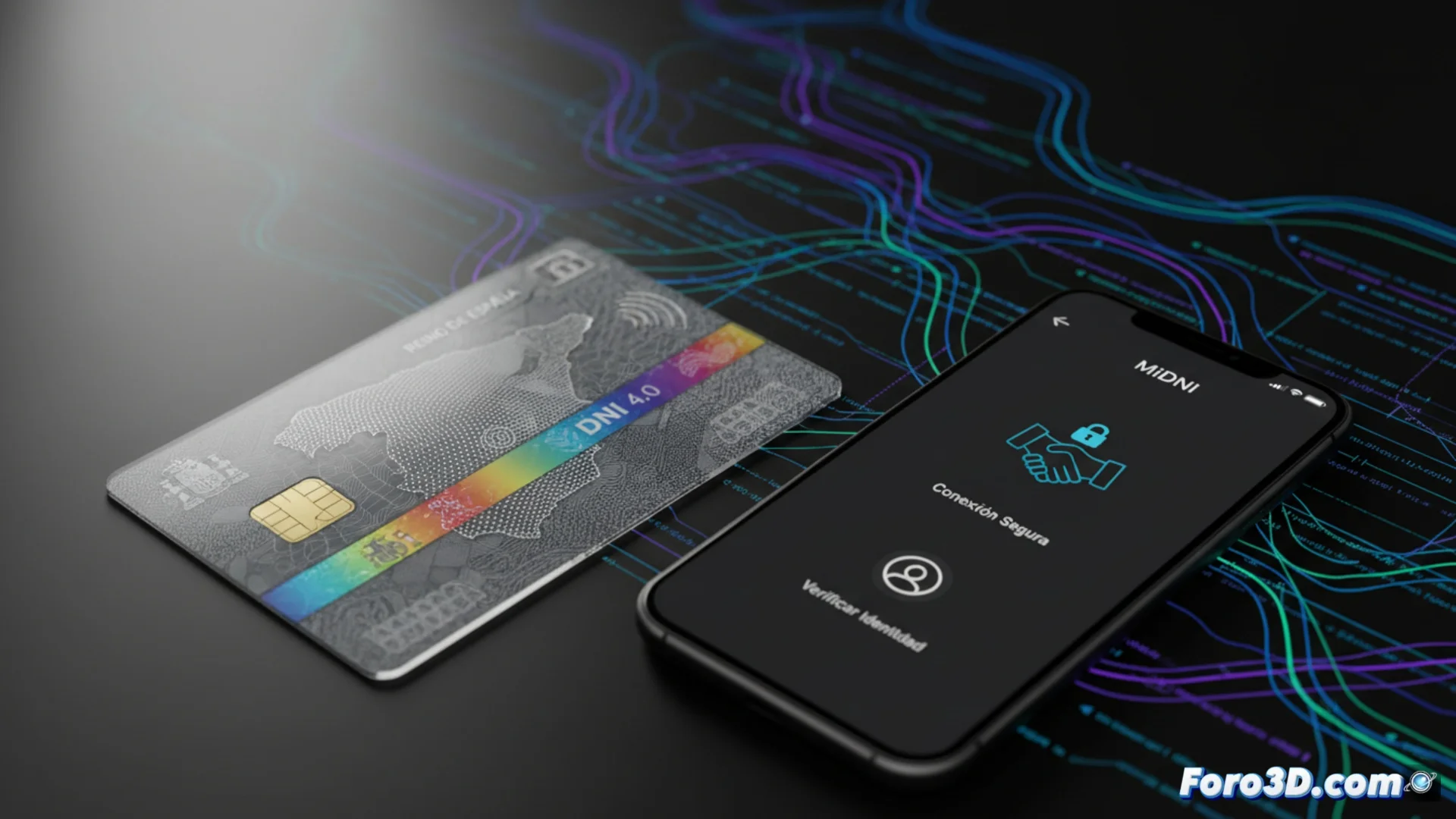
National Police Confirms that DNI 4.0 Adopts Elliptic Curve Cryptography
The Spanish National Police has verified that the latest version of the National Identity Document, known as DNI 4.0, integrates a more robust protection protocol. This advancement is based on a renewed Public Key Infrastructure (PKI), which replaces the previous algorithm with a more modern and secure one. 🔐
A Cryptographic Leap in the Identity Document
The main change lies in replacing 2048-bit RSA encryption with a system based on 384-bit elliptic curve. This transition significantly increases the cryptographic strength of the physical support. As a result, it better defends against attempts to falsify the document or commit fraud. Thus, trust is reinforced when identifying a person, whether in a face-to-face check or an online transaction. 💻
Key Features of DNI 4.0:- Implements a 384-bit elliptic curve (ECC) algorithm for greater security.
- Complies with current regulations and technical standards of the European Union.
- Incorporates an improved microchip that stores biometric data and digital certificates.
Technology advances faster than bureaucracy, so now administrations and web portals must adapt to accept this new system.
The Improved Chip and Digital Identity
This evolution adds to the features already offered by the DNI 3.0. The physical document now carries an electronic component with greater capabilities. Its memory stores the photograph, handwritten signature, fingerprints, and the holder's electronic certificates. Thanks to this chip, it is possible to authenticate a citizen's identity in the digital realm with a high level of assurance. 🛡️
Chip Functionalities:- Stores the holder's photo and signature securely.
- Contains the holder's biometric data from fingerprints.
- Stores the digital certificates necessary for online operations.
The MiDNI App: The Digital Key
To use digital identification, it is mandatory to use the official application called MiDNI. This tool allows the person to authenticate in online procedures and services that require official accreditation. The process uses the electronic certificates stored in the chip of the physical document. Thus, it avoids always carrying the plastic DNI for some procedures, although the law still recommends carrying it. 📱
The deployment of this technology marks a step forward. However, its full utility depends on public administration websites and private services updating their systems to recognize and support this new security standard. The transition to a fully operational digital identification is underway. 🚀