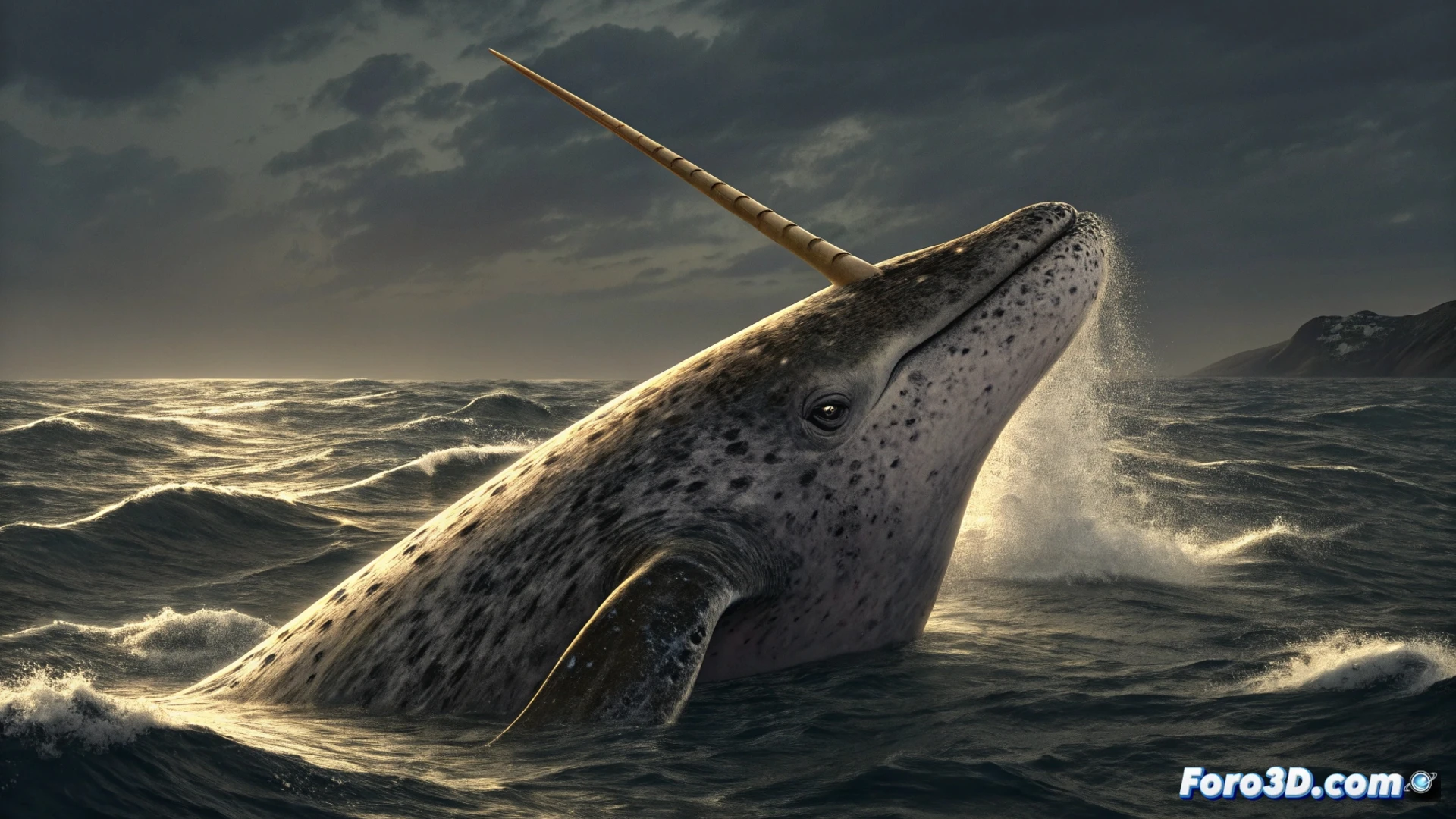
The image of the narwhal with its long spiral tusk is recognizable, but its function goes beyond the visual. This appendage, which is actually a left canine tooth, acts as a complex sensory organ. It is perforated and connected to the nervous system, allowing the animal to perceive details of its aquatic environment with great precision.
Biological Architecture for Capturing Environmental Data 🧬
The internal structure of the tusk is key. It features a porous surface with millions of microchannels leading to the central nerve. This design allows detecting minimal variations in water pressure, temperature gradients, and salt concentrations. Scientists analyze this system as a model of an integrated sensor, where the hardness of the ivory protects a biological data collection network.
The Arctic's "USB": Firmware Updates by Salinity 🔌
Imagine having a three-meter peripheral that, instead of connecting to a port, submerges in the water to tell you if there's ice nearby or if dinner (a cod) passed by there a while ago. The narwhal navigates this way, with what seems like an evolutionary selfie stick that, instead of uploading photos, downloads real-time oceanographic reports. A design that would make any sensor engineer reconsider.