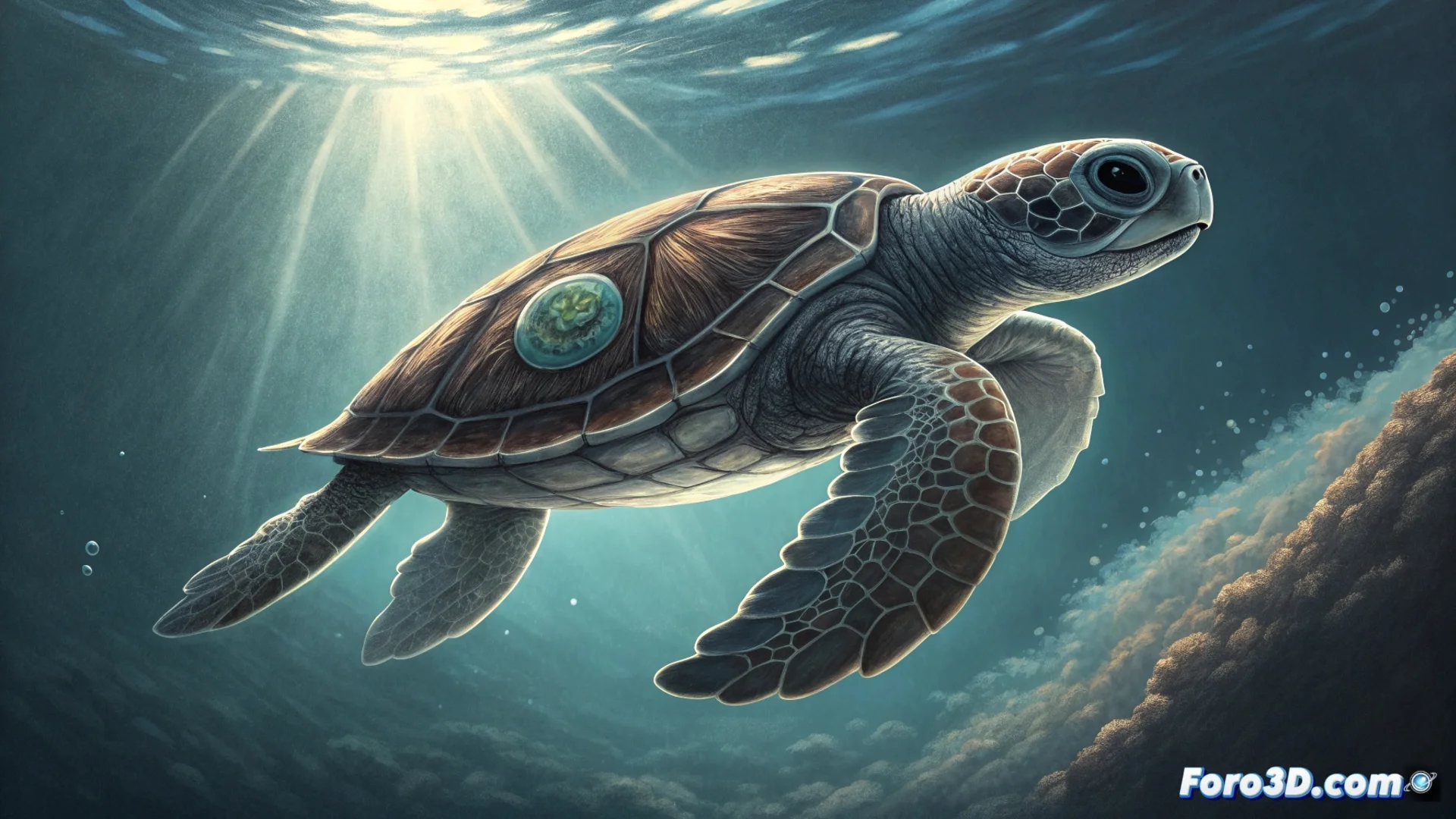
The Mystery of the Lost Years of Sea Turtles Solved
What happens to young sea turtles after entering the ocean and before returning to the coasts? For a long time, it was believed that their initial stage at sea consisted of passive drift. Modern science, however, has unveiled a much more dynamic and intriguing reality. 🐢
Innate Navigators, Not Mere Drifters
Thanks to miniaturized tracking devices, researchers have been able to monitor hatchlings of species like the green turtle. The data show that these animals do not just float. On the contrary, they perform active and directed swimming movements, altering their trajectory with a clear purpose. It seems they possess a highly effective internal orientation system. 🧭
Key Findings from the Study:- The hatchlings swim at speeds greater than estimated, demonstrating physical capacity.
- They modify their course intentionally, influencing where they end up.
- This behavior suggests they actively seek favorable oceanographic conditions.
They stopped being passengers to become pilots of their journey.
Implications for Understanding How They Survive
This discovery radically transforms models about their ecology and conservation. By being able to navigate, juvenile turtles can optimize their search for food, dodge threats, or locate beneficial currents. Their role changes from passive subject to active agent in their own oceanic dispersal.
Advantages of This Behavior:- Allows access to areas with greater abundance of trophic resources.
- Increases the chances of avoiding predators in the open sea.
- Facilitates finding optimal development habitats during their growth.
A Lesson from the Ocean
The story of these little explorers reminds us that, even in the vastest and seemingly chaotic environment, the ability to make decisions and act makes the difference. Far from being dragged uncontrollably, juvenile sea turtles demonstrate remarkable resilience and adaptive intelligence. Their journey is a guided traversal, not a mere surrender to fate. 🌊