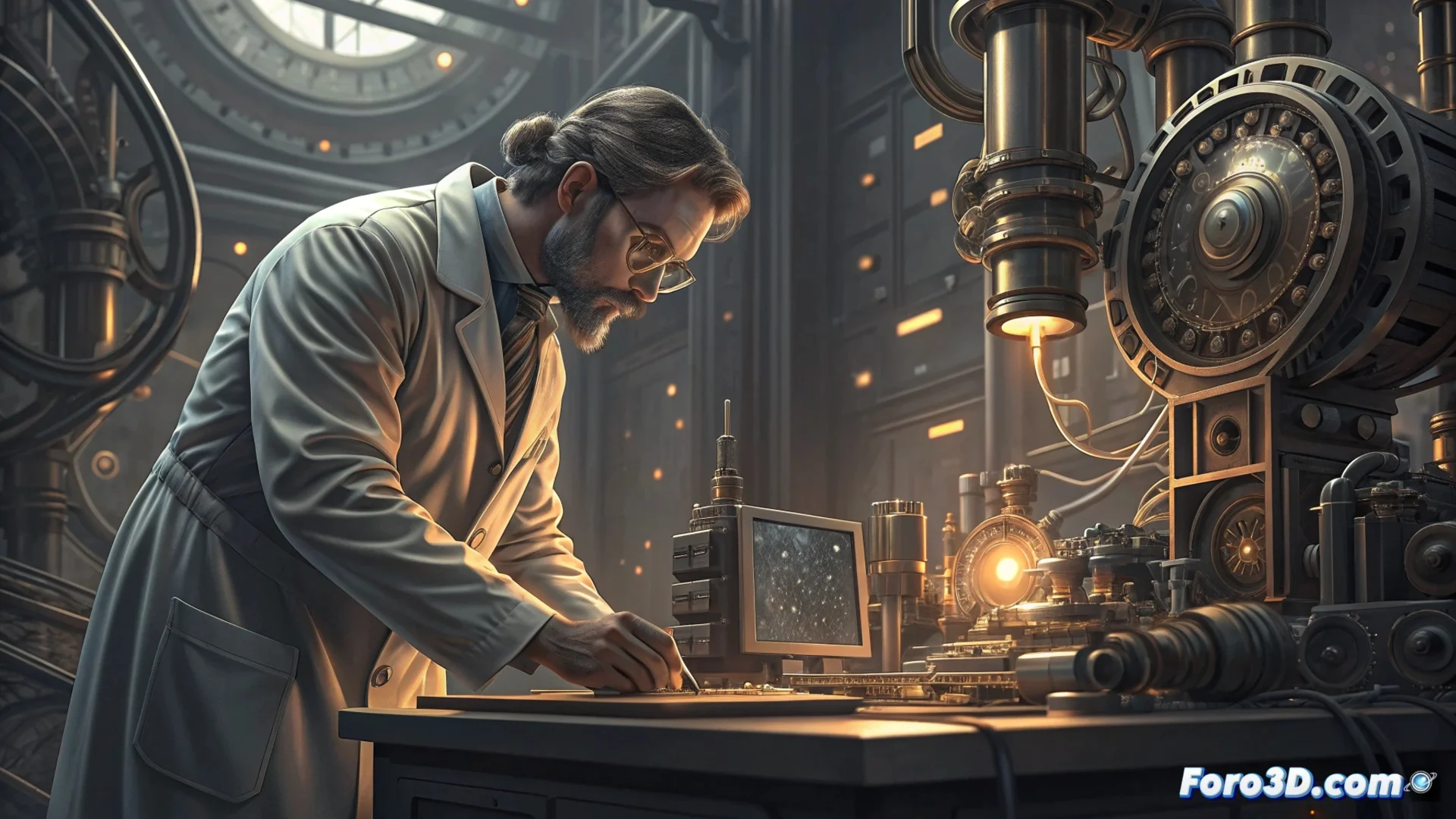
The Man Who Has Already Reinvented Quantum Computing Twice
Can you imagine building technology that seems straight out of science fiction? 🤯 John Martinis is one of the minds making it a reality, using superconductors instead of magic. After revolutionizing this field on two distinct occasions, he is now pursuing a third fundamental concept that could completely alter the technological landscape.
The Challenge of Building a Quantum Computer
A traditional bit is like a still coin: it shows heads or tails. A qubit, on the other hand, is like that coin spinning rapidly in the air; it can represent both states at once. The great obstacle is that the slightest vibration, heat, or interference causes "the coin to fall" and the qubit to lose its quantum state. Martinis' team specializes in designing environments of extreme stability so that these superconducting qubits can operate without failing. 🔬
Key achievements in his career:- Demonstrating that a quantum computer can perform a task impossible for a classical one, a turning point known as quantum supremacy.
- Deciding to leave a prominent position at Google to return to academia and rethink the fundamentals.
- Seeking a radically new architecture that is easier to scale and generates fewer intrinsic errors.
"The current design has a limit. We need to redesign everything from the ground up to move forward." - Vision that motivates his current research.
Why a New Beginning?
After reaching a historic milestone, Martinis identified that the predominant quantum computing architecture faces a performance ceiling. His goal is not just to improve the existing, but to propose a completely different system. This search for a third way is what could unlock the true potential of this technology. 💡
Central elements of his current approach:- Prioritizing scalability to practically integrate thousands or millions of qubits.
- Drastically reducing the error rate that affects quantum calculations.
- Innovating in the physical and logical design of processors, going beyond conventional schemes.
The Future of the Third Revolution
In the universe of quantum computing, it seems that the third attempt is the decisive one. If John Martinis and his team succeed in materializing this radical idea, the next great revolution in information processing could be just around the corner, impacting fields like cryptography, drug discovery, and artificial intelligence. 🚀